Eugene Homeowners Insurance Tips: Maximize Your Local Coverage

Living in Eugene means facing specific home insurance challenges that standard policies often overlook. Wildfires, heavy rainfall, and Oregon’s unpredictable weather patterns require coverage tailored to your region.

We at LeDoux Insurance Agency Inc. have helped countless local homeowners find the right protection at the right price. This guide covers Eugene homeowners insurance tips you need to maximize your coverage and minimize costs.

What Makes Eugene Home Insurance Different

Flood Risk Demands Separate Coverage

Eugene sits in a region where weather extremes and natural hazards demand insurance strategies that go beyond what a standard homeowner policy covers. The Willamette Valley experiences heavy winter rainfall that regularly causes flooding and water damage, yet flood damage is not covered by standard homeowners insurance policies. Over a 30-year mortgage, there is about a 26% chance of flood damage for structures in the flood hazard area, compared with a 10% chance of fire damage. This statistic alone explains why so many Eugene homeowners face unexpected losses.
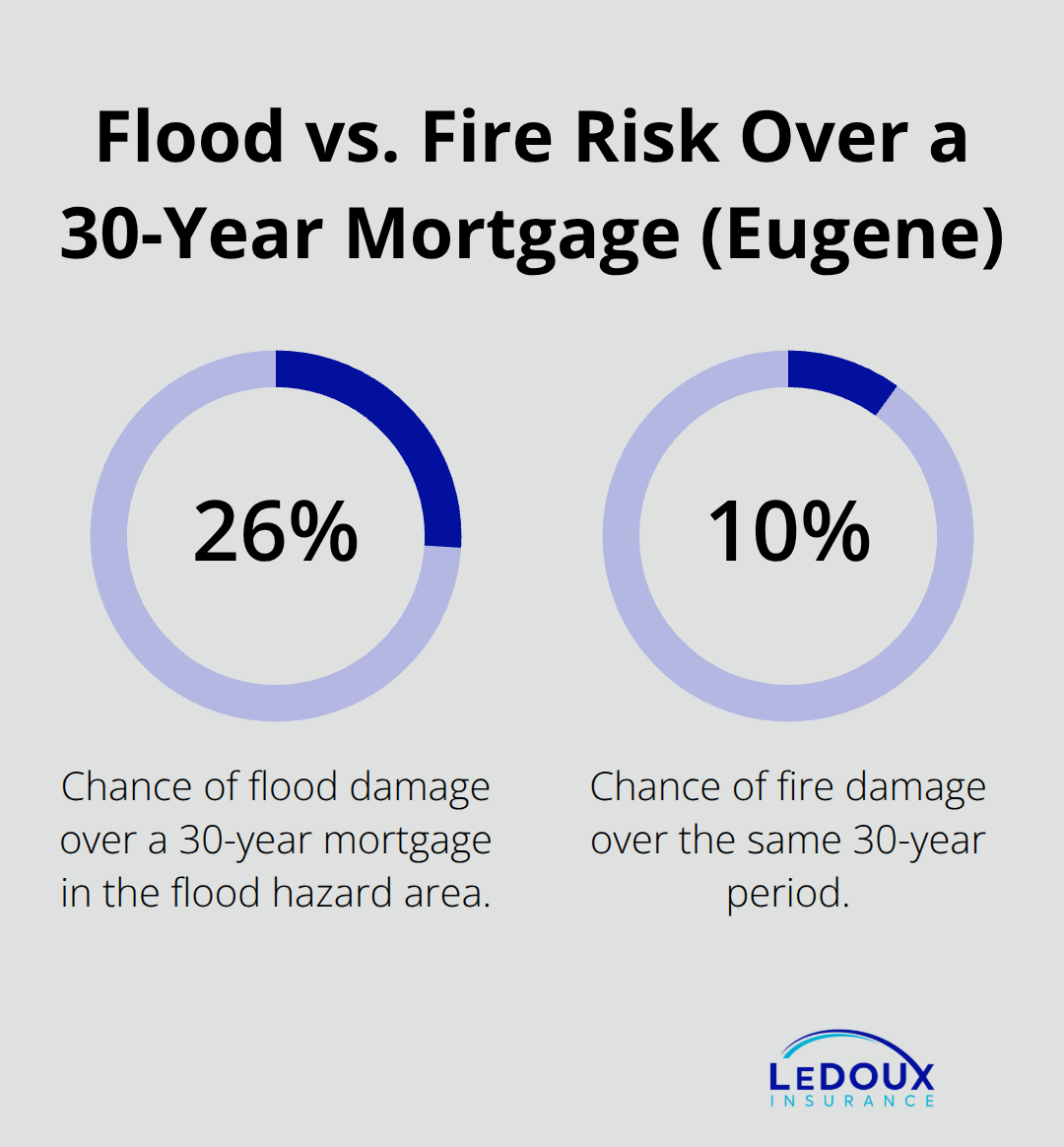
Comparison of 26% flood risk versus 10% fire risk over 30 years for homes in Eugenes flood hazard areas. - Eugene homeowners insurance tips

Flood insurance requires a separate policy, and there is a 30-day waiting period after purchasing before coverage becomes effective. Waiting until a flood threatens your property means you have no protection. The City of Eugene participates in the National Flood Insurance Program, which allows residents to buy flood insurance even if they are not in a high-risk area.
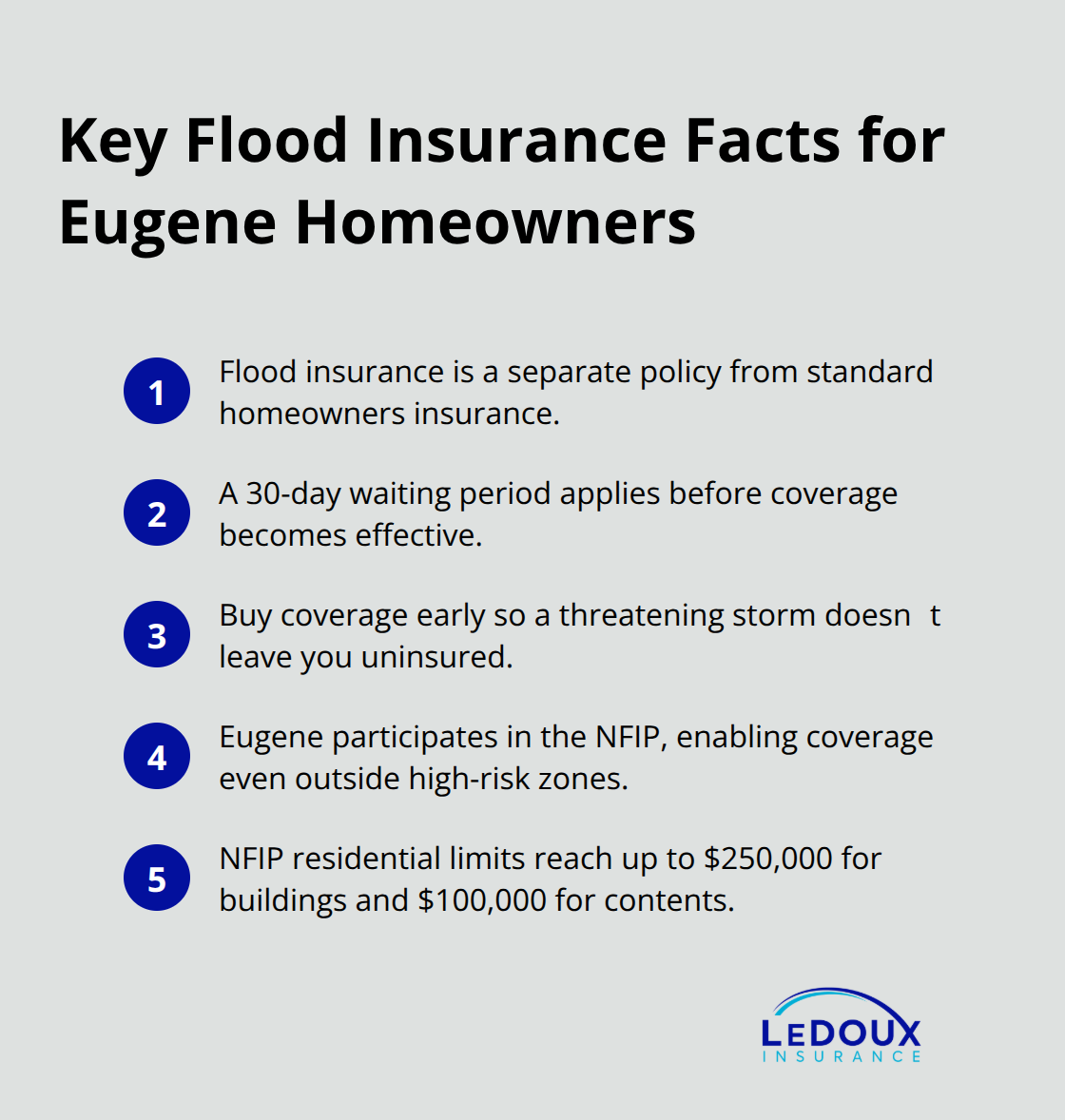
Compact list summarizing essential flood insurance facts for Eugene homeowners.

NFIP coverage limits reach up to $250,000 for building damage and $100,000 for contents on residential properties.

Wildfire Exposure and Rising Premiums

Wildfires pose another serious threat, especially for properties near forested areas or in zones flagged by wildfire-risk models that insurers now use to assess premiums. These models have become a major driver behind the sharp rate increases Eugene homeowners see at renewal. A local homeowner reported a 40% premium increase despite no claims, a trend directly linked to wildfire exposure and climate-related pricing adjustments. Even within Eugene city limits, proximity to forests or wildfire-prone zones influences insurance rates significantly.

Water Damage Beyond Flooding

Wind and hail during spring storms damage roofs and siding regularly. Sewer backups during heavy rain are common problems that standard policies often exclude. Sump pump failure and sewer backup coverage must be added as optional endorsements, not included in basic policies. These water-related hazards affect many Eugene properties but require specific add-ons to your standard coverage.

The Coverage Gaps in Standard Policies

Standard homeowner policies protect your dwelling, personal property, liability, and additional living expenses, but they leave critical gaps for Eugene residents. Earthquake coverage, common in Oregon, is also separate and not part of standard plans. Oregon does not legally require homeowners insurance, but mortgage lenders make it mandatory as a loan condition, leaving you vulnerable if your policy lacks the right coverage for local risks.

Taking time now to evaluate your actual risks and customize your coverage prevents the shock of discovering gaps when you file a claim. The specific hazards that threaten your home depend on its location, age, and proximity to natural risk zones. Understanding which coverage options apply to your situation sets the foundation for protecting your property effectively.

What Coverage Actually Protects Your Eugene Home

Dwelling Coverage and Replacement Cost

Your standard homeowners policy includes several core components, but understanding what each one covers-and what it doesn’t-makes the difference between adequate protection and costly gaps. Dwelling coverage pays to repair or rebuild your home’s structure if a covered peril like wind or hail damages it, yet the amount you choose matters significantly. Oregon homeowners pay around $2,065 per year on average according to NerdWallet data, though many carry dwelling limits that fall short of actual replacement costs. If your home would cost $450,000 to rebuild today and your policy covers only $350,000, you absorb the difference out of pocket. Replacement cost endorsements pay the cost to repair or replace your damaged property using current materials and labor.

Personal Property and Liability Protection

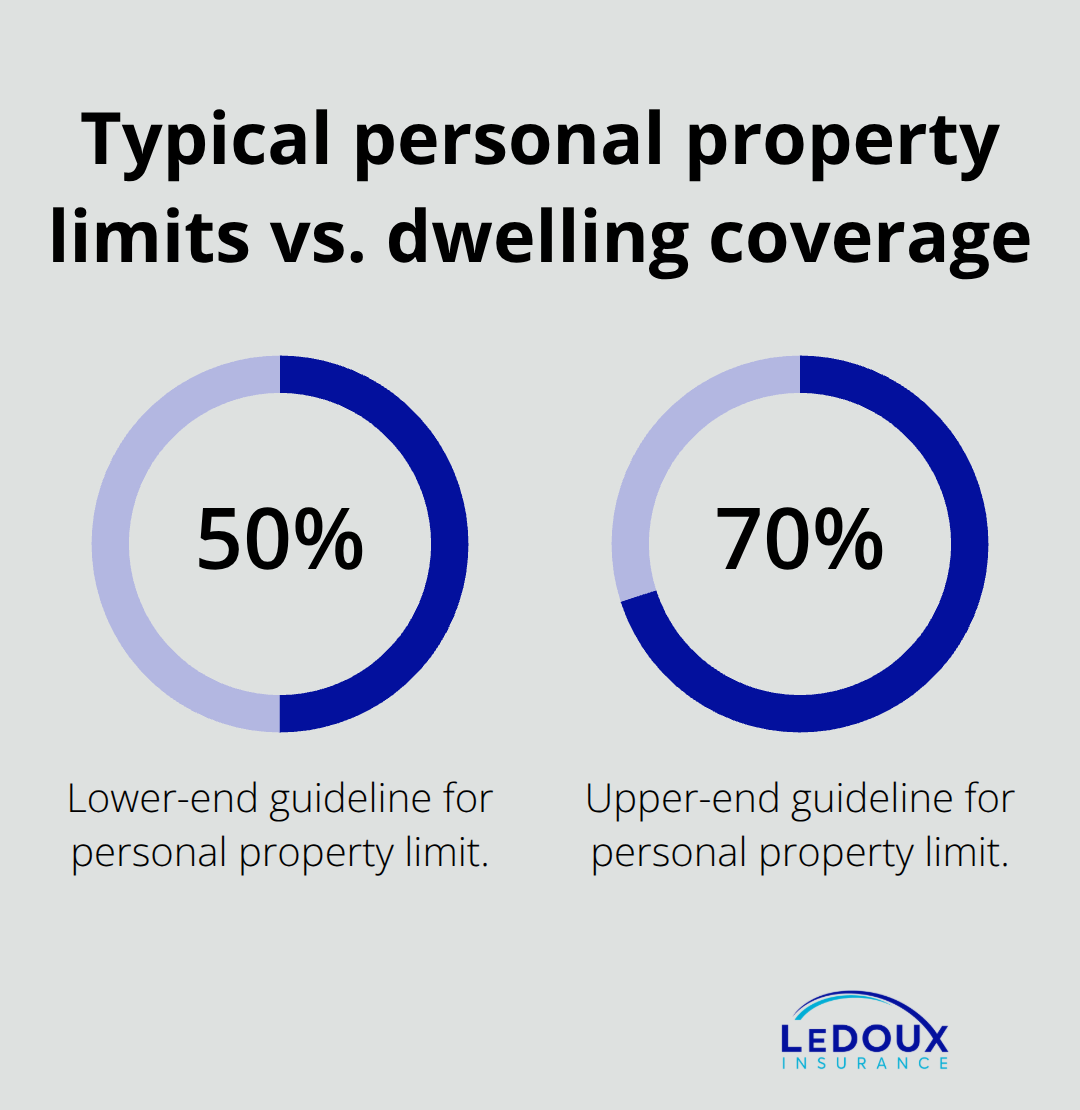
Personal property coverage inside your home typically covers 50 to 70 percent of your dwelling limit, meaning a $400,000 home might have only $200,000 to $280,000 in contents protection. That sounds reasonable until you itemize what’s actually inside: furniture, electronics, clothing, kitchen appliances, and tools add up fast. Many Eugene homeowners underestimate their belongings’ value and discover they’re underinsured only after a loss. Liability coverage protects you legally if someone is injured on your property or you accidentally damage someone else’s property, with typical limits ranging from $100,000 to $300,000. Additional living expenses cover hotel stays, meals, and other costs if your home becomes uninhabitable after a covered loss, preventing financial strain during recovery.

Identifying Coverage Gaps in Eugene

The real challenge for Eugene homeowners is recognizing what standard policies exclude and addressing those gaps deliberately. Flood damage requires separate flood insurance through the National Flood Insurance Program, and the 30-day waiting period means procrastination costs you protection. Sump pump failure and sewer backup coverage must be added as endorsements because standard policies treat water damage from internal plumbing differently than weather-related water intrusion. Earthquake coverage, essential in Oregon, is also separate and typically costs $15 to $30 per month depending on your home’s age and construction type.

Customizing Coverage for Your Specific Property

Your home’s location, age, and proximity to flood zones or forests determine which endorsements make sense. A 1970s home in a flood zone needs different protection than new construction on higher ground. Taking time to customize your policy now, rather than discovering exclusions during a claim, separates prepared homeowners from those facing unexpected out-of-pocket costs when disaster strikes. The next step involves identifying which money-saving strategies apply to your situation without sacrificing the protection your Eugene property actually needs.

How to Cut Your Eugene Home Insurance Costs Without Sacrificing Protection

Bundle Home and Auto Insurance for Immediate Savings

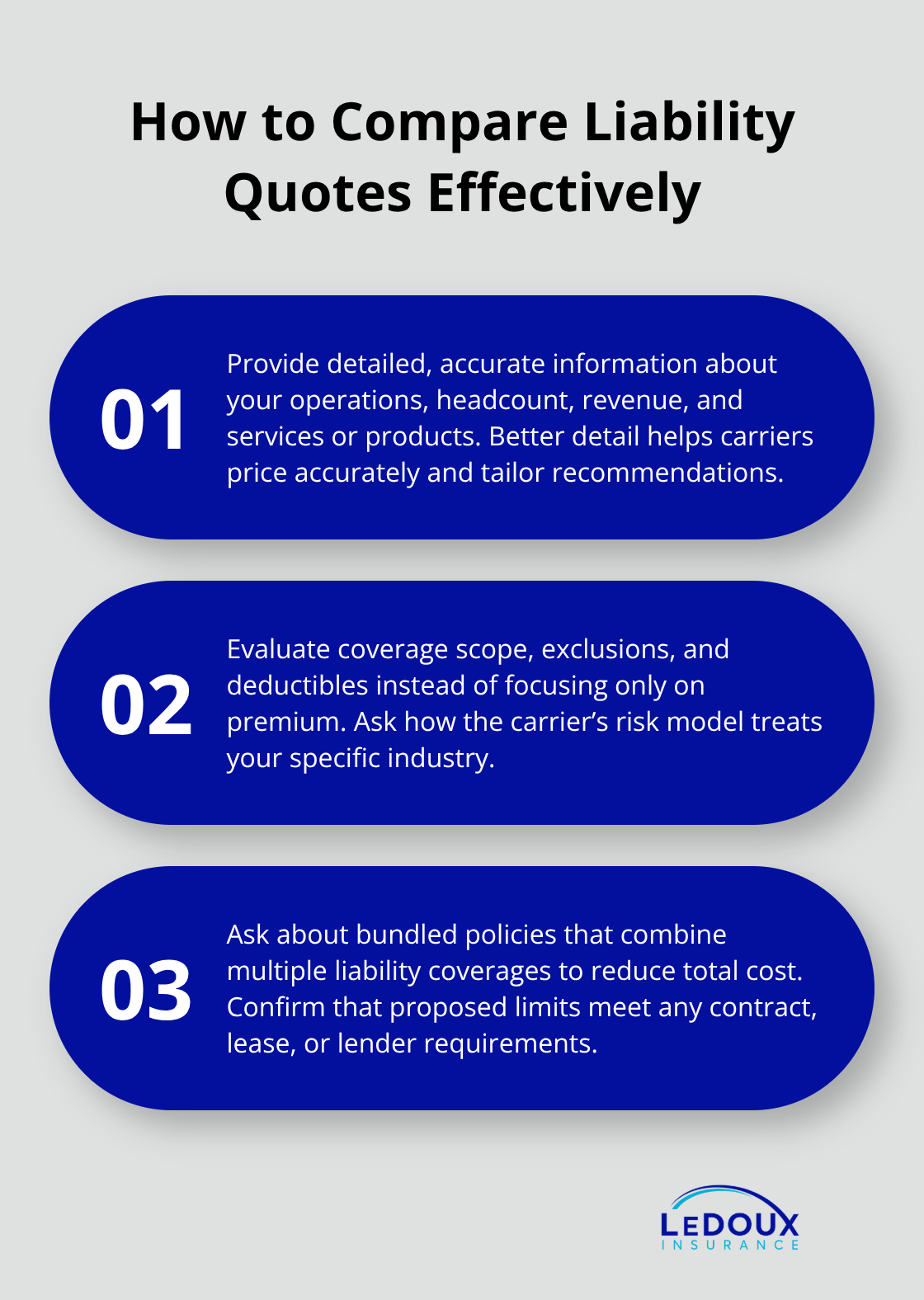
Customizing your coverage addresses local risks, but the real opportunity to reduce what you pay lies in three practical strategies that Eugene homeowners often overlook. Bundling your home and auto insurance with one carrier can save up to 25% or more on your combined premium, though the average bundle savings is 7% off your car insurance, making it a practical way to lower your annual costs. Instead of shopping auto and home policies separately, obtain quotes from the same insurer for both lines and compare the bundle total against what you’re paying now.
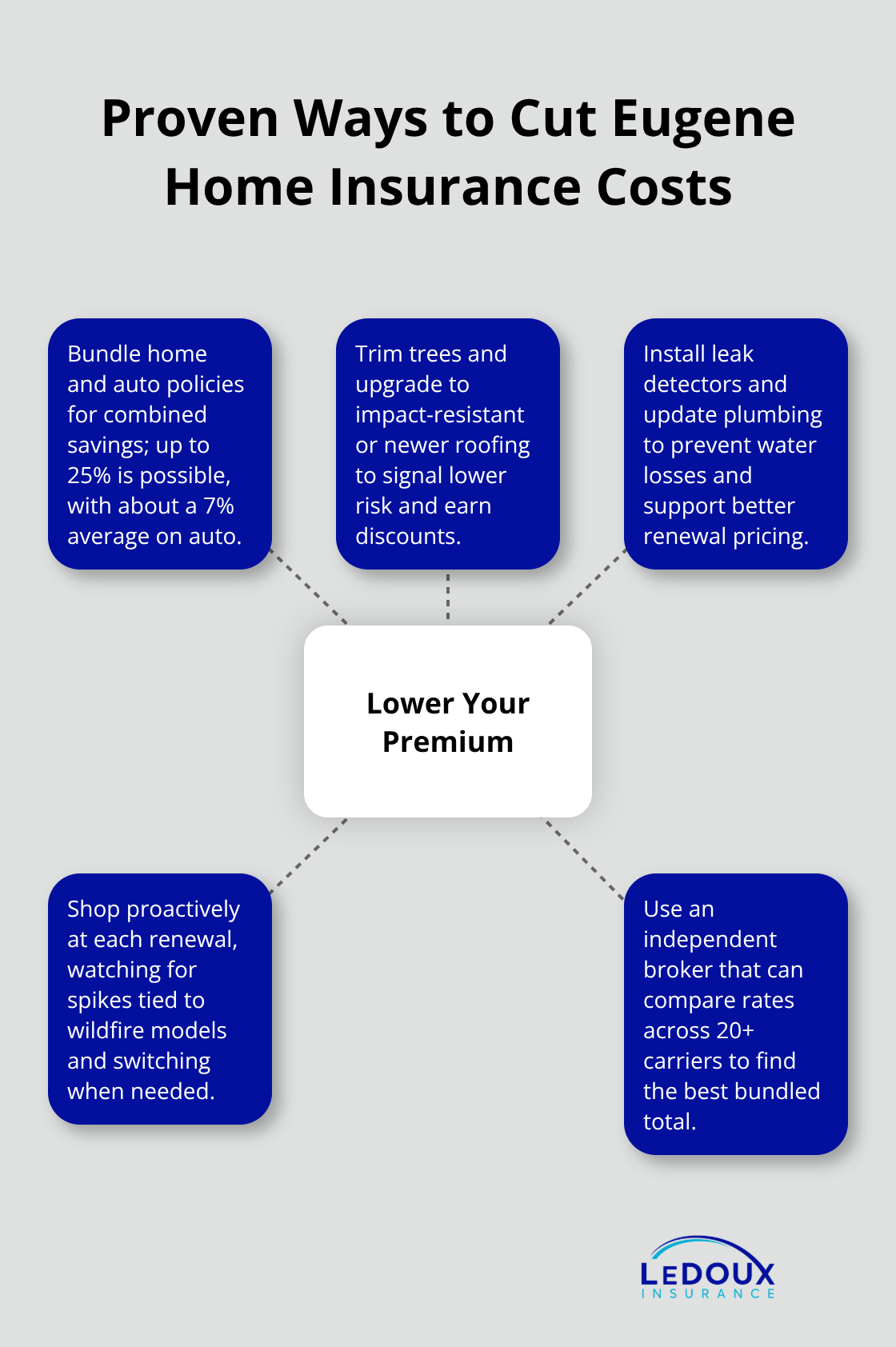
Hub-and-spoke diagram showing strategies to reduce Eugene home insurance premiums without losing protection. - Eugene homeowners insurance tips

Many Eugene homeowners stay with separate carriers simply because they haven’t run the numbers, leaving hundreds of dollars on the table each year. When you bundle, ask the insurer to apply every available discount: multi-policy bundling, protective devices like alarm systems, smart home features such as leak detectors, and loyalty or good-payer discounts. According to NerdWallet data, Oregon homeowners average $2,065 annually for coverage, but bundled customers often pay noticeably less.

Working with an independent broker rather than a captive agent matters here because brokers shop multiple carriers and can find you the best bundled rate across different companies, not just one insurer’s offerings. An independent firm like LeDoux Insurance Agency Inc. represents 20+ top-rated carriers, giving you access to competitive options that a single-company agent cannot provide.

Reduce Risk Through Home Improvements

Home improvements that reduce risk directly lower what insurers charge, and this is where you control your own premium. Trim trees away from your roof and gutters to reduce wildfire exposure and wind damage risk, potentially saving 5 to 10 percent on your annual premium depending on your location and how close you are to wooded areas. Upgrade your roof to impact-resistant materials or replace an aging roof altogether to signal lower claims risk to underwriters and justify premium reductions when you renew.

Install water detection systems or upgrade your plumbing to reduce sewer backup and leak claims (endorsements that already cost extra become less necessary with modern systems in place). Document these improvements with photos and receipts, then provide them to your insurer at renewal to give concrete evidence for a rate adjustment. The key is acting before renewal time rather than hoping an insurer notices your improvements.

Monitor Your Renewal and Shop Proactively

Eugene homeowners who actively monitor their renewal quotes every 6 to 12 months catch rate spikes early and can shop around or negotiate based on their risk-reducing actions. A 40 percent premium jump at renewal signals either wildfire-risk model changes or simple rate creep that a competing carrier might not apply. Waiting passively for renewal notices guarantees you pay whatever rate your current insurer sets, while proactive shopping and bundling keep costs aligned with your actual risk profile.

Final Thoughts

Protecting your Eugene home means addressing the specific risks your property faces, from flood and wildfire exposure to water damage from heavy rainfall. Customizing your policy with flood insurance, sewer backup protection, and earthquake coverage closes the gaps that standard homeowner policies leave open. Dwelling coverage should reflect your actual replacement costs, personal property limits should match what you own, and liability protection should match your net worth.

The money-saving strategies work together to lower your annual costs without sacrificing protection. Bundling your home and auto insurance, taking advantage of multi-policy and protective device discounts, and making risk-reducing home improvements all reduce what you pay. Shopping your renewal every 6 to 12 months prevents rate creep and catches wildfire-related pricing changes before they lock you into inflated premiums.

Gather your current policy documents and list what coverage you actually carry versus what your Eugene home requires based on its location and age. Compare your dwelling limit against current replacement costs in your area, verify your personal property coverage matches your belongings, and confirm you have flood insurance if you’re in or near a flood zone. LeDoux Insurance Agency Inc. represents 20+ top-rated carriers and specializes in Eugene homeowners insurance tips tailored to local risks, so contact us to review your current policy and get quotes that reflect both your protection needs and your budget.

The information provided in this blog is for general informational purposes only and does not constitute legal, financial, or insurance advice. Coverage options, terms, and availability may vary. Please consult with a licensed professional for advice specific to your situation. Artificial intelligence may have been used to generate text and images in some blog articles.
Flood Earthquake Landlord Insurance: Comprehensive Protection for Rentals

Rental property owners in Oregon face real exposure to natural disasters. Standard landlord insurance policies leave you vulnerable because they don’t cover flood or earthquake damage-two of the costliest threats to rental properties.

At LeDoux Insurance Agency Inc., we help landlords understand their options for flood and earthquake landlord insurance. The right coverage protects your investment and keeps your business stable when disaster strikes.

Why Standard Landlord Insurance Leaves You Exposed

Your landlord insurance policy protects against fire, storms, theft, and liability claims. It does not protect against flood or earthquake damage. Standard landlord policies explicitly exclude both perils, leaving Oregon rental property owners facing potentially catastrophic financial loss. If a flood or earthquake damages your rental property, you pay for repairs out of pocket. If the damage makes the property uninhabitable, you lose rental income with no coverage to compensate. This gap exists because flood and earthquake risks vary dramatically by location, and insurers price them separately to reflect actual exposure.

Flood Risk Extends Beyond Mapped Zones

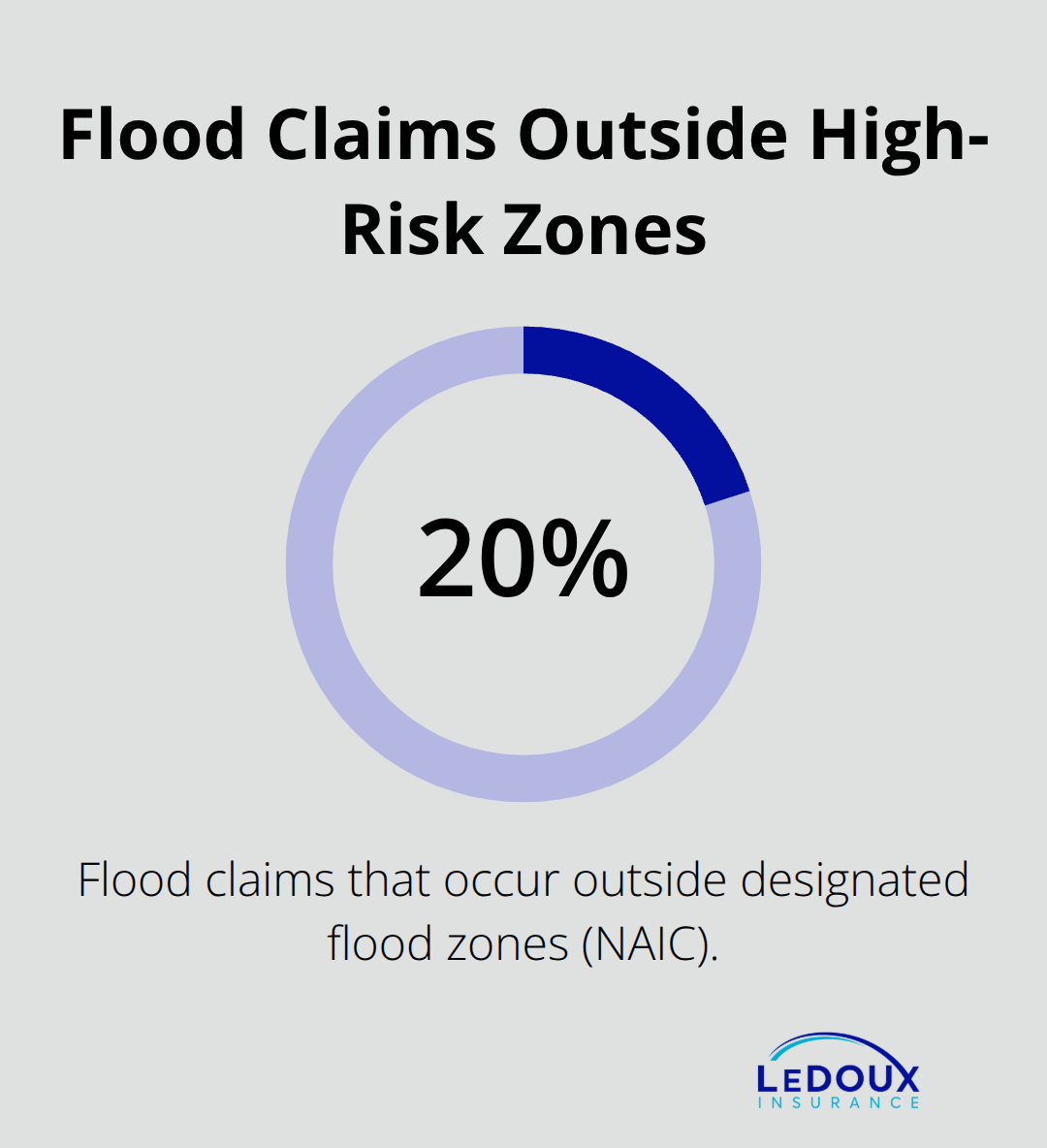
Oregon’s flood risk reaches far beyond the mapped high-risk zones. According to the National Association of Insurance Commissioners, about 20 percent of flood claims occur in properties outside designated flood zones. Many landlords assume their property is safe because it sits outside a mapped floodplain, then face devastating losses when heavy rain, river overflow, or poor drainage causes water damage.

Share of flood claims that occur outside designated flood zones

A single flood event can cost $25,000 to $100,000 or more in repairs, depending on the extent of water intrusion and damage to structure, systems, and contents. Flood insurance through the National Flood Insurance Program or private carriers costs between $500 and $2,000 annually for most Oregon rental properties-a fraction of potential repair costs. Without it, you absorb the full expense and lose rental income while repairs happen.

Earthquake Damage Compounds Property Loss

Oregon sits in an active seismic zone. The Cascadia Subduction Zone, which runs along the Pacific Coast, poses a significant long-term earthquake risk. Seismic activity damages rental properties through foundation cracks, structural failure, burst pipes, and damage to electrical and HVAC systems. Repair costs for earthquake damage average $50,000 to $150,000 for residential properties, according to the U.S. Geological Survey. Earthquake insurance typically costs $300 to $800 annually for Oregon rental properties (depending on property age, construction type, and coverage limits). Skipping this coverage means betting that your property will not experience significant seismic activity during your ownership. That bet fails when an earthquake hits.

Why These Gaps Matter Now

The financial exposure from uninsured flood and earthquake damage threatens your rental business stability. One major event wipes out years of profit and forces you to choose between expensive repairs and prolonged vacancy. Understanding what your current landlord policy actually covers-and what it does not-is the first step toward real protection. The next section walks through how flood and earthquake coverage actually works and what options exist to fill these dangerous gaps.

How Flood and Earthquake Insurance Works for Rental Properties

Two Pathways to Flood Protection

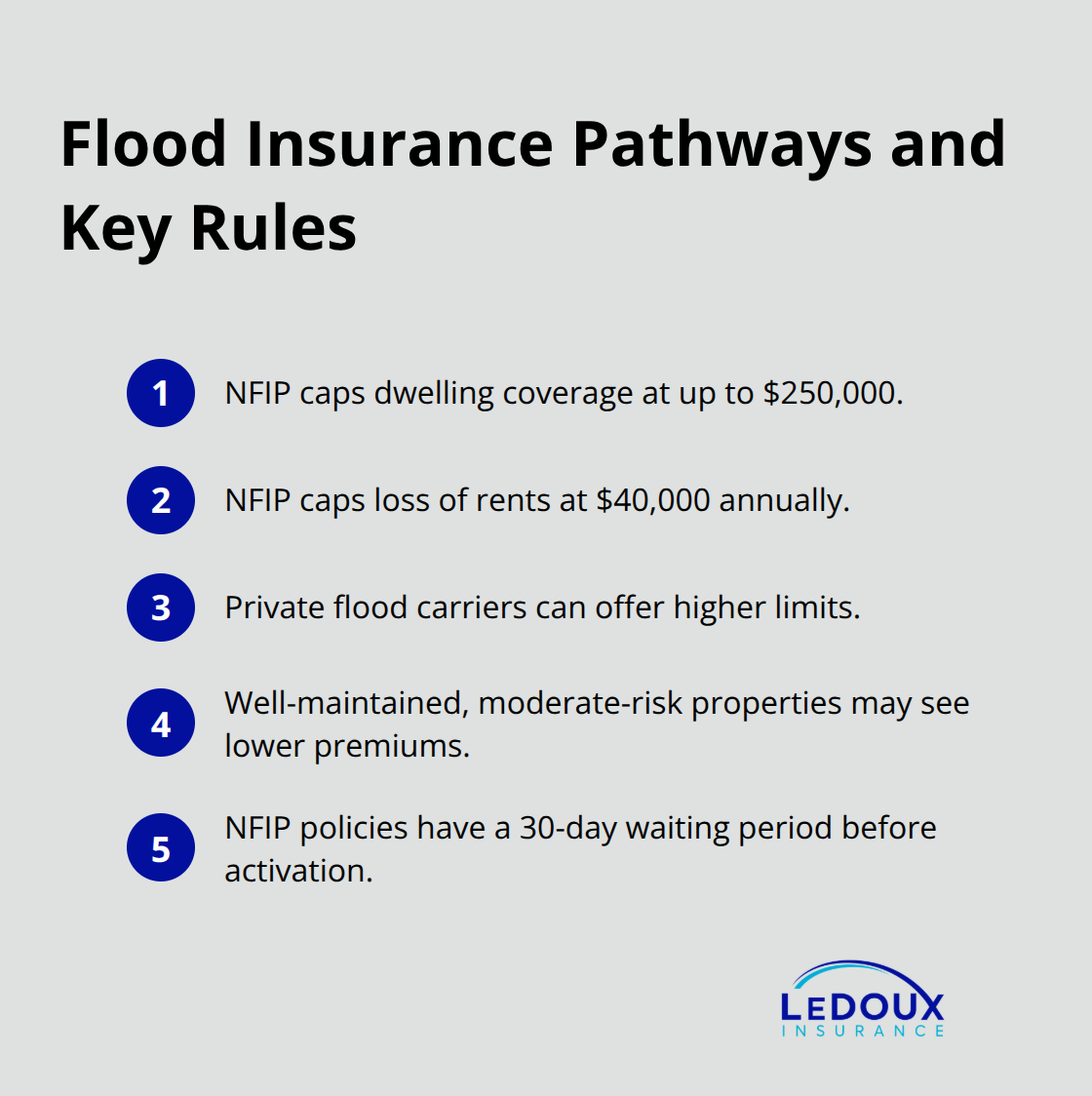
Flood insurance for rental properties operates through two distinct pathways, and understanding which one applies to your situation matters because the coverage limits and costs differ significantly. The National Flood Insurance Program, or NFIP, is a federal program that caps dwelling coverage at up to $250,000 and loss of rents at $40,000 annually. Private flood insurance carriers offer higher limits and sometimes lower premiums for well-maintained properties in moderate-risk areas. Oregon rental property owners should know that NFIP policies require a 30-day waiting period before coverage activates, so waiting until storm season to purchase protection leaves you exposed.

Overview of NFIP caps, private options, and the 30-day waiting period - Flood earthquake landlord insurance

Flood insurance covers water damage to the structure, foundation, electrical systems, HVAC equipment, and built-in appliances, but it does not cover contents or tenant belongings. The average annual premium for NFIP flood coverage on an Oregon rental property ranges from $500 to $1,200 depending on flood zone designation and elevation, according to FEMA data. If your property sits outside a mapped flood zone, you still qualify for preferred-risk rates starting around $400 annually, which is substantially cheaper than facing a $50,000 water damage bill.

How Earthquake Coverage Protects Your Structure

Earthquake insurance works differently because it covers sudden, violent ground movement that damages foundation, walls, roof, and permanently installed systems. Oregon earthquake policies typically carry deductibles of 10 to 25 percent of the coverage limit rather than fixed dollar amounts, meaning a $200,000 policy with a 15 percent deductible requires you to pay $30,000 out of pocket before coverage kicks in. This structure reflects the low-frequency but high-severity nature of seismic events.

Annual earthquake premiums for Oregon rentals average $400 to $900 based on construction type, with older masonry buildings costing more to insure than newer wood-frame structures. Combining flood and earthquake coverage with your base landlord insurance creates genuine comprehensive protection because each policy addresses specific perils your standard coverage excludes entirely.

Layering Policies for Complete Protection

The practical approach to layering these policies involves three steps. First, determine your actual flood risk through the FEMA Flood Map Service Center and ask your insurance agent whether your property qualifies for preferred-risk rates, because many landlords overpay for flood insurance on properties with minimal exposure. Second, evaluate earthquake risk based on your property’s age, construction material, and distance from known fault lines-properties built before 1980 in seismic zones face substantially higher repair costs from earthquakes, making coverage more valuable.

Third, adjust your deductibles strategically across all three policies to balance premium costs with your financial capacity to absorb losses. Many landlords set $2,500 deductibles on flood and earthquake policies while maintaining $1,000 deductibles on their base landlord policy, a structure that keeps premiums reasonable while protecting against catastrophic exposure.

Coordinating Coverage Across Multiple Carriers

Review your combined coverage limits annually because rental income needs change as property values appreciate and rents increase. If your property generates $3,000 monthly rental income, your loss-of-rent coverage should reflect at least six months of income ($18,000) to sustain your business through extended repairs. Combining policies from multiple carriers sometimes produces better overall protection than bundling everything with one insurer, though coordination becomes more complex. An independent agent who represents multiple carriers prevents gaps and overlaps that create false economy and helps you navigate the specifics of each policy’s terms.

The next section walks through how to assess your property’s individual risk profile and select the right coverage limits and carriers for your rental business.

Selecting Coverage That Matches Your Property’s Actual Risk

Assess Your Property’s Flood Risk Profile

Start with your property’s specific characteristics because flood and earthquake risk vary dramatically across Oregon, and generic coverage amounts waste money or leave you exposed. Request a detailed flood zone assessment from FEMA’s Flood Map Service Center, then cross-reference with local county assessor data on historical water damage claims in your neighborhood. Properties near creeks, in low-lying areas, or with poor drainage qualify for preferred-risk flood rates starting around $400 annually, while properties in high-risk zones pay $1,200 to $2,000. A well-maintained rental with updated electrical systems and proper drainage might qualify for significant discounts from private flood carriers that the National Flood Insurance Program cannot offer.

Evaluate Earthquake Exposure Based on Construction Type

For earthquake risk, your property’s construction type and age matter most. Wood-frame structures built after 1980 cost $400 to $600 annually to insure against earthquakes, while older masonry or unreinforced concrete buildings run $800 to $1,500 because repair costs from seismic damage are substantially higher. Contact your local building department or a structural engineer if your property was built before 1980 in a seismic zone. Retrofit costs sometimes justify earthquake coverage through lower long-term expenses when you calculate the total financial impact over your ownership period.

Compare Quotes Across Multiple Carriers

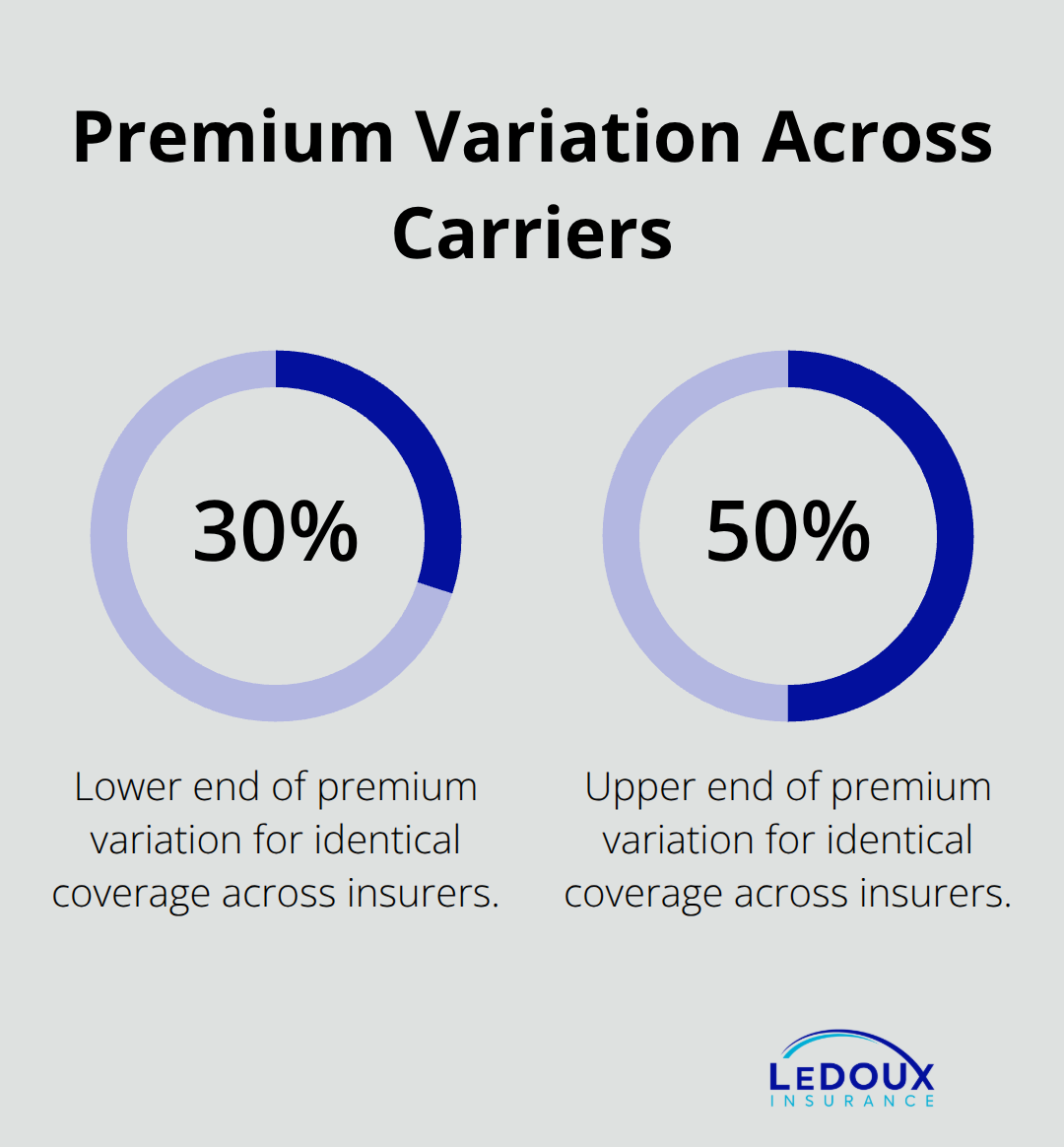
Compare actual quotes from multiple carriers because premium variation for identical coverage reaches 30 to 50 percent across insurers. The National Flood Insurance Program sets standardized rates, so NFIP quotes are consistent, but private flood carriers price based on individual property condition.

Range of premium variation for identical coverage across insurers - Flood earthquake landlord insurance

For earthquake coverage, request quotes from at least three carriers and specify your preferred deductible percentage. A 15 percent deductible costs roughly 30 percent less than a 10 percent deductible, so adjusting this lever creates real savings.

Provide each carrier with identical property details-age, square footage, construction type, roof condition, distance from flood sources, and claims history-so quotes compare apples to apples. Many landlords discover their property qualifies for preferred-risk pricing or carrier-specific discounts only after requesting detailed quotes, which can reduce annual premiums by $300 to $500 combined across all three policies. An independent agent prevents the common mistake of accepting the first quote because initial offers rarely reflect your property’s actual risk profile or available discounts.

Work with an Independent Agent for Competitive Options

An independent agent who represents multiple carriers accesses competitive options across flood, earthquake, and landlord policies simultaneously rather than forcing you into a single company’s offerings. This approach prevents gaps and overlaps that create false economy and helps you navigate the specifics of each policy’s terms. LeDoux Insurance Agency Inc. represents 20+ top-rated carriers, which means we can access competitive options across all three policy types at once. Coordination becomes more complex when combining policies from multiple carriers, but the savings and customization often justify the additional effort.

Final Thoughts

Protecting your Oregon rental property from flood and earthquake damage requires moving beyond standard landlord insurance. The gaps in conventional coverage are real, the financial stakes are high, and the solution is straightforward: add flood and earthquake policies tailored to your property’s actual risk profile. Shopping around across multiple carriers typically reveals 30 to 50 percent premium variation for identical coverage, which means comparing quotes saves hundreds of dollars annually while ensuring you have genuine comprehensive protection.

The most common mistake landlords make is treating flood and earthquake insurance as afterthoughts rather than core components of their risk strategy. They purchase base landlord policies first, then add flood and earthquake coverage months or years later, often at higher rates or with gaps in protection. Instead, approach all three policies as a coordinated system from the start, adjusting deductibles strategically across policies to balance premiums with your financial capacity to absorb losses.

We at LeDoux Insurance Agency Inc. specialize in helping Oregon landlords build comprehensive flood earthquake landlord insurance strategies that actually protect their investments. Our agents will assess your property’s actual risk profile, compare options across multiple carriers, and customize a policy that protects your rental business without overpaying for unnecessary coverage. Contact LeDoux Insurance Agency Inc. today for a free quote on comprehensive landlord coverage including flood and earthquake protection.

The information provided in this blog is for general informational purposes only and does not constitute legal, financial, or insurance advice. Coverage options, terms, and availability may vary. Please consult with a licensed professional for advice specific to your situation. Artificial intelligence may have been used to generate text and images in some blog articles.
Eugene Investment Property Insurance: Protect Your Rental Portfolio

Rental properties in Eugene generate income, but they also expose you to risks that standard homeowners insurance won’t cover. That’s where Eugene investment property insurance becomes essential.

We at LeDoux Insurance Agency Inc. help landlords understand what protection they actually need. Without the right coverage, a single liability claim or property damage event can wipe out years of rental income.

Why Rental Properties Need Different Insurance

Rental properties operate under completely different risk dynamics than homes you occupy yourself. When tenants live on your property, liability exposure skyrockets. A guest slips on ice in the driveway, a tenant’s friend gets injured in the unit, or someone claims property damage from negligence-these situations happen regularly and can result in lawsuits costing $50,000 to $300,000 or more. Standard homeowners insurance explicitly excludes rental income properties, leaving you personally liable for these claims. Oregon law doesn’t require landlords to carry specific insurance, but lenders almost always do. More importantly, without proper coverage, a single incident wipes out years of profit.

Liability Claims Hit Harder on Rental Properties

Tenants and their guests file more claims than homeowners experience. Rental properties generate more liability claims of owner-occupied homes because properties with multiple occupants create more foot traffic, more activities, and more opportunities for accidents. A tenant’s injury claim alone can cost $100,000 to defend and settle. Rental property liability coverage protects you when someone sues for bodily injury or property damage they claim resulted from your negligence as a landlord. Without adequate limits, your personal assets become targets. Most Eugene landlords carry only $100,000 in liability protection when they should carry $300,000 to $500,000 minimum.

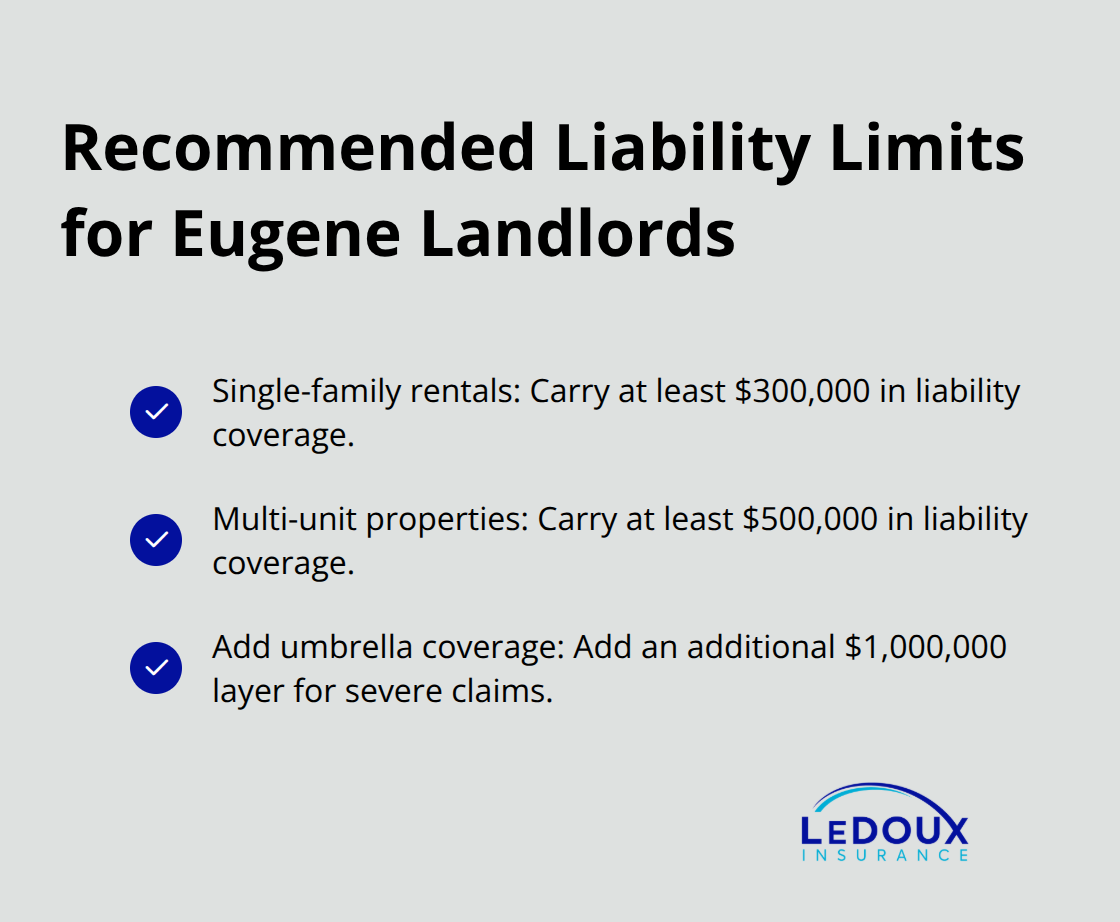
Suggested liability limits for Eugene rental property owners, including single-family, multi-unit, and umbrella coverage. - Eugene investment property insurance

Protecting Your Actual Income Stream

Rental income represents real money flowing into your business. When a fire, major water damage, or other disaster forces repairs, you lose rent while the property sits damaged. Loss of rents coverage compensates you for that lost income during the repair period, which typically lasts 30 to 90 days for significant claims. Without this coverage, you cover the mortgage, property taxes, and maintenance costs yourself while earning zero rental income. This financial gap destroys cash flow fast. The coverage pays your lost rents up to the policy limits, allowing you to maintain financial stability while repairs happen.

What Happens When You Underestimate Your Exposure

Many landlords think standard homeowners policies or minimal coverage will suffice. They won’t. Your lender requires proof of adequate protection, and your own financial security depends on it. A liability claim that exceeds your policy limits means you personally pay the difference-potentially hundreds of thousands of dollars. Property damage claims follow the same pattern (your coverage maxes out, and you absorb the rest). The gap between what you think you’re covered for and what you actually need creates serious vulnerability. Understanding these coverage options prevents costly mistakes later.

Coverage Options for Rental Properties in Eugene

Building Protection Through Dwelling Fire Policies

Structure protection through dwelling fire policies covers the building itself, but most landlords misunderstand what this means. A dwelling fire policy insures the physical structure against fire, wind, hail, theft, and vandalism, but it excludes business property like appliances you provide for tenants. The dwelling coverage limit should reflect your actual replacement cost, not what you paid for the property years ago.

If your rental cost $250,000 to build but would cost $350,000 to rebuild today due to inflation and construction costs, your coverage limit must reflect that higher figure. Eugene rental markets have appreciated significantly, yet many landlords carry outdated coverage limits based on older purchase prices. Request a professional property valuation from your insurance agent to establish accurate dwelling limits. This single step prevents catastrophic underinsurance that leaves you personally responsible for reconstruction costs exceeding your policy limits.

Liability Protection for Tenant and Guest Injuries

Liability coverage protects you when tenants or their guests suffer injuries on your property and hold you legally responsible. Most Eugene landlords start with $100,000 in liability limits, but this amount proves inadequate in today’s litigation environment. A serious injury claim involving permanent disability or multiple injured parties regularly exceeds $300,000 in damages and legal costs.

Minimum liability limits of $300,000 work well for single-family rentals and $500,000 for multi-unit properties, with umbrella coverage adding an additional $1,000,000 layer of protection. This layered approach (dwelling coverage plus liability plus umbrella) creates comprehensive protection against the most common claims that affect rental property owners. Tenants and their guests file more claims than homeowners experience, making adequate liability limits non-negotiable for your financial security.

Loss of Rents Coverage During Repairs

Loss of rents coverage compensates you for income lost when damage forces repairs. If a pipe burst floods your rental and creates two months of repair time, loss of rents coverage pays your lost rental income during that period, protecting your cash flow when you need it most. This coverage typically costs between $15 and $40 monthly depending on your annual rental income, yet most landlords skip it despite its importance to financial stability during disaster recovery.

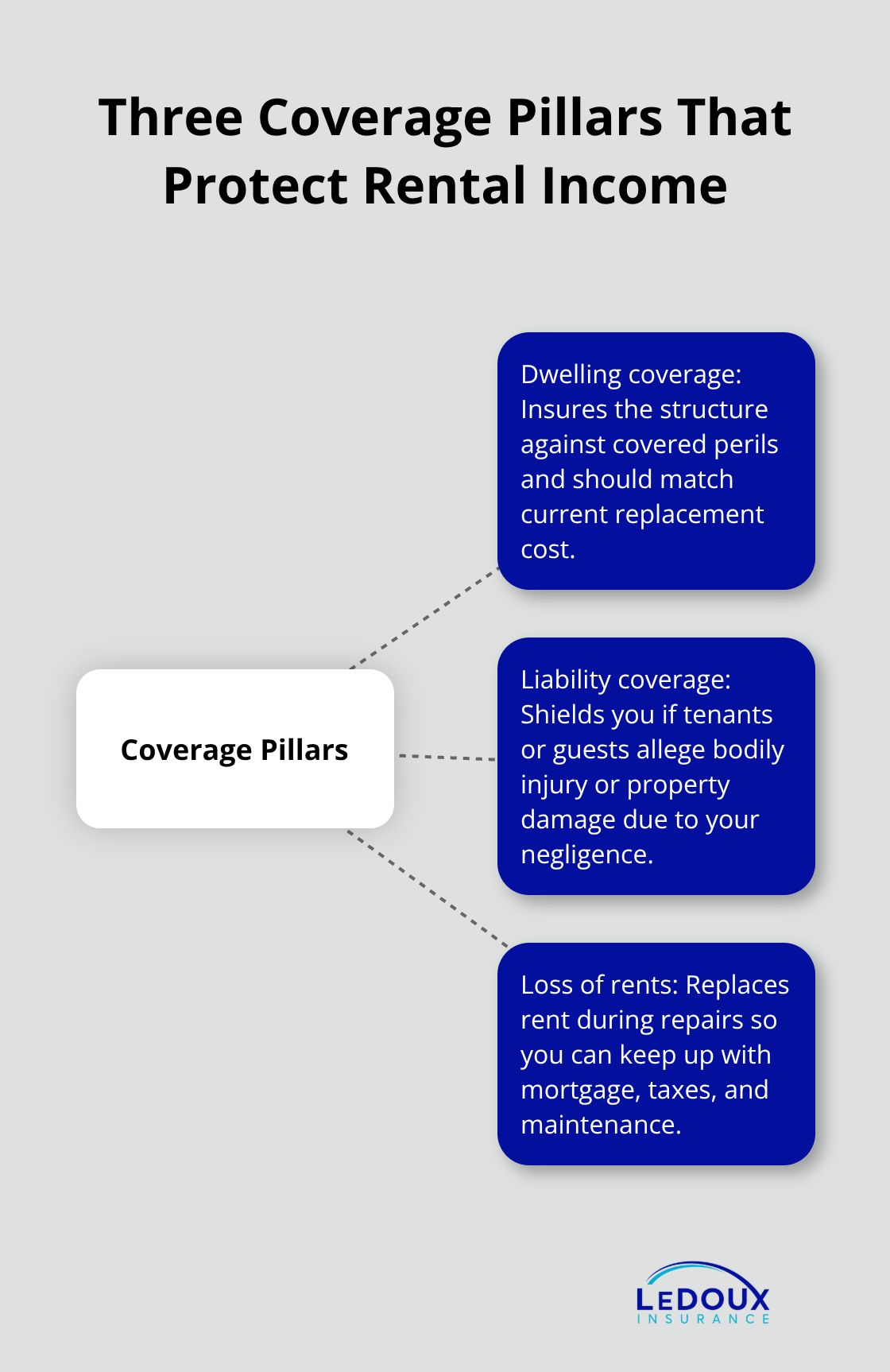
Without this protection, you cover the mortgage, property taxes, and maintenance costs yourself while earning zero rental income. The financial gap destroys cash flow fast. This coverage pays your lost rents up to the policy limits, allowing you to maintain financial stability while repairs happen. Understanding these three coverage pillars (dwelling, liability, and loss of rents) positions you to identify the gaps that leave most Eugene landlords exposed.

Visualization of the three core insurance pillars—dwelling, liability, and loss of rents—that protect Eugene rental properties. - Eugene investment property insurance

Common Gaps in Rental Property Insurance

Underinsuring Property Value

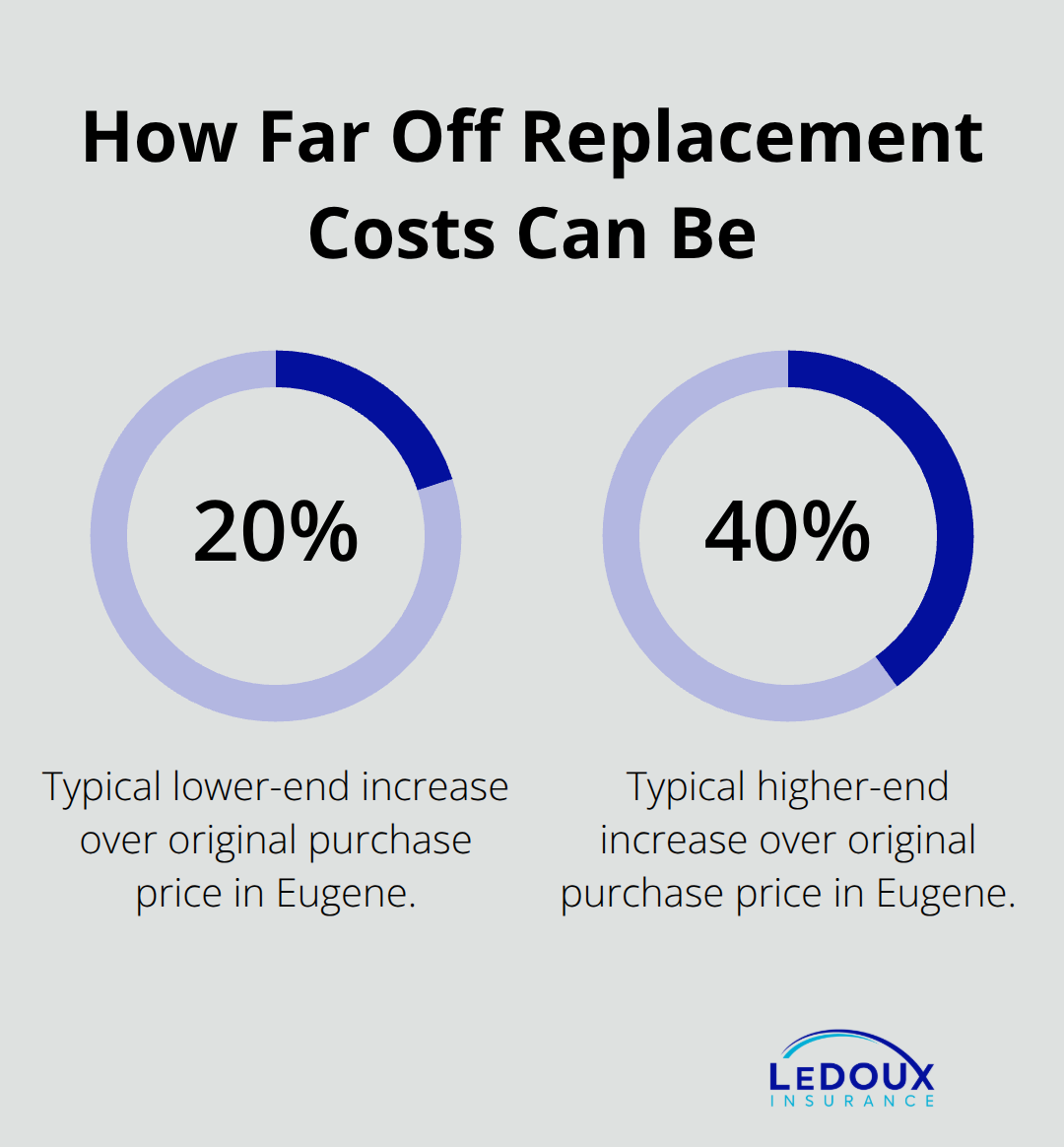
Most Eugene landlords base their dwelling coverage on what they paid for the property rather than what it would cost to rebuild today. If you purchased a rental in Eugene ten years ago for $280,000, reconstruction costs have climbed significantly due to inflation and labor shortages. A professional replacement cost assessment from your insurance agent reveals the actual figure-often 20 to 40 percent higher than the original purchase price.

Range showing how much higher modern replacement costs can be versus original purchase price for Eugene rentals.

This gap leaves you absorbing the difference when damage occurs. Your policy pays only up to its stated limit, and you cover everything beyond that amount from your own pocket. The solution requires requesting a professional replacement cost valuation from your agent annually to keep pace with market changes.

Overlooking Liability Limits

Liability limits haven’t kept pace with claim severity in today’s litigation environment. Many Eugene landlords maintain $100,000 limits that covered their exposure a decade ago, yet exposure has grown substantially. A tenant’s serious injury or a guest’s permanent disability easily generates $300,000 to $500,000 in damages and legal costs.

Your $100,000 policy maxes out immediately, leaving you personally responsible for the remainder. This gap represents the single most dangerous exposure in rental property portfolios. Try carrying $300,000 in liability limits for single-family rentals and $500,000 for multi-unit properties, with umbrella coverage adding an additional $1,000,000 layer of protection.

Failing to Update Coverage After Renovations

Landlords neglect to update coverage after renovations or property improvements. Adding a deck, upgrading electrical systems, installing new flooring, or finishing a basement increases your property’s replacement cost, but most owners never notify their insurance agent about these changes. Your policy still reflects the pre-renovation value, creating dangerous underinsurance on the improved structure.

A $40,000 deck addition that increases your home’s replacement cost should trigger a coverage limit increase, yet this oversight happens constantly. Notify your agent immediately whenever you complete renovations or major improvements. These steps cost nothing beyond the policy adjustments themselves, yet they eliminate the coverage gaps that turn disasters into financial catastrophes.

Final Thoughts

Eugene investment property insurance protects your rental portfolio from the financial devastation that comes with liability claims, property damage, and lost income. The gaps we’ve covered-underinsured property values, inadequate liability limits, and outdated coverage after renovations-represent real vulnerabilities that affect most landlords. Addressing these gaps requires action, not just awareness.

Start with your current policy documents and compare your dwelling coverage limits against a professional replacement cost assessment. Request this valuation from your insurance agent at no charge, then review your liability limits honestly. If you’re carrying $100,000 in coverage, increase it to at least $300,000 for single-family rentals or $500,000 for multi-unit properties, with umbrella coverage adding an additional $1,000,000 layer of protection.

Contact LeDoux Insurance Agency Inc. to schedule your portfolio review and identify exactly where your Eugene investment property insurance coverage falls short. We help landlords throughout the area review their entire rental portfolios and deliver competitive options tailored to your specific situation.

The information provided in this blog is for general informational purposes only and does not constitute legal, financial, or insurance advice. Coverage options, terms, and availability may vary. Please consult with a licensed professional for advice specific to your situation. Artificial intelligence may have been used to generate text and images in some blog articles.
Salem Auto Insurance Rates: Understand Your Local Premiums

Salem auto insurance rates vary significantly based on where you live and how you drive. At LeDoux Insurance Agency Inc., we help residents understand what influences their premiums and how to find better coverage options.

This guide walks you through the main factors affecting your rates, how to compare quotes effectively, and practical ways to lower what you pay each month.

What Drives Your Salem Auto Insurance Rate

Your driving record stands as the single most important factor determining what you pay for auto insurance in Salem. A DUI conviction can significantly increase your premium, as insurers view you as a higher risk. Even a speeding ticket produces similar damage, pushing costs upward. An at-fault accident with damages exceeding $2,000 adds roughly $1,173 to your six-month premium compared to a clean history. Your driving decisions directly control a substantial portion of your insurance costs. One accident or violation can lock you into higher rates for years, making accident prevention genuinely worth the effort.

Where You Live Matters More Than You Think

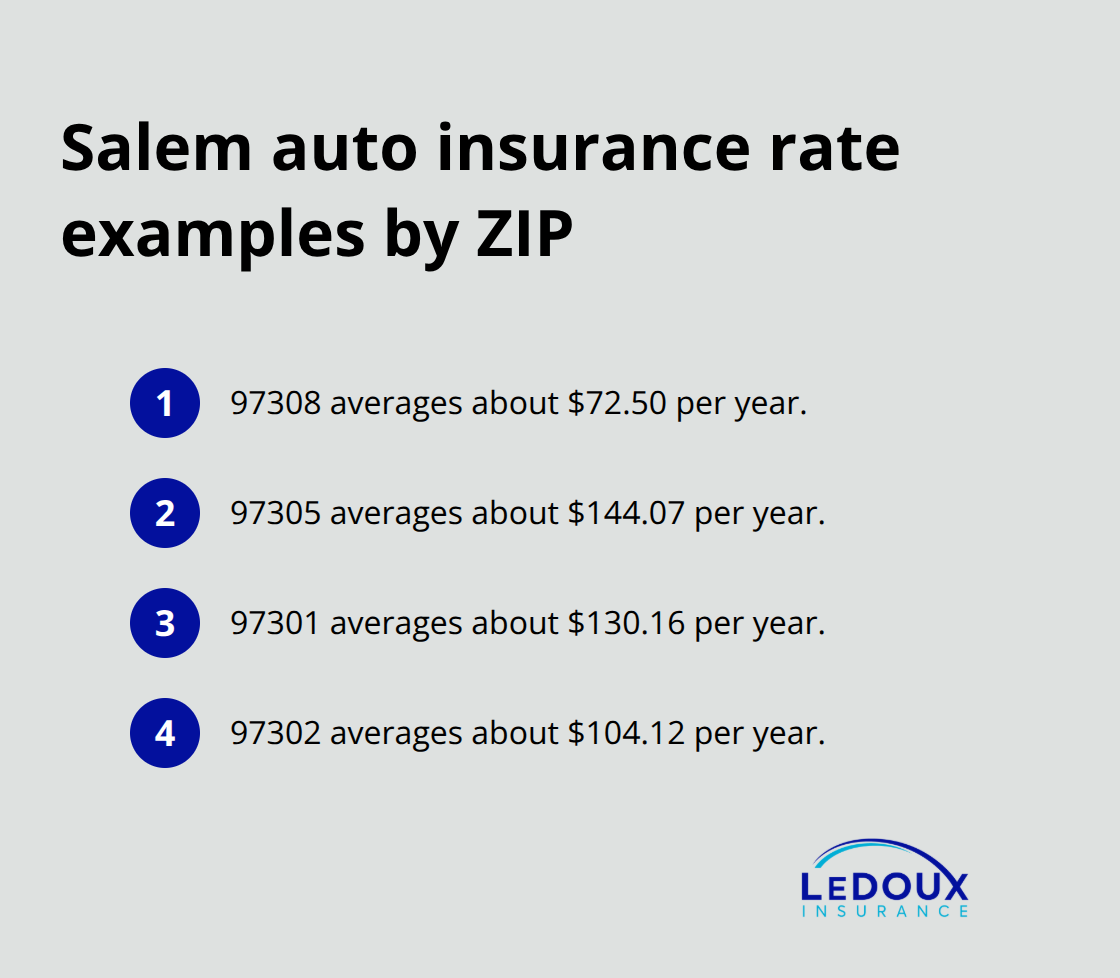
Your ZIP code in Salem creates dramatic rate differences that have nothing to do with how you drive. Zip code 97308 averages just $72.50 per year while 97305 reaches $144.07 annually-nearly double for living just a few miles away. The 97301 area runs $130.16 yearly, while 97302 sits at $104.12.

Four example ZIP code averages showing how Salem auto insurance costs vary by neighborhood.

These variations reflect local traffic density, theft frequency, and claim patterns in each neighborhood. Higher-density areas with more accidents naturally carry steeper premiums. Before you accept a quote, confirm your ZIP code is entered correctly, as a single-digit error can misrepresent your actual rate significantly.

Age and Vehicle Choice Complete the Picture

Teenagers in Salem face $2,945 for six months of coverage, while drivers in their 20s average $1,012-nearly three times cheaper. Drivers aged 50 pay $691 for six months. Your vehicle type also shapes rates significantly since repair costs and safety features vary widely. A Tesla or Audi typically costs more to insure than a Toyota Corolla due to higher repair expenses and replacement parts. Older vehicles with strong safety ratings often qualify for lower premiums than newer luxury models. The 2017 Toyota Camry LE used in local rate studies represents a midpoint vehicle-not the cheapest option but far less expensive than high-performance or luxury vehicles.

How Credit Scores Influence Your Premiums

Your credit history affects what insurers charge you in Salem, though the impact varies by carrier. A driver with very poor credit (below 580) pays roughly $1,562 for six months, while someone with exceptional credit (above 750) pays $636-a difference of $926. Moving from very poor to fair credit alone saves about $632 over six months. Approximately 36% of Salem drivers fall into the average credit range (580–679), placing them in the middle tier for pricing. Insurers view credit scores as predictors of claim likelihood, so improving your financial health directly lowers your insurance costs.

Understanding How These Factors Work Together

Each factor influences your rate independently, but they compound when combined. A teenager with a recent speeding ticket living in the 97305 ZIP code faces substantially higher premiums than a 50-year-old with a clean record in the 97308 area. Insurance companies weigh these factors differently, which explains why two drivers with similar profiles receive different quotes from different carriers. This variation makes shopping around essential-what one insurer charges may be undercut significantly. Understanding these rate drivers positions you to compare quotes effectively and identify which factors you can control. Contact LeDoux Insurance Agency to discuss your Salem auto insurance options.

Comparing Salem Insurance Quotes Like a Pro

Getting quotes from multiple carriers in Salem isn’t optional if you want competitive rates. Data shows that 39% of Zebra customers in Salem switched insurers specifically because they were overpaying with their current provider, which means most drivers sitting with their existing rates are likely leaving money on the table. Country Financial quotes at $484 for six months in Salem while GEICO runs $532 and State Farm reaches $599 for the same coverage, demonstrating that carrier choice alone can shift your premium by over $100 every six months.

Hub-and-spoke graphic explaining the benefits of comparing Salem auto insurance quotes. - Salem auto insurance rates

Request Quotes from Multiple Carriers

The fastest approach involves requesting quotes online from at least three to five major carriers simultaneously rather than shopping one at a time, which wastes hours and makes comparison harder. When you request quotes, enter your exact ZIP code correctly since even a single digit error can misrepresent your local rate by tens of dollars monthly. Use the same coverage limits across all quotes so you’re comparing apples to apples, not different protection levels masquerading as rate differences. Most carriers offer online quote tools that take 5-10 minutes and don’t require a phone call, making the process painless if you have your driver’s license and vehicle information handy.

Understand Coverage Types and Deductibles

Full-coverage policies in Salem average $1,416 yearly and include collision, comprehensive, and liability protection, but liability-only policies cost substantially less since they exclude collision and comprehensive. Oregon’s minimum liability requirements are $25,000 bodily injury per person, $50,000 per accident, and $20,000 property damage, plus $15,000 personal injury protection and matching uninsured motorist coverage. Higher liability limits protect your personal assets if you cause a serious accident, which matters far more than minimum coverage if you own a home or have savings to protect.

When comparing quotes, confirm whether each carrier is quoting the same deductible amounts since a $500 deductible costs less than a $250 deductible but means paying more out-of-pocket after a claim. Uninsured motorist coverage is mandatory in Oregon and should match your liability limits to maintain consistent protection across scenarios.

Identify and Claim Your Discounts

Ask each carrier specifically what discounts apply to your situation before accepting their quote, since discounts for bundling, safe driving, good student status, or low mileage can reduce your actual cost by 10-25% from the base quote. Bundling auto insurance with homeowners or renters coverage delivers meaningful savings in Salem, with examples showing reductions from $140 monthly to $80 monthly when combining policies with a single carrier. Military discounts, good driver discounts, anti-theft device discounts, and student discounts each reduce premiums, but you must ask about them explicitly since carriers rarely volunteer these automatically.

Percentage chart showing typical discount ranges available to Salem drivers. - Salem auto insurance rates

Usage-based programs that monitor your driving through a mobile app reward safe driving habits with lower premiums, making them valuable if you drive cautiously and log fewer miles than average. Low-mileage discounts apply if you drive significantly less than the standard 10,000 miles annually that insurers use for rate calculations, so discuss your actual driving distance during quotes. Paying your full premium upfront rather than monthly installments sometimes qualifies for a discount worth 5-10% annually.

The most effective approach involves telling each carrier upfront about your situation-whether you’re a student, have safety features installed, work from home, or qualify for any professional or employer discounts-rather than hoping they discover discounts on their own. Once you’ve collected quotes and identified your best options, the next step involves taking action to lower your premiums even further through strategic choices you control directly.

Cut Your Salem Premiums Through Smart Policy Decisions

Bundle Your Policies for Immediate Savings

Bundling auto insurance with homeowners or renters coverage delivers the fastest path to lower premiums in Salem. One Salem driver reported dropping from roughly $140 monthly to $80 monthly after combining auto and home policies with a single carrier, cutting costs by 43 percent. Another household reduced their two-vehicle premium from about $220 monthly to substantially less through bundling. Most carriers offer 10–25 percent reductions when you consolidate policies, making this the single most effective strategy you control directly.

Different insurers weight bundling discounts differently, so comparing actual bundled quotes matters far more than accepting initial offers. Some carriers offer aggressive bundling discounts while others reserve them for specific policy combinations. As an independent insurance agency serving Salem with over 40 years of local experience, LeDoux Insurance Agency represents 20+ top-rated carriers and can help you explore bundling options across multiple providers to find your best rate.

Maintain a Clean Driving Record

Your driving record shapes your premium far more than any other single factor you can influence going forward. A clean record over the next three to five years gradually lowers your rates as violations and accidents age off your record, while even one speeding ticket adds roughly $954 to your six-month premium in Salem. That single violation costs you approximately $1,908 yearly in increased premiums, making accident and violation avoidance extraordinarily valuable financially.

Each decision you make behind the wheel directly impacts what you’ll pay for insurance months and years later. The financial consequences of poor driving choices extend far beyond immediate ticket costs-they compound across multiple policy renewal periods.

Qualify for Low-Mileage Discounts

Discussing low-mileage discounts with insurers matters significantly if you work from home, use public transportation, or drive substantially less than the standard 10,000 miles annually that rate calculations assume. Drivers logging 5,000 miles yearly or fewer often qualify for meaningful discounts, sometimes reducing premiums by 10–15 percent.

Usage-based programs that monitor your driving through a mobile app reward safe driving habits with lower premiums, making them valuable if you drive cautiously and log fewer miles than average. These programs track your actual mileage and driving patterns, providing concrete data that supports your discount request.

Activate Safety Device Discounts

Safety device discounts apply when your vehicle includes anti-theft systems, automatic emergency braking, collision avoidance technology, or similar features that reduce claim likelihood. Modern vehicles with these features built-in automatically qualify, while aftermarket anti-theft devices on older vehicles also trigger discounts.

Ask each carrier to confirm which safety features on your specific vehicle qualify for reductions rather than assuming your car’s equipment generates savings automatically. The specific features that qualify vary by insurer, so verification prevents missed opportunities for lower rates.

Final Thoughts

Salem auto insurance rates reflect factors you control and factors you cannot, but understanding both helps you pay less than you currently might. Your driving record, vehicle type, age, location, and credit history combine to shape what insurers charge you. While you cannot change your age or instantly relocate to a cheaper ZIP code, you absolutely can improve your driving habits, maintain clean records, and make strategic policy choices that lower your premiums immediately.

The most effective path forward involves three concrete steps: request quotes from multiple carriers using identical coverage limits so you see real rate differences, ask each carrier about every discount you might qualify for (bundling, low-mileage, safety device, good driver, and student discounts), and take action on the strategies within your control whether that means bundling policies for 10-25 percent savings or committing to safer driving that gradually reduces your rates over time. At LeDoux Insurance Agency Inc., we represent 20+ top-rated carriers and help Salem residents find competitive rates tailored to their specific situations. Contact LeDoux Insurance Agency to explore your options across multiple carriers simultaneously and identify which discounts apply to your profile.

The information provided in this blog is for general informational purposes only and does not constitute legal, financial, or insurance advice. Coverage options, terms, and availability may vary. Please consult with a licensed professional for advice specific to your situation. Artificial intelligence may have been used to generate text and images in some blog articles.
Salem Liability Insurance Rates: What Local Firms Pay

Salem liability insurance rates vary significantly based on your business type, coverage choices, and claims history. At LeDoux Insurance Agency Inc., we help local firms understand what drives these costs and how to reduce them.

This guide breaks down the factors affecting your premiums, proven strategies to lower expenses, and current market trends shaping Salem’s insurance landscape.

What Drives Liability Insurance Costs for Salem Businesses

Industry Type Sets Your Premium Foundation

Your industry shapes your premium more than almost anything else. A construction firm faces vastly different risks than a consulting business, and insurers price accordingly. Salem’s business mix includes retail, professional services, construction, tech, hospitality, and healthcare-each with distinct liability profiles.

List of Salem industries with distinct liability profiles - Salem liability insurance rates

A roofing contractor operating in Salem will pay substantially more than a web designer because fall hazards, equipment accidents, and property damage claims occur far more frequently in trades. Seasonal weather patterns in Oregon also matter; winter storms and ice increase accident frequency, which ripples through local pricing.

When you request a quote, insurers evaluate your specific industry classification first, then layer in other factors. This classification determines the baseline risk assessment before any other consideration enters the picture.

Coverage Limits and Deductibles Shape Your Bottom Line

The coverage limits you select directly determine your premium cost. Choosing a $1 million general liability limit costs significantly more than $500,000, but the difference isn’t always proportional-it depends on your insurer and risk profile. Your deductible choice works the opposite way: higher deductibles lower premiums because you absorb more of the loss yourself.

Many Salem businesses select $1,000 deductibles to balance affordability with reasonable out-of-pocket protection. Lower deductibles ($500) appeal to firms with tight cash flow, though they pay higher monthly or annual premiums. The framework matters too-bundling general liability with property coverage into a business owners policy typically lowers your total cost compared to purchasing each separately.

Claims History: Your Most Controllable Factor

Claims history is the factor you can influence most over time. A clean record with zero claims over five years positions you for better renewal rates at your next policy anniversary. One significant claim can increase your premium by 10% to 30% depending on severity and your insurer’s underwriting guidelines.

Multiple claims within three to five years signal higher risk, and some carriers may decline renewal entirely. Local claim frequency in Salem affects community-wide pricing as well; if your ZIP code experiences higher theft or accident rates, all businesses there pay slightly more regardless of individual history. This is why ZIP code matters-97301 averages $1,666 annually for full-coverage auto insurance, while 97306 averages $1,539, according to Policygenius analysis using Quadrant Information Services data. Safer neighborhoods with lower incident rates see more competitive quotes across the board.

Understanding these three pillars-industry risk, coverage structure, and loss experience-reveals why your neighbor’s quote differs from yours. The next section shows how Salem businesses actively reduce these costs through concrete strategies.

How Salem Businesses Cut Insurance Costs Without Cutting Coverage

Safety Programs Deliver Measurable Premium Reductions

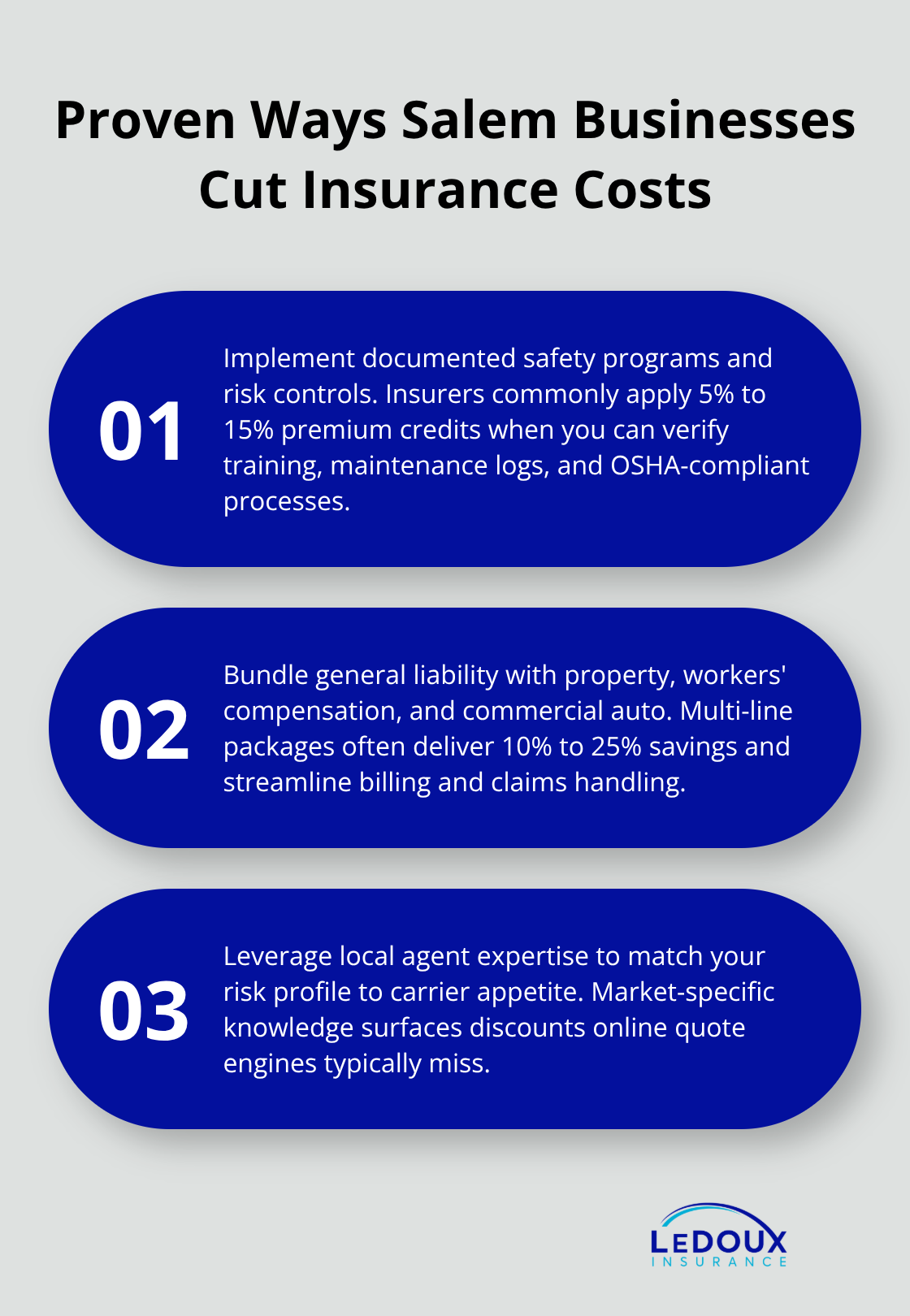
Safety investments reduce premiums faster than most Salem business owners realize. Insurers offer concrete discounts for documented safety programs-typically 5% to 15% off your annual premium depending on what you implement.

Three cost-reduction strategies for Salem liability insurance

Installing fire suppression systems, implementing equipment maintenance logs, or establishing written safety programs and documented risk controls signals lower risk to underwriters. Construction firms that maintain OSHA compliance records qualify for steeper discounts than those without documentation. The key is proving your risk controls through paperwork; verbal commitments mean nothing to underwriters.

A roofing contractor’s fall-prevention program might earn 10% savings with one carrier and only 3% with another. You need an agent who knows which carriers value your particular risk controls. Local expertise matters-national online quote services can’t match that level of specificity when identifying which safety measures your specific insurer rewards most.

Bundling Policies Unlocks Substantial Savings

Bundling general liability with property, workers’ compensation, and commercial auto into a single policy package consistently delivers 10% to 25% savings compared to buying each separately, according to industry data on multi-line discounts. A Salem retail business might pay $1,200 annually for standalone general liability, but bundling it with property and workers’ comp through the same carrier drops the total cost to roughly $2,400 for all three rather than $3,100 purchased individually.

Independent agents who represent multiple A-rated carriers (Chubb, Travelers, The Hartford, CNA, and Liberty Mutual) can shop your entire risk across carriers to find the best bundle pricing for your specific profile. Quotes typically arrive within 24 to 48 hours, so you’re not waiting weeks for options. The bundling strategy also simplifies claims handling and policy management through a single point of contact, reducing administrative headaches when something goes wrong.

Local Market Knowledge Beats Online Platforms

Agents in Salem know which carriers offer the strongest multi-line pricing for your industry; this competitive knowledge is impossible to replicate through online platforms that lack market-specific intelligence. When you work with someone familiar with Salem’s business landscape-retail, professional services, construction, tech, hospitality, and healthcare-they identify opportunities you’d miss on your own. These agents understand local risk factors, seasonal patterns, and which carriers actively compete for your type of business.

Getting competitive quotes requires more than entering data into a form. It demands someone who understands your industry’s specific exposures and can match you with carriers that value your risk profile. This is where the next section becomes critical: understanding current market trends that shape what Salem businesses actually pay.

What Salem Businesses Actually Pay Right Now

Carrier Competition Shapes Salem’s Rate Landscape

Oregon’s insurance market is fiercely competitive, and Salem sits in the middle of that competition where rates shift monthly based on carrier strategy and local risk data. State Farm dominates Oregon with the lowest average full-coverage auto rates at roughly $992 yearly, followed by USAA at $1,050 and COUNTRY Financial at $1,116 according to Policygenius analysis using Quadrant Information Services data. This competitive pressure between major carriers filters down to general liability pricing too-when State Farm or USAA undercuts competitors on personal auto, those same carriers often adjust commercial rates to maintain market share.

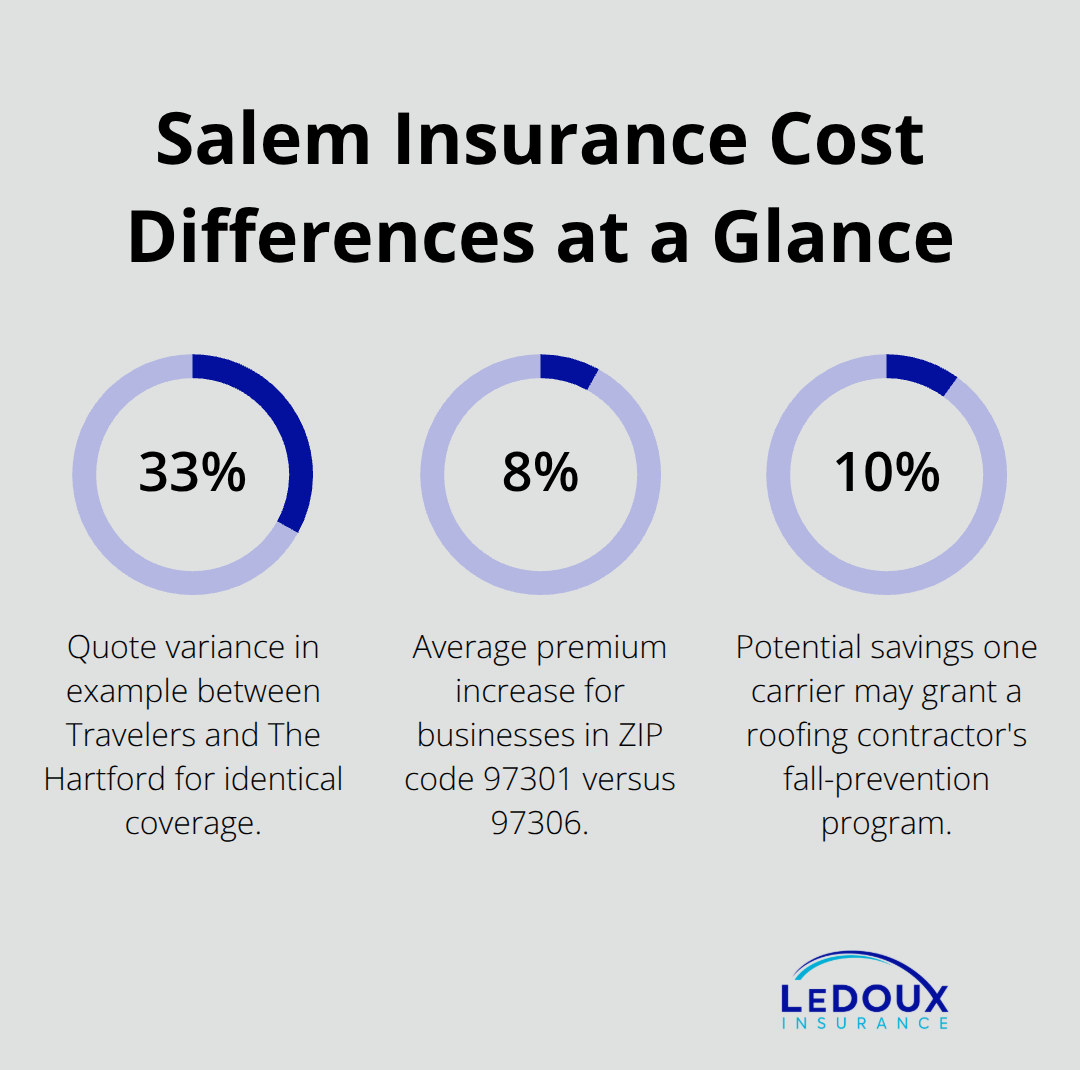
The result is that Salem businesses shopping around receive wildly different quotes from different insurers for identical coverage. One contractor might pay $1,800 annually with Travelers while the same coverage costs $1,200 with The Hartford. This 33% difference exists because carriers weight risk factors differently and compete aggressively for specific industry segments.

Percentage differences affecting Salem business insurance costs - Salem liability insurance rates

How Different Carriers Price Your Risk

Salem’s retail businesses experience fierce competition from carriers like CNA and Liberty Mutual, which means quotes can drop 15% to 20% simply by switching providers at renewal. The carriers active in Salem-Chubb, Travelers, The Hartford, CNA, Liberty Mutual, and 30+ others-all price differently based on their underwriting appetite and claims experience in your specific ZIP code. Shopping multiple carriers isn’t optional if you want competitive rates; it’s the only way to find what your actual risk costs in today’s market.

ZIP Code and Local Claims Activity Drive Pricing

Local claim frequency directly impacts what you pay because insurers analyze Salem’s accident and theft data by neighborhood. ZIP code 97301 experiences higher claims activity than 97306, so businesses in 97301 pay approximately 8% more on average for the same coverage. This isn’t punishment-it’s actuarial reality. When a particular area records more property damage claims, auto accidents, or worker injuries, insurance companies raise rates across that zone to match expected losses.

A construction firm operating in 97301 might pay $2,400 annually for general liability while an identical firm in 97306 pays $2,200 for the same policy limits and deductibles. Your location within Salem matters as much as your industry type.

Seasonal Weather Patterns Affect Annual Costs

Winter weather patterns in Oregon drive seasonal claim spikes-ice and snow in January through March increase accident frequency, which carriers factor into annual pricing. If your business operates year-round in Salem, you’re already paying for those seasonal risk months even if your specific claims history is clean. Requesting quotes from multiple carriers using your actual ZIP code produces more accurate pricing than statewide averages.

Final Thoughts

Salem liability insurance rates reflect your industry, coverage choices, claims history, and location-but you control more than you might think. Shopping multiple carriers uncovers 15% to 30% savings on identical coverage, and implementing documented safety programs cuts premiums by 5% to 15% depending on your insurer. Local agents who represent 20+ carriers can match you with insurers that actively compete for your business type and reward the specific risk controls you’ve implemented.

Contact LeDoux Insurance Agency Inc. with your basic business details-industry, annual revenue, employee count, and claims history-and we’ll request quotes from carriers that fit your profile. We deliver competitive options within 24 to 48 hours so you see what Salem liability insurance rates actually cost for your specific risk. Most Salem businesses discover they’ve overpaid simply because they haven’t compared multiple carriers in years.

Reach out today for a quote and stop leaving money on the table.

The information provided in this blog is for general informational purposes only and does not constitute legal, financial, or insurance advice. Coverage options, terms, and availability may vary. Please consult with a licensed professional for advice specific to your situation. Artificial intelligence may have been used to generate text and images in some blog articles.
Salem Condo Insurance Options: Choose the Right Policy for Your Building

Condo ownership in Salem comes with unique insurance challenges that many owners overlook. Your building faces specific risks, from Oregon’s wet winters to aging infrastructure, that require thoughtful coverage decisions.

At LeDoux Insurance Agency Inc., we help Salem condo owners navigate their Salem condo insurance options with clarity. The right policy protects both your investment and your financial future.

Why Salem Condo Insurance Matters

The Coverage Gap Between Master Policies and Your Unit

Salem condo owners face real vulnerabilities that standard homeowners policies don’t address. Your condo sits within a building where you control your unit but share responsibility for common areas with dozens of other owners. This split ownership creates coverage gaps that leave many owners underinsured. The condo association’s master policy covers the building’s roof, exterior walls, and common hallways, but it stops at your unit’s interior walls. That means damage to your kitchen cabinets, flooring, appliances, and personal belongings falls entirely on you. If the master policy has a $500,000 limit and the building suffers major damage, your individual claim competes with all other unit owners for those funds. Many owners learn this problem only after a loss, when it’s too late to add coverage.

Oregon’s Wet Winters and Water Damage Risks

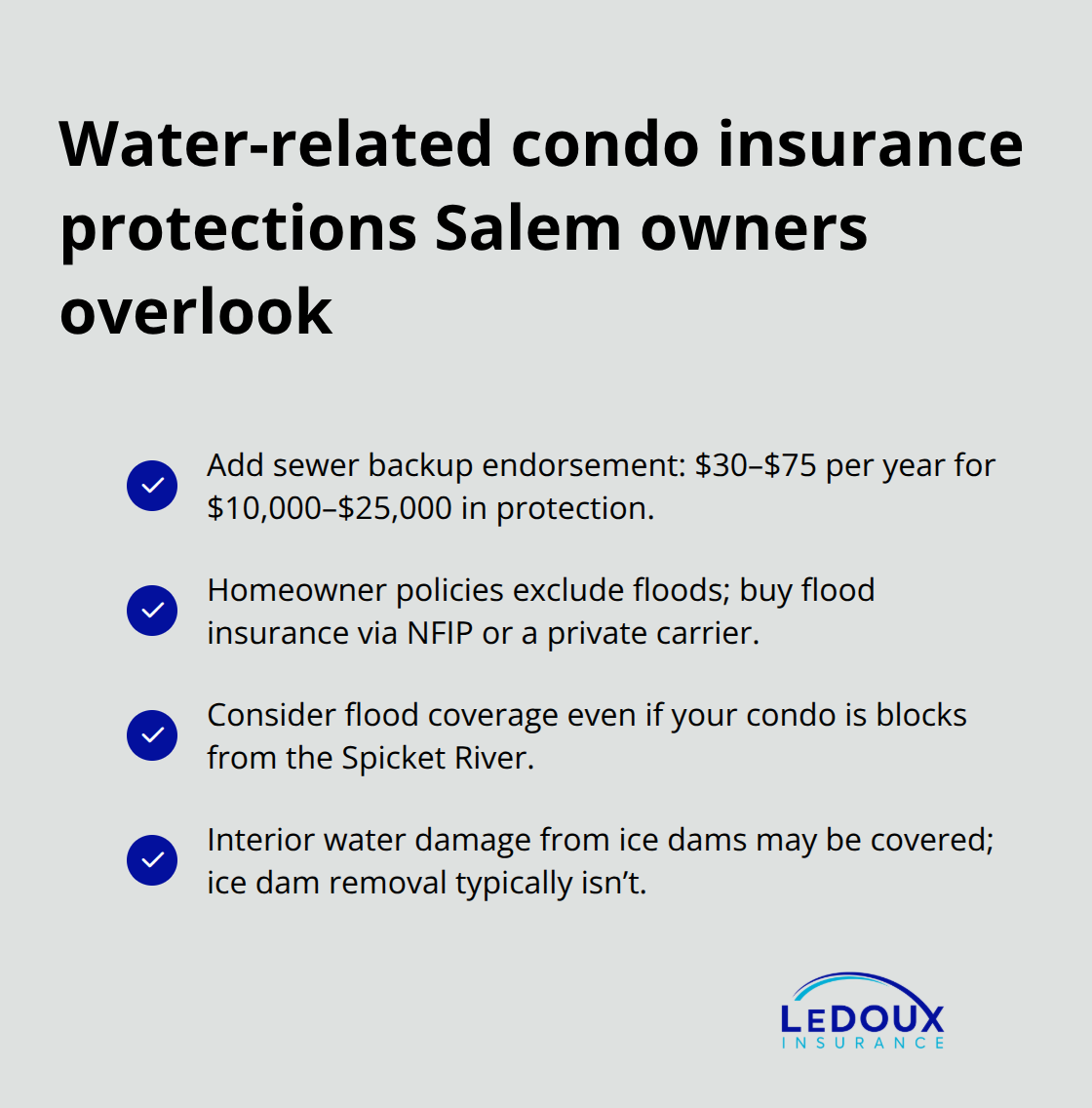
Oregon’s wet winters create specific threats to Salem condos that most owners underestimate. Ice dams form regularly on north-facing roofs, and while interior water damage from ice dams may be covered, the removal of the ice dam itself typically isn’t. Sewer backups happen frequently during heavy rainfall, yet standard condo policies exclude this damage entirely-you need a separate endorsement costing roughly $30 to $75 annually for $10,000 to $25,000 of protection. Homeowner insurance policies do not cover damage from floods. Federally-backed flood insurance is available for all structures, and even Salem condos blocks away from the Spicket River should carry this protection through the National Flood Insurance Program or a private carrier.

Checklist of Salem condo water-damage coverages and endorsements for Salem condo owners - Salem condo insurance options

Building Age and Underwriting Challenges

Older Salem condo buildings built before 1980 face additional scrutiny from insurers regarding roof age, wiring, and plumbing systems, which can limit your coverage options unless you work with an independent agent accessing multiple carriers. Your unit’s value matters too-Salem’s proximity to the Massachusetts border drives high property values, and the New Hampshire median rebuild cost sits around $508,911. If your condo is valued over $1.5 million or contains valuable contents, standard policies leave dangerous gaps that require a consultative approach with multiple carriers to address properly. Understanding these building-specific factors helps you identify what coverage you actually need.

Coverage Options for Salem Condo Owners

What Your HOA Master Policy Actually Covers

Your condo association’s master policy protects the building’s structure-the roof, exterior walls, common hallways, elevators, and grounds-but the scope varies significantly between policies. Some master policies extend into individual units to cover flooring, countertops, and cabinetry, while others stop at your interior walls entirely. This variation determines exactly what you must insure yourself.

Request your HOA’s master policy document before purchasing your unit owner’s coverage. Many Salem condo owners skip this step and end up either over-insuring what the master policy covers or leaving dangerous gaps in personal protection. The master policy also has aggregate limits-if your building suffers major damage, your claim competes with all other unit owners for those funds. A $500,000 master policy limit sounds substantial until 30 units file claims simultaneously.

Salem’s proximity to Massachusetts and higher property values mean reconstruction costs often exceed standard limits, making your individual unit owner’s policy essential regardless of what the master covers. Your association funds the master policy through maintenance fees, so review your HOA documents to understand exactly what premium you’re already paying for shared coverage.

Your Individual Unit Owner’s Policy (HO6)

Your individual unit owner’s policy, called an HO6, covers interior improvements, personal belongings, and liability for injuries that occur inside your unit. This policy protects your kitchen cabinets, flooring, appliances, furniture, electronics, and clothing-everything the master policy doesn’t cover.

Personal liability coverage under HO6 is equally important; if someone slips in your unit and sues you, this coverage defends you and pays medical expenses up to your policy limits. Loss of use coverage reimburses lodging and meal costs if your unit becomes uninhabitable after a covered loss, a protection many owners underestimate.

Protecting High-Value Items and Special Circumstances

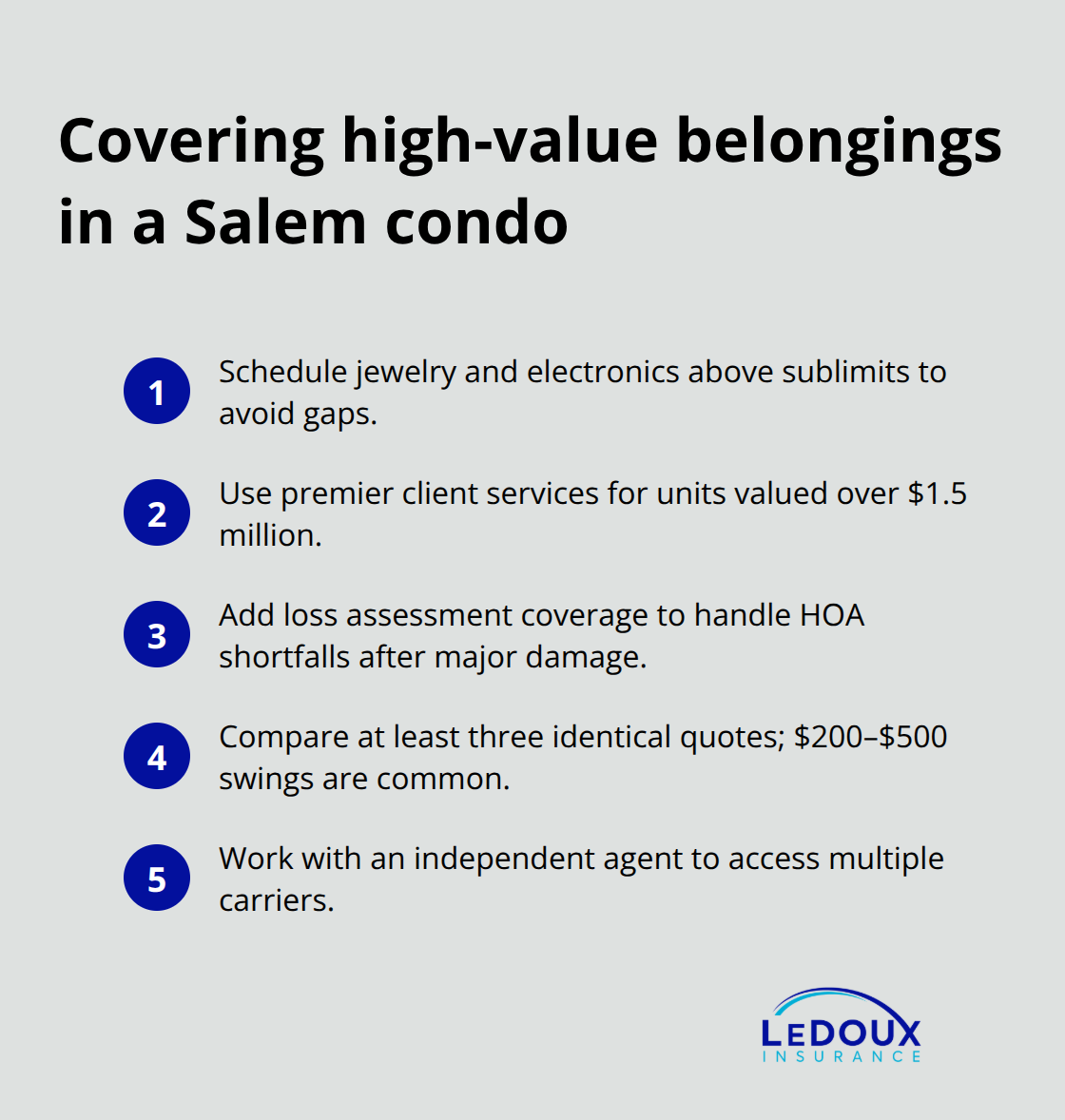
For high-value items like jewelry, artwork, or electronics, standard HO6 policies impose sublimits-typically $2,500 to $5,000 for jewelry and $5,000 for electronics-forcing you to add scheduled personal property endorsements that list and insure valuable items separately. Salem condos with valuations over $1.5 million or luxury interiors benefit from premier client services programs that offer guaranteed replacement cost and specialized handling of high-value belongings.

Compact list of steps to insure valuables and special circumstances in a Salem condo - Salem condo insurance options

Loss assessment coverage reimburses you for unexpected HOA charges when the master policy falls short, protecting you from special assessments that can run thousands of dollars after major building damage. An independent agent who accesses multiple carriers can compare HO6 options effectively, as pricing varies widely for identical coverage-comparing three quotes typically reveals $200 to $500 annual differences for the same protection.

Understanding these two distinct policies sets the foundation for your next decision: determining which specific coverages and limits actually fit your unit’s needs and your building’s characteristics.

Choosing the Right Policy for Your Salem Condo

Review Your HOA’s Master Policy First

Start by obtaining a copy of your HOA’s master policy document and read it thoroughly-this single step eliminates more coverage mistakes than anything else you can do. Contact your condo association’s management company and request the full policy, not just a summary. Identify exactly what the master policy covers: Does it protect only the roof and exterior walls, or does it extend to interior elements like flooring and cabinetry? What are the aggregate limits, and how are claims paid when multiple units file simultaneously?

Salem condo buildings vary dramatically in their master policy scope, and guessing wrong leaves you either overpaying for duplicate coverage or facing unexpected out-of-pocket costs after a loss. Once you understand the master policy’s boundaries, you know precisely what your individual HO6 policy must address. If the master policy covers only the building shell, your HO6 needs robust dwelling coverage for your kitchen, flooring, and built-in appliances. If the master policy extends into units, your HO6 can focus more heavily on personal belongings and liability protection. This coordination prevents the coverage gaps that plague unprepared condo owners.

Calculate Your Actual Replacement Costs

Calculate your actual replacement costs rather than relying on estimates or market value. Salem’s proximity to Massachusetts drives property values significantly higher than surrounding areas, but insurance should reflect what it actually costs to rebuild your specific unit, not what someone might pay for it on the market. Your unit’s square footage, finishes, and location within the building affect your specific needs.

Request quotes from at least three different carriers for identical coverage levels. Regional carriers familiar with New England construction often provide more flexible terms for older Salem buildings than national insurers unfamiliar with pre-1980s construction standards.

Compare Quotes and Essential Endorsements

When comparing quotes, verify that dwelling coverage reflects current construction costs in your area, personal property limits are set at 50 to 70 percent of dwelling coverage, and essential endorsements like sewer backup and ice dam removal are included or available. Bundling your condo policy with auto insurance typically yields 10 to 25 percent in multi-policy discounts, making your total insurance costs significantly lower than separate quotes.

Percentage range showing HO6 personal property limits relative to dwelling coverage

Raising your deductible from $1,000 to $2,500 cuts premiums by roughly 10 to 15 percent, while increasing to $5,000 saves more than 20 percent-but only if you can actually cover that deductible from savings after a loss. This strategy works well for owners with solid emergency funds who want to lower their monthly or annual costs.

Work With an Independent Agent

An independent agent who accesses multiple carriers provides far more value than calling individual insurers directly. These agents spend their time shopping the market for you, comparing endorsements and discounts across 20 or more carriers to find the actual best value for your specific situation. They understand Salem’s building characteristics, local water risks, and which carriers offer the most competitive rates for pre-1980s construction.

Final Thoughts

Salem condo ownership requires a two-part insurance strategy that protects both your building’s structure and your individual unit. Your HOA’s master policy covers the building shell, while your HO6 policy fills the gaps for your interior, belongings, and liability exposure. Understanding what each policy covers prevents costly mistakes that surface only after a loss occurs.

Start by requesting your HOA’s master policy and reading it thoroughly to understand exactly what protection already exists. Once you know the master policy’s scope, calculate your actual replacement costs based on current Salem construction expenses, then request quotes from at least three carriers for identical coverage. Bundling with auto insurance typically saves 10 to 25 percent, while raising your deductible can cut premiums by 10 to 20 percent if you have emergency savings available.

An independent agent who represents multiple carriers provides far more value than shopping individual insurers, as these professionals understand Salem’s specific building characteristics and water risks. We at LeDoux Insurance Agency Inc. serve Salem condo owners through our local office with access to top-rated carriers and can help you evaluate your master policy coverage, calculate your actual needs, and compare Salem condo insurance options across multiple carriers. Contact us at our Salem location to discuss your specific situation and receive personalized guidance tailored to your building and unit.

The information provided in this blog is for general informational purposes only and does not constitute legal, financial, or insurance advice. Coverage options, terms, and availability may vary. Please consult with a licensed professional for advice specific to your situation. Artificial intelligence may have been used to generate text and images in some blog articles.
Umbrella Liability Insurance Tips: How to Build Strong Personal Protection

Your standard homeowners and auto insurance policies have limits. Once you exceed those boundaries, your personal assets face real financial risk.

At LeDoux Insurance Agency Inc., we help clients understand umbrella liability insurance tips that protect what they’ve worked hard to build. This guide walks you through coverage options, when you need protection, and how to choose the right policy for your situation.

How Umbrella Insurance Fills the Gap

What Umbrella Coverage Actually Does

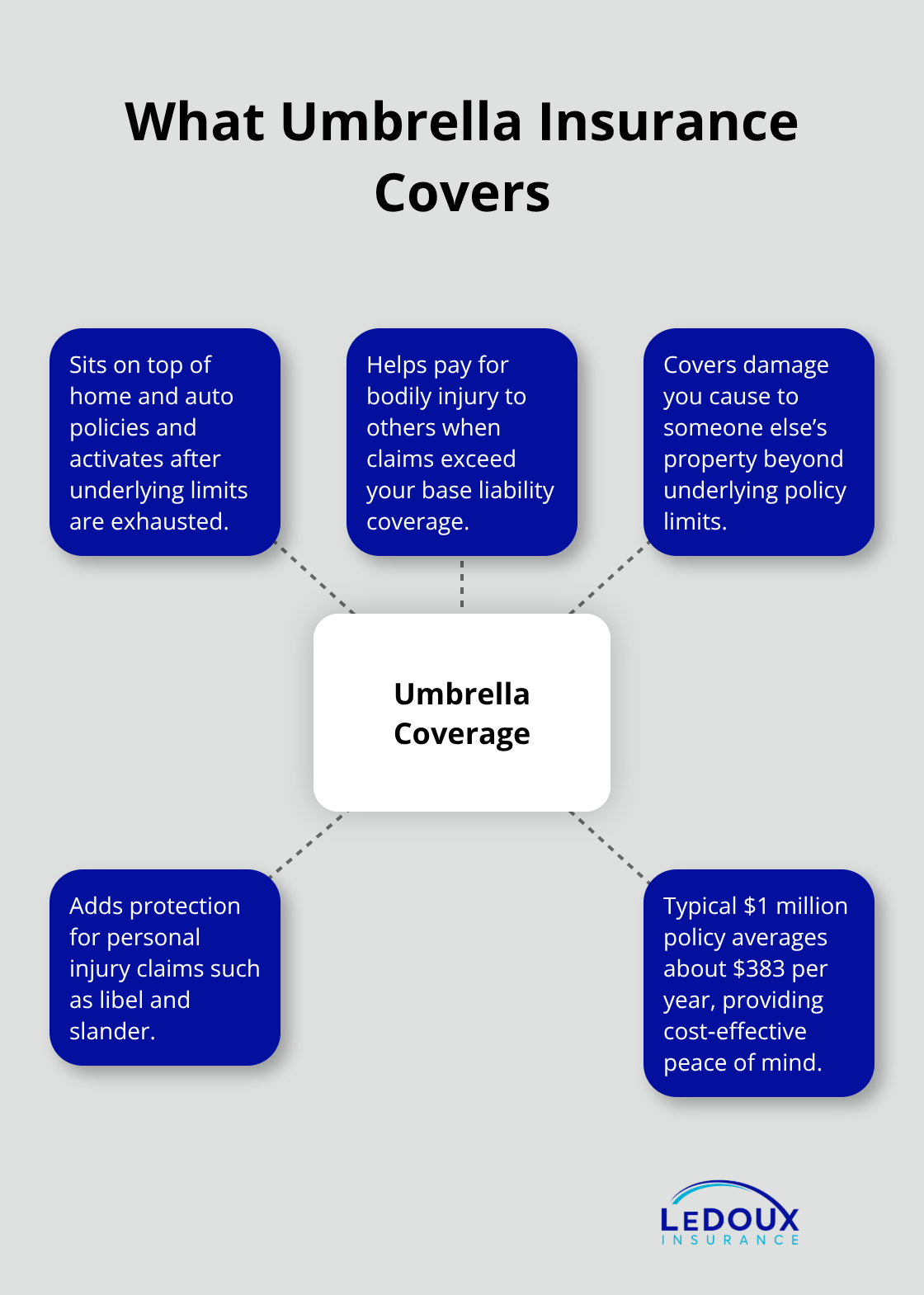
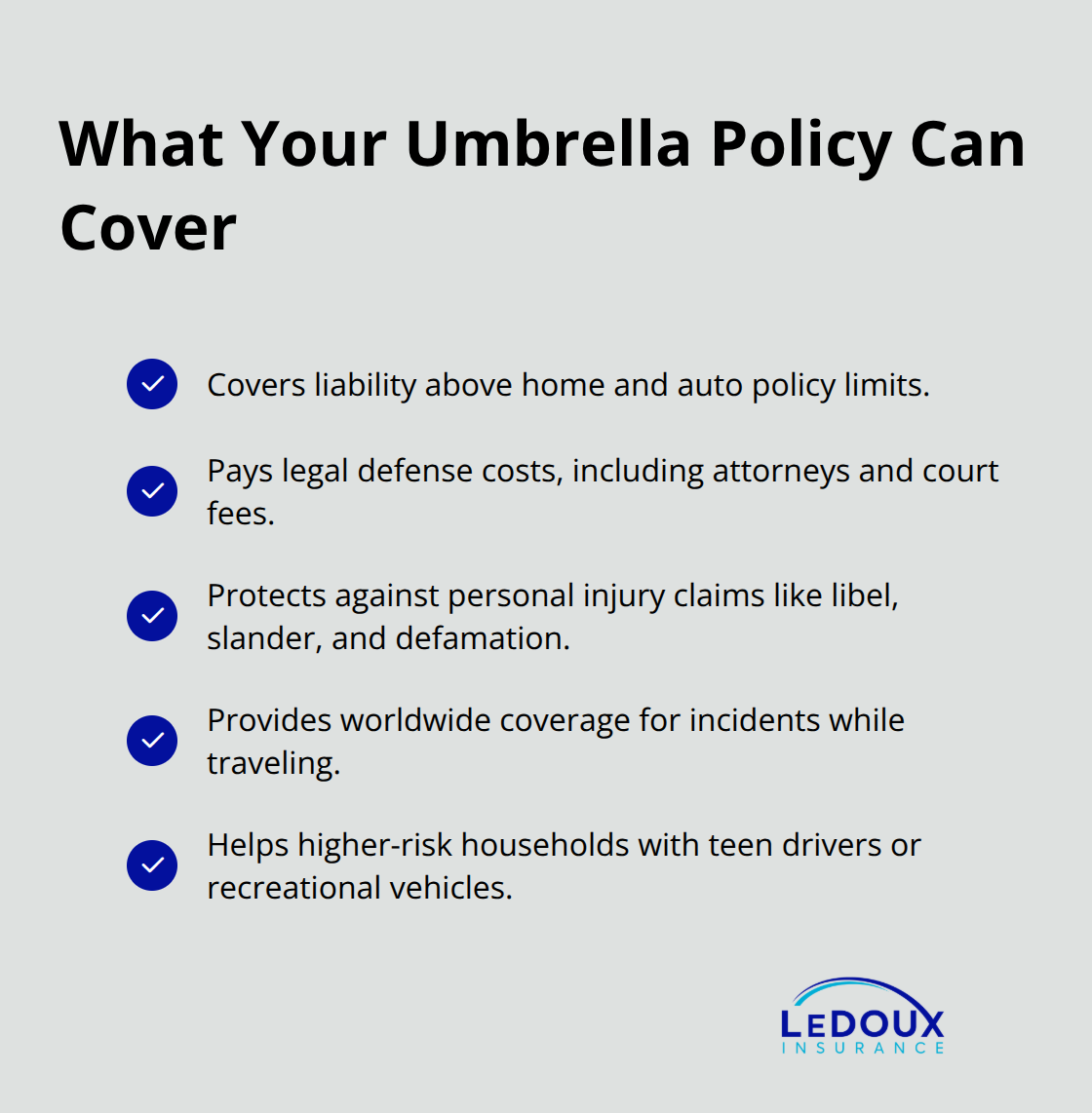
Standard homeowners and auto policies come with liability limits that sound protective until you face a serious incident. Most homeowners policies cap personal liability at $300,000 to $500,000, while typical auto policies max out at $500,000 for bodily injury liability per accident. These limits worked fine decades ago, but they don’t match today’s reality. A single car accident causing severe injuries can easily exceed $750,000 in damages. A lawsuit from a dog bite, a guest injured on your property, or a defamation claim can drain your savings fast. Umbrella liability insurance sits on top of your existing policies and activates when those underlying limits get exhausted. It covers bodily injury to others, property damage you cause, and personal injury claims like libel or slander. Unlike your homeowners or auto policy, an umbrella policy doesn’t replace your underlying coverage-it extends protection beyond what those policies provide.

Hub-and-spoke showing how umbrella insurance extends protection beyond existing policies and what it covers - Umbrella liability insurance tips

In Oregon, the average cost for $1 million in umbrella coverage runs about $383 per year for a typical household with one home and two cars. That modest premium buys significant peace of mind when your assets are on the line.

Why Your Current Limits Fall Short

A $500,000 liability limit sounds substantial until you calculate what serious injuries actually cost. Medical treatment for catastrophic injuries, lost wages, pain and suffering damages, and legal fees add up quickly. In a multi-vehicle accident where you’re at fault, medical bills alone can reach $1 million. Your auto policy covers the first $500,000, but you remain personally liable for the remaining $500,000 and any additional damages awarded. An umbrella policy would cover that gap. The same exposure exists with homeowners liability. A guest falls down your stairs, suffers permanent disability, and sues for $750,000 in damages. Your homeowners policy pays $300,000, leaving you to cover $450,000 from personal assets. Renters with significant savings face identical risk. If you own rental property, tenant liability claims add another layer of exposure that standard coverage doesn’t adequately address. Umbrella coverage extends to landlord liability, protecting you against claims from tenants or visitors on rental properties.

Calculating Your Coverage Amount

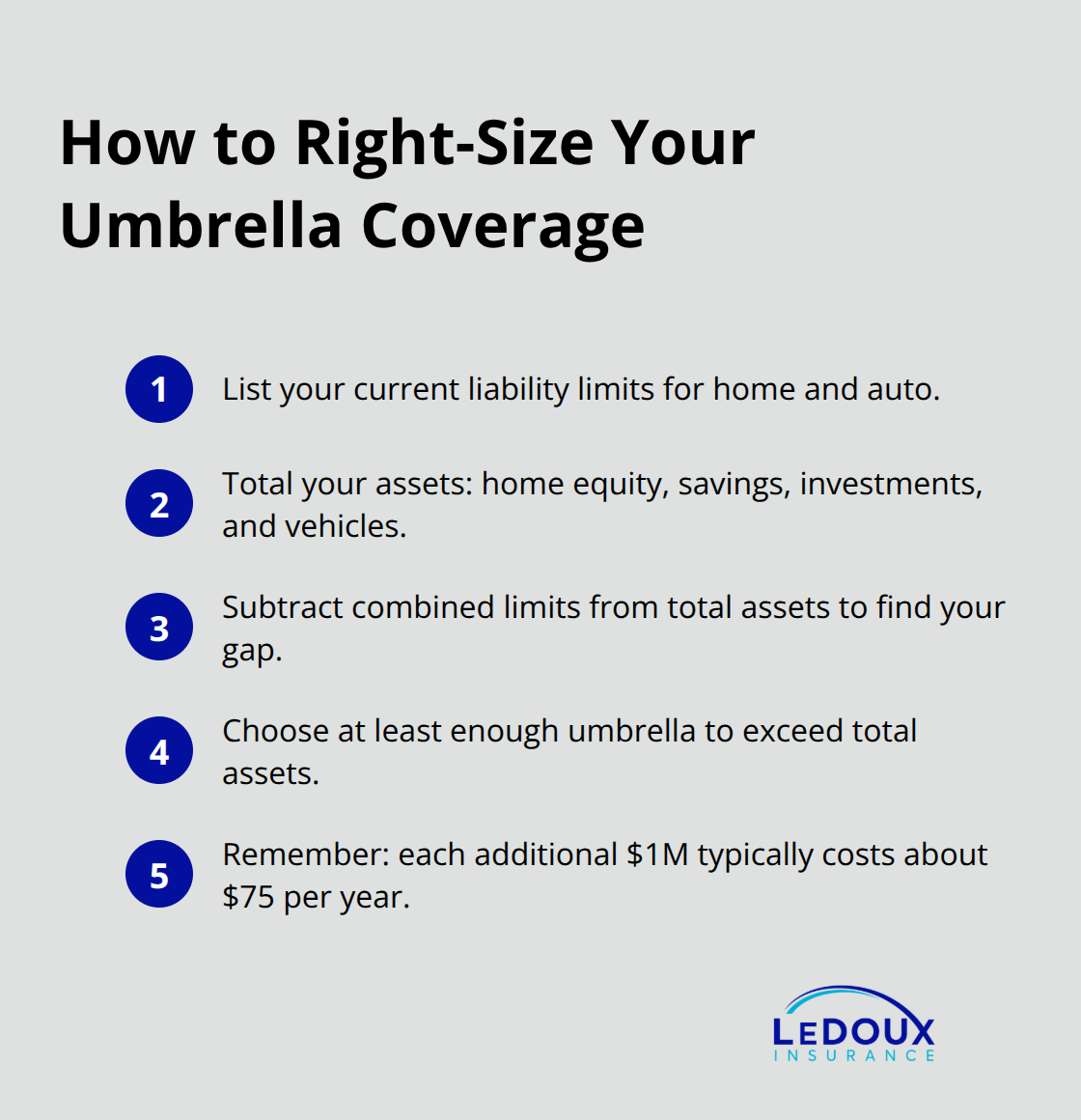
The right umbrella limit depends on your total assets and future earning potential. Add up your home equity, savings, investments, and vehicles. This total represents what creditors can pursue if you lose a major lawsuit. If your assets total $1.5 million but your underlying liability limits cap at $500,000, a $1 million umbrella policy leaves a $500,000 gap. Most carriers offer coverage in $1 million increments, with Money.com reporting that each additional $1 million of coverage typically costs about $75 per year. That pricing means moving from $1 million to $2 million in umbrella protection costs roughly $458 annually instead of $383. Higher net worth individuals often carry $2 million to $5 million in umbrella coverage. Your umbrella limit should exceed your total assets. Federal protections exist for certain retirement accounts (401(k)s receive protection under ERISA according to the U.S. Department of Labor), but IRAs vary by state. An independent agent who understands your specific situation can help you calculate the appropriate coverage level and identify any gaps in your current protection strategy.

Who Actually Needs Umbrella Protection

Assets Worth Protecting

Most people assume umbrella insurance is only for the wealthy, but that’s wrong. You need umbrella coverage if you own meaningful assets, host people at your home, drive regularly, or face any situation where someone could sue you for serious injuries or damages. The threshold isn’t about net worth-it’s about exposure. A homeowner with $400,000 in equity, $150,000 in savings, and a $50,000 vehicle has $600,000 in assets worth protecting. A single liability claim exceeding your underlying policy limits puts all of that at risk.

High-Risk Situations That Increase Your Exposure

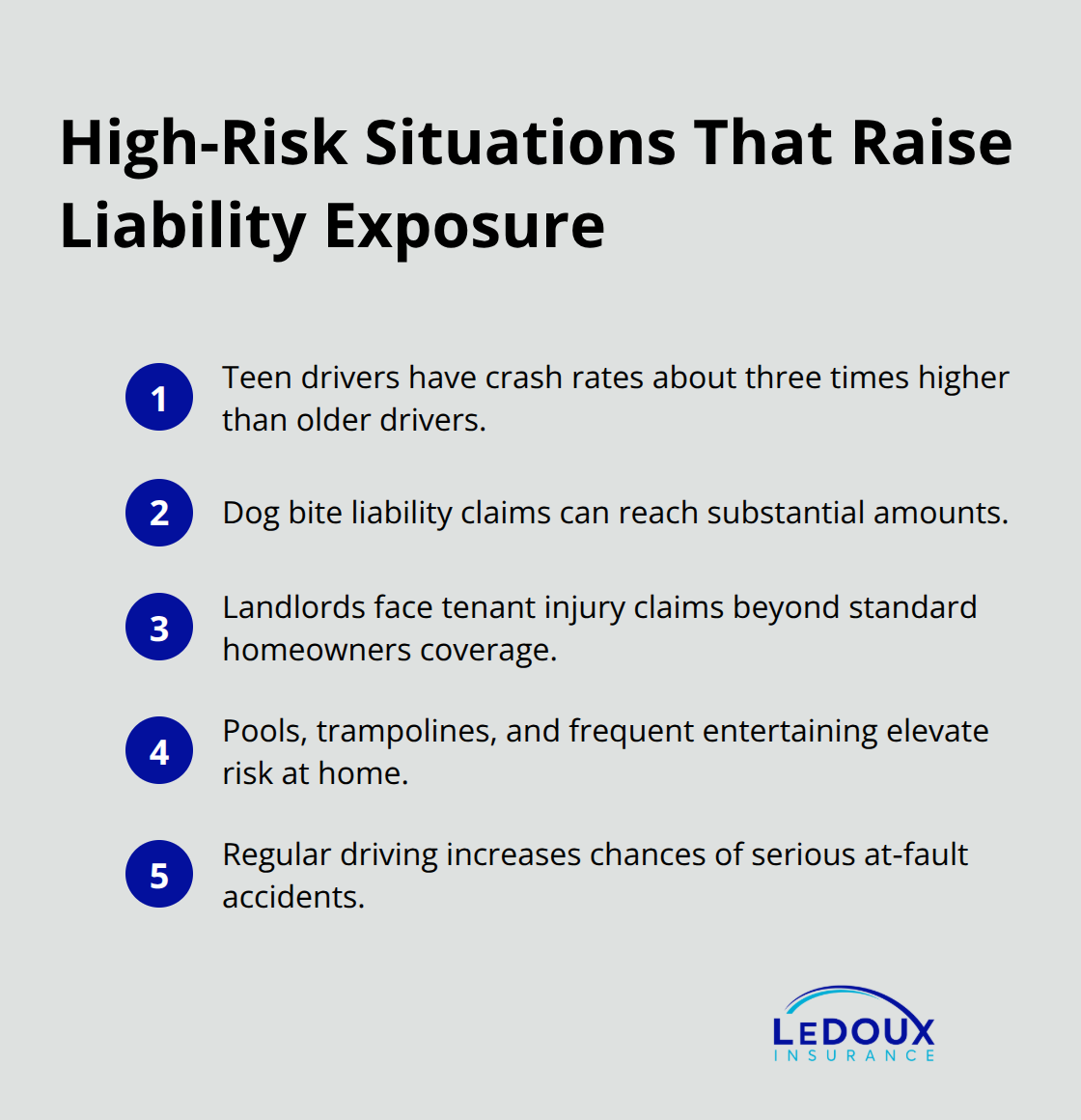
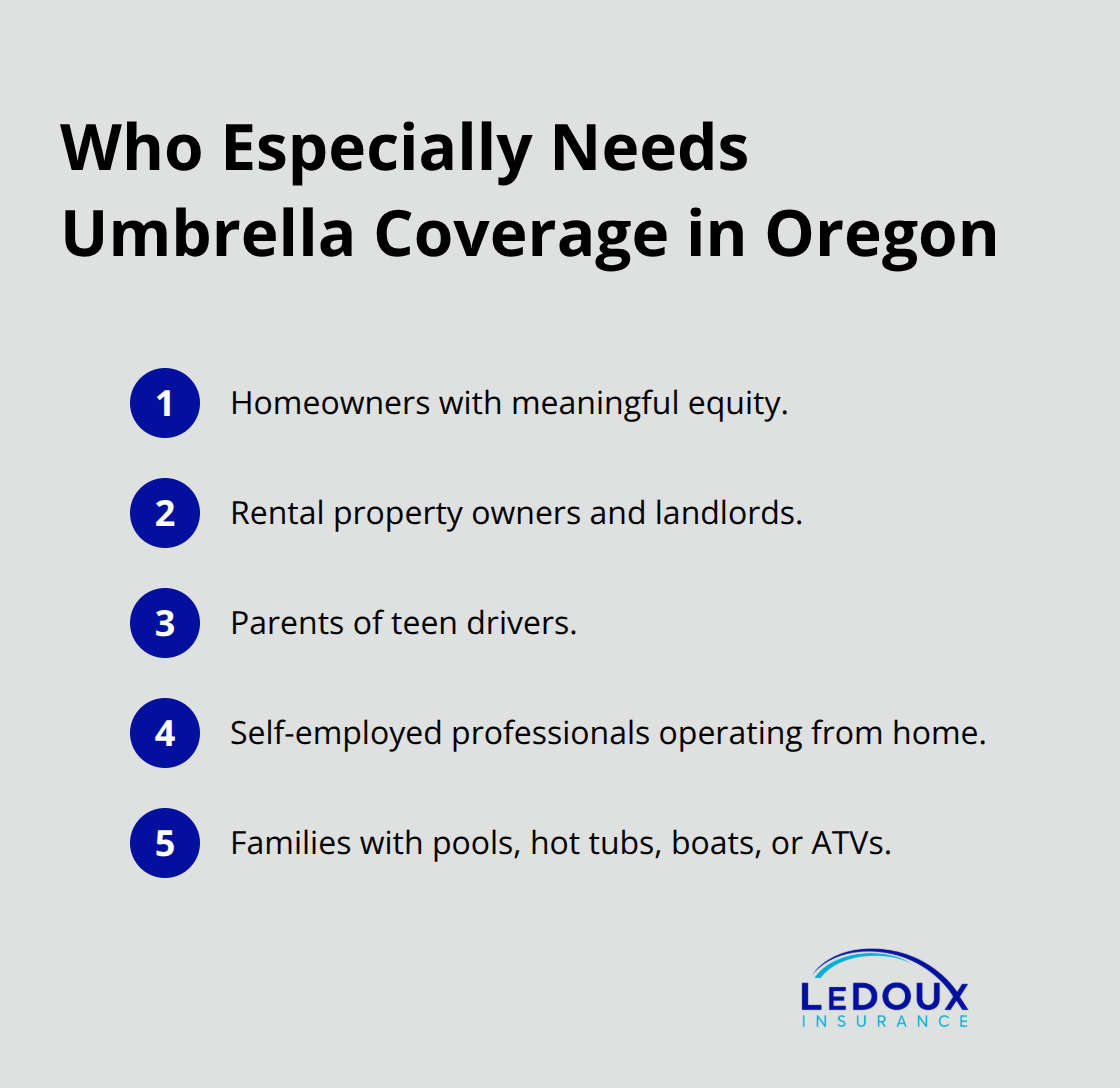
Dog owners face particular exposure because liability claims from bites can reach substantial amounts. If your homeowners policy covers $300,000 in personal liability and a guest’s dog bite claim reaches $500,000, you’re personally responsible for the $200,000 gap. Pool owners, trampoline owners, and anyone who entertains guests regularly carry elevated risk. Landlords absolutely need umbrella coverage because tenant liability claims from injuries on rental property fall outside standard homeowners protection. A tenant injured in a common area suing for $600,000 in damages can access your personal assets if your landlord liability limits are insufficient.

Teen drivers in your household significantly increase exposure. According to industry data, drivers under 20 have crash rates three times higher than drivers aged 20 and older. Even a single accident involving a teen driver could generate claims well beyond typical auto policy limits. Umbrella coverage activates after your underlying auto policy maxes out, protecting your family’s financial security.

Compact list of common scenarios that increase the need for umbrella insurance - Umbrella liability insurance tips

Calculating Your Actual Gap

The practical approach is calculating what you actually stand to lose. Add your home equity, liquid savings, investment accounts, and vehicle values. If that total exceeds your current liability limits by more than $250,000, umbrella insurance becomes financially sensible rather than optional. Someone with $800,000 in assets and $500,000 in combined auto and homeowners liability limits has a $300,000 gap that a $1 million umbrella policy closes affordably.

The cost difference between $1 million and $2 million in umbrella coverage is roughly $75 annually, making it inexpensive to match your protection to your actual exposure. Retirees with substantial savings should prioritize umbrella coverage because they have limited ability to recover from major liability judgments through future earnings. A $750,000 lawsuit against a retiree with $1 million in savings can be catastrophic.

Special Circumstances That Matter

Umbrella policies typically apply worldwide, which matters if you travel internationally or maintain property abroad. If you expect your income and assets to grow significantly over the next five years, purchasing umbrella coverage now locks in lower premiums and ensures protection during your accumulation phase. Your specific situation-whether you own rental properties, host frequent gatherings, or have multiple vehicles-determines how much umbrella protection makes sense for your household.

Selecting the Right Umbrella Coverage for Your Situation

Identify Your Coverage Gaps

Start by identifying exactly what your current policies won’t cover. Pull out your homeowners and auto policy declarations pages and write down your liability limits for bodily injury, property damage, and personal liability. Most people discover their limits are lower than they assumed. If you carry $300,000 in homeowners liability and $500,000 in auto bodily injury liability, your total protection across both policies is fragmented-a $750,000 claim leaves you exposed. Calculate this gap by subtracting your combined limits from your total assets. That number is what umbrella insurance must cover.

Someone with $1.2 million in home equity, savings, and investments facing $800,000 in existing liability limits needs at least $400,000 in umbrella protection, though most carriers sell in $1 million increments starting at roughly $383 annually according to ACE Private Risk Services data. The actual cost difference between a $1 million policy and a $2 million policy runs about $75 per year, making it inexpensive to purchase more protection than your minimum gap suggests. This approach replaces guesswork with concrete math.

Step-by-step list to calculate and choose an umbrella liability limit

Compare Policies and Underwriting Requirements

Comparing actual policies requires understanding what different carriers exclude and how their underwriting requirements differ. Some insurers require minimum underlying liability limits before selling umbrella coverage-GEICO typically requires $300,000 per person bodily injury on auto policies, while others are more flexible. Call three to five carriers directly and ask about their specific requirements, exclusions for dog breeds or high-risk activities, and whether they offer discounts for bundling with your homeowners or auto policy.

An independent agent representing multiple carriers gives you access to options you won’t find shopping with a single company. LeDoux Insurance Agency Inc. represents 20+ top-rated carriers, which means we match your specific situation to the right policy rather than forcing you into one company’s template. Ask each agent whether the umbrella policy covers international travel, rental property liability, and how it interacts with your underlying policies if you later increase those limits.

Evaluate Hidden Costs and Policy Interactions

Some carriers penalize you for raising auto or homeowners liability limits by increasing umbrella premiums, while others don’t. These details matter far more than shopping purely on price. Request quotes in writing and compare the actual coverage language, not just the premium. Your situation is unique enough that the cheapest option often carries hidden gaps that cost far more later.

Final Thoughts

Umbrella liability insurance tips ultimately protect what you’ve built through years of hard work and smart financial decisions. A single serious incident can wipe out your home equity, savings, and investments if your liability limits fall short, but umbrella coverage costs roughly $383 annually for $1 million in protection. That modest premium shields hundreds of thousands of dollars in personal assets from creditors and lawsuits.

Your next step is straightforward: pull your homeowners and auto policy declarations and calculate your actual gap. Add your home equity, savings, and investments, then subtract your combined liability limits-that number tells you exactly how much umbrella protection you need. Most people discover their gap is larger than they expected, which is why this exercise matters far more than generic online quotes.

We at LeDoux Insurance Agency Inc. help Oregon families and business owners across Eugene, Salem, Woodburn, and Albany build comprehensive protection strategies that match their specific situation. Contact us for a straightforward conversation about your assets, your current coverage, and the umbrella protection that makes sense for your household.

The information provided in this blog is for general informational purposes only and does not constitute legal, financial, or insurance advice. Coverage options, terms, and availability may vary. Please consult with a licensed professional for advice specific to your situation. Artificial intelligence may have been used to generate text and images in some blog articles.
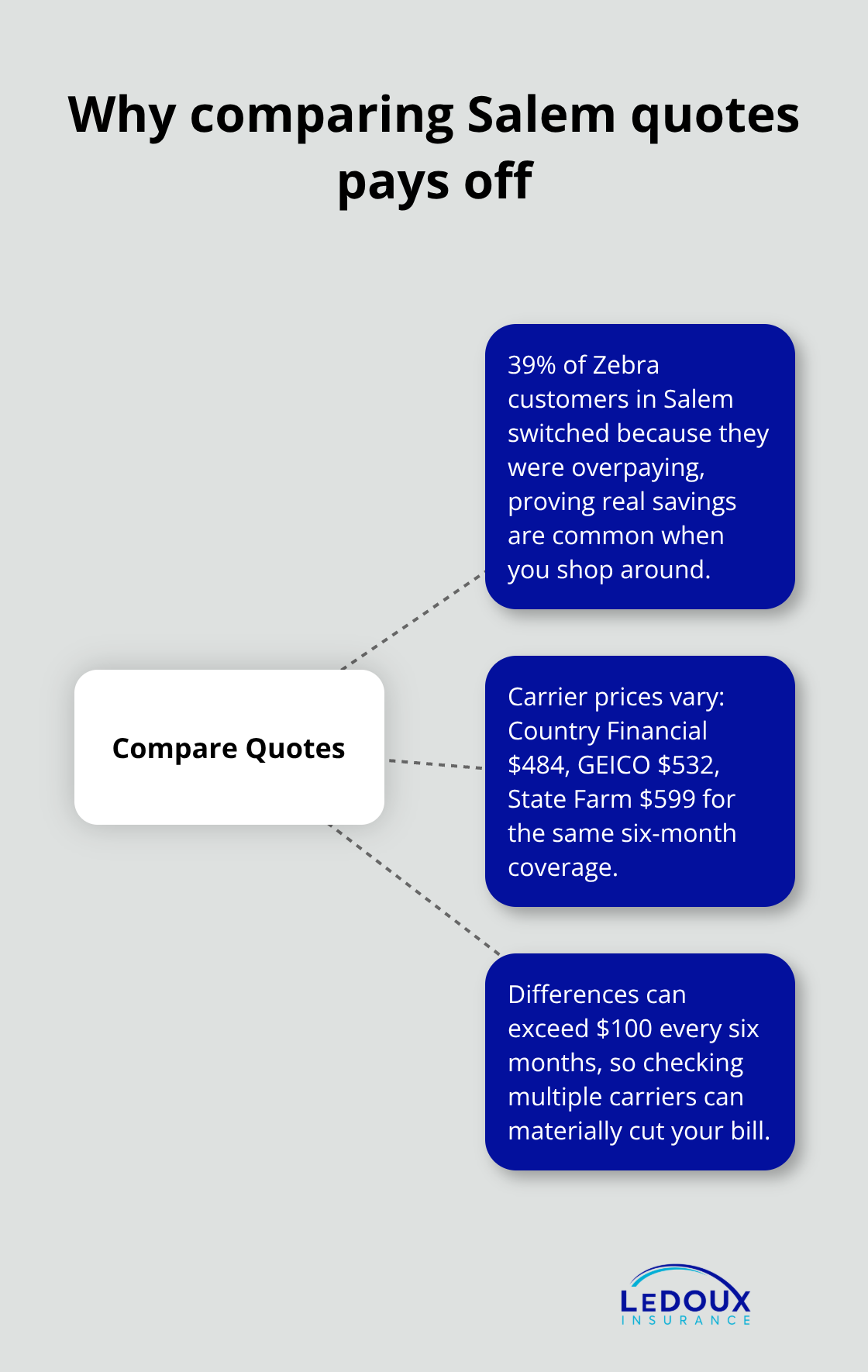
Albany Rental Property Insurance: Protect Your Investment

Owning rental property in Albany comes with real financial exposure. Tenant accidents, property damage, and lost income can drain your profits fast.

Albany rental property insurance protects you from these risks, but many landlords carry the wrong coverage or miss critical gaps. We at LeDoux Insurance Agency Inc. help property owners build policies that actually match their exposure.

Why Rental Property Insurance Matters in Albany

Your rental property represents one of your largest financial commitments, and a single incident can wipe out months of profit. A tenant slips on icy stairs in January and sues for $50,000 in medical bills. A burst pipe floods the unit for two weeks, costing you $8,000 in repairs plus lost rent. A fire damages the structure, leaving you without income while contractors rebuild. Without the right coverage, these events become personal financial disasters. Rental property insurance in Albany protects your asset and your cash flow by transferring these risks to an insurer. According to Hippo data, Albany landlords pay approximately $847 annually for core coverage, which is significantly less than New York City landlords at $1,392 per year. This low cost reflects Albany’s lower property values and risk profile, making protection genuinely affordable.

Your Liability Exposure as an Albany Landlord

Many landlords underestimate their liability exposure. The moment a tenant or visitor steps onto your property, you become legally responsible for injuries caused by unsafe conditions. A visitor trips on a broken step and suffers a broken hip requiring surgery. A tenant develops respiratory illness from mold in the basement.

Key elements of liability exposure and coverage for Albany rental property owners

You face medical bills, legal defense costs, and potential settlements that can exceed $100,000 easily. Standard liability coverage ranges from $300,000 to $2,000,000 per occurrence and typically adds $200 to $400 annually to your premium. This coverage pays medical expenses, legal defense, and court judgments if someone is injured due to your negligence. Without it, your personal assets become vulnerable. New York state does not legally mandate landlord insurance, but mortgage lenders typically require it as a condition of financing, and smart landlords carry it regardless of lender requirements.

Protecting Income When Repairs Stop Rent Collection

Loss of rent coverage is the protection most landlords overlook until disaster strikes. A severe winter storm damages your roof and the unit becomes uninhabitable for three weeks. You still owe the mortgage, property taxes, and insurance, but collect zero rent. That $1,500 monthly rent loss compounds quickly across multiple units or extended repairs. Loss of rent coverage reimburses this income gap while the property undergoes repairs after covered events such as fire, burst pipes, or storm damage. For Albany properties, where winter weather frequently causes water damage and structural issues, this coverage prevents cash-flow collapse during the repair period. Many landlords skip this endorsement to save $100 or $200 annually, then face thousands in lost income when repairs drag on.

What Comes Next in Your Coverage Strategy

Your liability and income protection form the foundation, but gaps remain. Property damage coverage, additional endorsements, and specific perils require careful attention to match your actual exposure.

Coverage Options for Albany Rental Properties

Dwelling fire coverage forms the structural backbone of any rental property policy in Albany, protecting the building itself from fire, smoke, and wind damage. This coverage pays for repairs to the roof, walls, plumbing, electrical systems, and other permanent fixtures after a covered event. However, dwelling coverage alone leaves you exposed to significant gaps.

Water Damage and Freeze-Thaw Risks

Many Albany landlords assume their policy covers water damage from burst pipes, but standard dwelling fire policies exclude gradual leaks and maintenance failures. A frozen pipe that bursts in February requires separate water damage coverage, which reimburses structural repairs and lost rent during the repair period. Water damage claims rank among the costliest for Albany properties due to freeze-thaw cycles, making this endorsement non-negotiable rather than optional. Your policy must explicitly cover sudden water events like burst pipes and appliance overflow to protect your cash flow when winter weather strikes.

Storm and Hail Protection

Storm and hail coverage specifically protects against roof damage, broken windows, wind damage, and tornadoes, which matter in Albany’s climate. If your policy lacks this endorsement, a March nor’easter that tears off shingles becomes your financial problem, not the insurer’s. Albany’s weather patterns demand this protection as a standard component of your coverage.

Five essential coverage components for Albany rental properties - Albany rental property insurance

Liability and Income Protection

Liability protection and loss of rent coverage work together to shield both your legal exposure and your income stream. Liability coverage at $300,000 to $2,000,000 per occurrence pays medical bills, legal defense, and court judgments when a tenant or visitor is injured on your property due to negligence. Loss of rent coverage reimburses your income during repairs after fire, burst pipes, storm damage, or other covered events, preventing months of cash-flow pain.

Additional Endorsements That Matter

Additional endorsements expand your protection beyond the basics. Riot and civil commotion coverage protects repair costs from civil unrest, though you must keep documentation linking damage directly to the unrest when filing a claim. Vandalism and burglary coverage guards against malicious damage, and a police report is typically required to support the claim. Additional structures coverage extends protection to detached garages, sheds, fences, or other buildings on the property, which many Albany landlords own but fail to insure separately. Rent guarantee insurance is an optional add-on that recovers unpaid rent if a tenant defaults, protecting against income loss from non-payment rather than property damage.

Flood Insurance and Policy Gaps

Flood damage is critically absent from standard policies and requires separate flood insurance to cover rising water risk, a must-have if your Albany property sits in a flood zone. Multiple carriers offer these endorsements at different price points, so comparing quotes across insurers reveals substantial savings opportunities. Your next step involves identifying which gaps exist in your current coverage and which endorsements match your property’s specific exposure.

Common Gaps in Rental Property Coverage

Many Albany landlords discover coverage gaps only after a loss occurs, and by then the damage is done. Your policy likely excludes situations that feel like they should be covered, leaving you exposed to thousands in unexpected costs. The most dangerous gaps stem from misunderstandings about what standard dwelling fire policies actually protect. A property manager in Albany might assume the policy covers damage from a tenant’s negligence, but standard coverage protects only against named perils like fire and wind, not tenant-caused damage. Similarly, landlords often carry replacement cost coverage on the building but fail to apply the same standard to personal property inside the unit, creating a dangerous mismatch.

Water Damage and Winter Weather Exclusions

Water damage and freezing temperatures now account for 22% of home insurance claims, yet many policies explicitly exclude gradual leaks, seepage, and damage from frozen pipes-the exact scenarios Albany’s winter weather creates. Your policy might state it covers water damage from burst pipes, but the fine print excludes damage that occurred over time or resulted from lack of maintenance. This distinction matters enormously when a frozen pipe slowly leaks for weeks before you notice it, or when seasonal moisture damage accumulates in the basement. Standard dwelling fire policies exclude gradual leaks and maintenance failures, leaving you unprotected during freeze-thaw cycles that plague Albany winters.

Percentage of home insurance claims tied to water damage and freezing conditions - Albany rental property insurance

High-Value Items and Coverage Limits

High-value items inside the rental unit face strict coverage limits that most landlords overlook entirely. Standard policies cap coverage on jewelry, artwork, electronics, and collectibles at $500 to $2,500 per item, far below actual replacement cost if your tenant owns valuable equipment or furnishings. If a tenant’s expensive camera equipment, musical instruments, or jewelry suffers damage in a fire, the standard policy pays only the capped amount, leaving the remainder as their loss-not yours, but it damages the relationship and your reputation.

Underinsurance and Replacement Cost Penalties

Underinsurance on the building itself creates an even larger problem. Many Albany landlords insure their property based on mortgage value rather than actual replacement cost, assuming the two are equivalent. A property with a $200,000 mortgage might actually cost $280,000 to fully rebuild after a total loss due to construction inflation and local labor rates. If you carry $200,000 in dwelling coverage, the insurer applies a coinsurance penalty, paying only a proportional share of the loss rather than the full amount. This means a $100,000 fire damage claim might pay only $71,000 because you were underinsured.

Property taxes and insurance costs in Albany average around $4,271 annually across all properties, yet many landlords fail to account for how replacement cost inflation outpaces their coverage limits year after year. A policy written five years ago at replacement cost may cover only 70% of actual rebuilding expenses today. The solution requires annual reviews of your coverage limits tied to local construction costs, not just your original purchase price or mortgage amount. Obtain updated replacement cost estimates every two to three years, especially after major renovations or significant market shifts in Albany’s construction market.

Final Thoughts

Albany rental property insurance protects your investment only when your coverage matches your actual exposure. Water damage exclusions, underinsurance penalties, and missing endorsements represent real money that leaves your pocket after a loss, so pull your declarations page today and verify that you have water damage coverage, storm and hail protection, and loss of rent endorsement. Compare your dwelling coverage limit to current replacement cost estimates for your property, accounting for construction inflation since your policy was written.

Gather quotes from multiple carriers because premium variation across insurers can exceed $300 annually for identical coverage. Document your property’s condition, safety features, and recent upgrades (security systems, updated wiring, improved drainage), as these details lower your rate when you provide them to insurers. Shopping around gives you genuine choice rather than accepting a single company’s limitations.

We at LeDoux Insurance Agency Inc. help Albany landlords build Albany rental property insurance policies that protect both asset and income stream. Contact us to review your current coverage and explore options that fit your budget and exposure.

The information provided in this blog is for general informational purposes only and does not constitute legal, financial, or insurance advice. Coverage options, terms, and availability may vary. Please consult with a licensed professional for advice specific to your situation. Artificial intelligence may have been used to generate text and images in some blog articles.
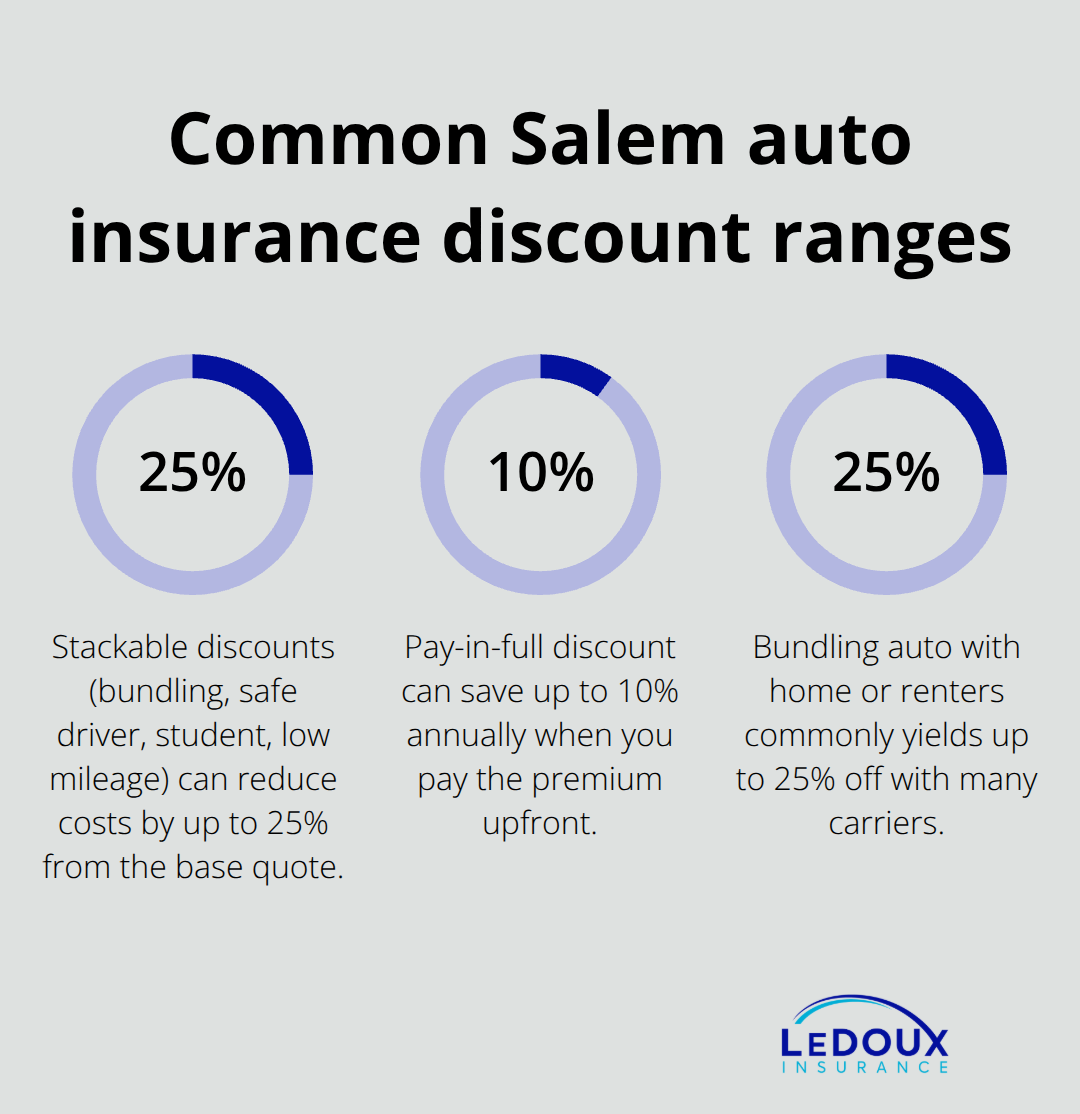
Personal Umbrella Insurance Oregon: Extra Protection for Life

Your home and car insurance have limits. Once you exceed those limits, your personal assets are at risk.

Personal umbrella insurance in Oregon fills that gap with additional liability protection. At LeDoux Insurance Agency Inc., we help Oregon residents understand how this coverage works and why it matters for their financial security.

What Umbrella Insurance Actually Covers

A personal umbrella policy activates when your home or auto insurance limits run out. If someone sues you for bodily injury or property damage and the judgment exceeds your underlying policy caps, your umbrella steps in to cover the remaining liability up to your chosen limit. For example, if a guest is seriously injured on your property and a court awards 1.5 million dollars in damages, but your homeowners liability maxes out at 500,000 dollars, your umbrella policy covers that 1 million dollar gap plus your legal defense costs. The policy also protects against personal injury claims that standard homeowners or auto policies often exclude, including libel, slander, and defamation.

Key benefits of a personal umbrella policy for Oregon households - Personal umbrella insurance Oregon

This matters because nuclear verdicts are driving up judgment sizes across Oregon and the Pacific Northwest. Recent market data shows jury awards and settlement amounts have climbed significantly, making that extra layer of protection far more valuable than it was a decade ago.

Legal Fees and Defense Costs Are Included

One major advantage most people overlook is that umbrella coverage pays for your legal defense even before the underlying policies are exhausted. If you face a lawsuit, your umbrella insurer covers attorney fees, court costs, and investigation expenses within your policy limits. This can easily run 50,000 to 200,000 dollars or more depending on case complexity. Without this coverage, you pay those bills out of pocket while waiting for settlement or verdict. The umbrella also provides worldwide coverage, meaning incidents that occur during vacations abroad receive protection. If you own rental properties, operate recreational vehicles, or have teen drivers in your household, the legal exposure is higher, making defense cost coverage especially practical.

Teen Drivers and Higher-Risk Households

Teens crash at rates approximately three times higher than drivers aged 20 and older according to traffic safety data. Families with young drivers should prioritize this protection because the liability exposure is real and substantial. A single serious accident involving a teen can result in judgments that far exceed standard auto policy limits. Your umbrella policy fills that gap and covers the legal costs that follow. This protection extends to any household member whose activities create elevated liability risk, whether that involves recreational vehicles, swimming pools, or other exposures. Understanding your household’s specific risk profile helps you select appropriate umbrella limits when you work with an insurance professional.

Who Needs Umbrella Protection in Oregon

Umbrella insurance isn’t reserved for the wealthy. Anyone with meaningful assets to protect should consider this coverage. If you own a home, drive a vehicle, or have income you’ve worked to build, a judgment against you can threaten that financial security. Oregon’s legal environment has shifted toward larger awards. Recent jury verdicts show that six-figure and seven-figure judgments are far more common than they were ten years ago. This means the gap between your standard homeowners or auto liability limits and a realistic worst-case scenario has grown substantially. A single incident-a guest injured on your property, a serious auto accident where you’re found liable, a swimming pool incident-can result in damages that exceed your underlying coverage by hundreds of thousands of dollars.

High-priority groups who benefit from umbrella insurance

Homeowners and Property Owners Face Real Risk

Homeowners with equity in their properties face particular risk. If you own real estate worth 500,000 dollars or more, a judgment can attach to that asset. Rental property owners face even higher exposure because they operate a business from that property, and liability claims tend to be more aggressive in commercial or semi-commercial contexts. The financial threat is concrete and substantial.

Parents with Teen Drivers Need Extra Protection

Parents with teen drivers should treat umbrella coverage as non-negotiable. Traffic data shows teens crash at roughly three times the rate of drivers over 20. A serious accident involving a teen driver can generate medical bills, pain-and-suffering awards, and legal fees that quickly reach significant amounts. This protection directly addresses one of the highest-risk scenarios in most households.

Self-Employed Professionals and Business Operators

Self-employed professionals and business owners operating from home face elevated liability exposure. Your professional activities can create liability exposure beyond what a standard homeowners policy covers. If you operate any kind of service business, maintain clients at your residence, or have employees visiting your property, umbrella protection is practical risk management. The exposure grows with each client interaction and business activity conducted from your home.

Recreational Activities and Amenities Increase Exposure

Families with swimming pools, hot tubs, or recreational equipment like ATVs and boats should absolutely carry umbrella coverage. These amenities significantly increase liability exposure. If you frequently host gatherings or have extended family visiting regularly, the risk multiplies. Each activity and amenity adds another layer of potential liability that standard policies don’t adequately cover.

Finding the Right Coverage Limits for Your Situation

An independent insurance agent can assess your specific situation by reviewing your assets, household composition, activities, and existing coverage to recommend appropriate limits. Most Oregon residents find that 1 million dollars of umbrella coverage costs less than 200 dollars annually, making it an affordable way to protect what you’ve built. The next step involves understanding how to evaluate your total assets and select coverage limits that actually match your financial exposure.

Selecting Your Umbrella Limit in Oregon

Calculate Your Total Assets and Future Earnings

Start by tallying your actual assets, not what you think you own. Add up your home equity, investment accounts, retirement savings, vehicles, and any other property with real value. Most Oregon homeowners underestimate this total significantly. If your home is worth 600,000 dollars and you have 200,000 dollars in retirement savings plus a paid-off vehicle, your total exposure is 800,000 dollars minimum. That’s your baseline.

Now add your annual income for the next decade or two-that’s future earnings a judgment can potentially attach to. Someone earning 80,000 dollars annually has roughly 800,000 to 1.6 million dollars in future earning potential a creditor could pursue. This calculation shows why 1 million dollars of umbrella coverage falls short for many Oregon households.

Understand How Oregon’s Legal Environment Has Shifted

Oregon’s liability environment has shifted dramatically toward larger awards. Recent jury verdicts show nuclear verdicts and seven-figure judgments are far more common than a decade ago, with third-party litigation funding and social inflation driving plaintiff expectations upward. Your underlying homeowners policy likely caps liability at 300,000 to 500,000 dollars, and your auto policy probably sits at similar levels. That gap between your underlying limits and a realistic worst-case judgment has widened substantially.

The 2025 umbrella market data shows that even clean accounts with pristine loss histories face 10 to 20 percent increases in excess lines premiums, signaling that carriers are repricing risk across the board. This means coverage that seemed adequate five years ago may not be today.

Range of umbrella premium increases cited for 2025 - Personal umbrella insurance Oregon

Select Coverage Limits That Match Your Exposure

Most homeowners with meaningful equity and income should carry at least 1 million dollars of umbrella coverage. Households with 800,000 dollars or more in combined assets and future earnings should seriously consider 2 million dollars. The cost difference between 1 million and 2 million is often just 100 to 150 dollars annually-a modest investment given the protection gap you’d otherwise leave open.

Compare Quotes and Evaluate Carrier Options

When comparing quotes, request identical limits from multiple carriers-don’t let price alone drive your decision. Some insurers have exited higher-risk sectors entirely or are offering smaller towers and higher attachment points, meaning available capacity varies widely. A carrier quoting you 1 million dollars may not quote 2 million, or may price it uncompetitively.

Bundling your umbrella with auto and homeowners through the same carrier sometimes yields modest savings, though the 2026 market is tighter than previous years and overall savings may be reduced. More importantly, verify that your underlying auto and homeowners policies are solid before purchasing umbrella coverage-carriers scrutinize the foundation policies closely. Weak underlying coverage or claims history will either disqualify you or substantially increase your umbrella premium.

Strengthen Your Underwriting Position

Document any risk controls you’ve implemented: home security systems, pool safety equipment, regular maintenance records. These concrete measures improve underwriting view and can lower your rate. Work with an independent agent who can present your portfolio to multiple carriers and re-underwrite your risks rather than just chasing the cheapest quote.

Final Thoughts

Personal umbrella insurance in Oregon protects what you’ve built by covering liability claims that exceed your home and auto policy limits. The gap between standard coverage and realistic worst-case judgments has widened significantly over the past decade, with nuclear verdicts and seven-figure awards now common in Oregon courts. A single serious incident-a guest injured on your property, a teen driver causing a major accident, or an accident involving your boat or recreational vehicle-can result in a judgment that threatens your financial security.

The math is straightforward: most Oregon households add 1 million dollars of umbrella coverage for less than 200 dollars annually, and 2 million dollars costs only slightly more. That modest investment protects hundreds of thousands of dollars in assets and future earnings from a single lawsuit. The 2025 and 2026 insurance market shows carriers are tightening capacity and repricing risk across the board, which means waiting to purchase coverage becomes more expensive, not cheaper.

Contact LeDoux Insurance Agency Inc. to review your current coverage and discuss appropriate umbrella limits for your household.

The information provided in this blog is for general informational purposes only and does not constitute legal, financial, or insurance advice. Coverage options, terms, and availability may vary. Please consult with a licensed professional for advice specific to your situation. Artificial intelligence may have been used to generate text and images in some blog articles.
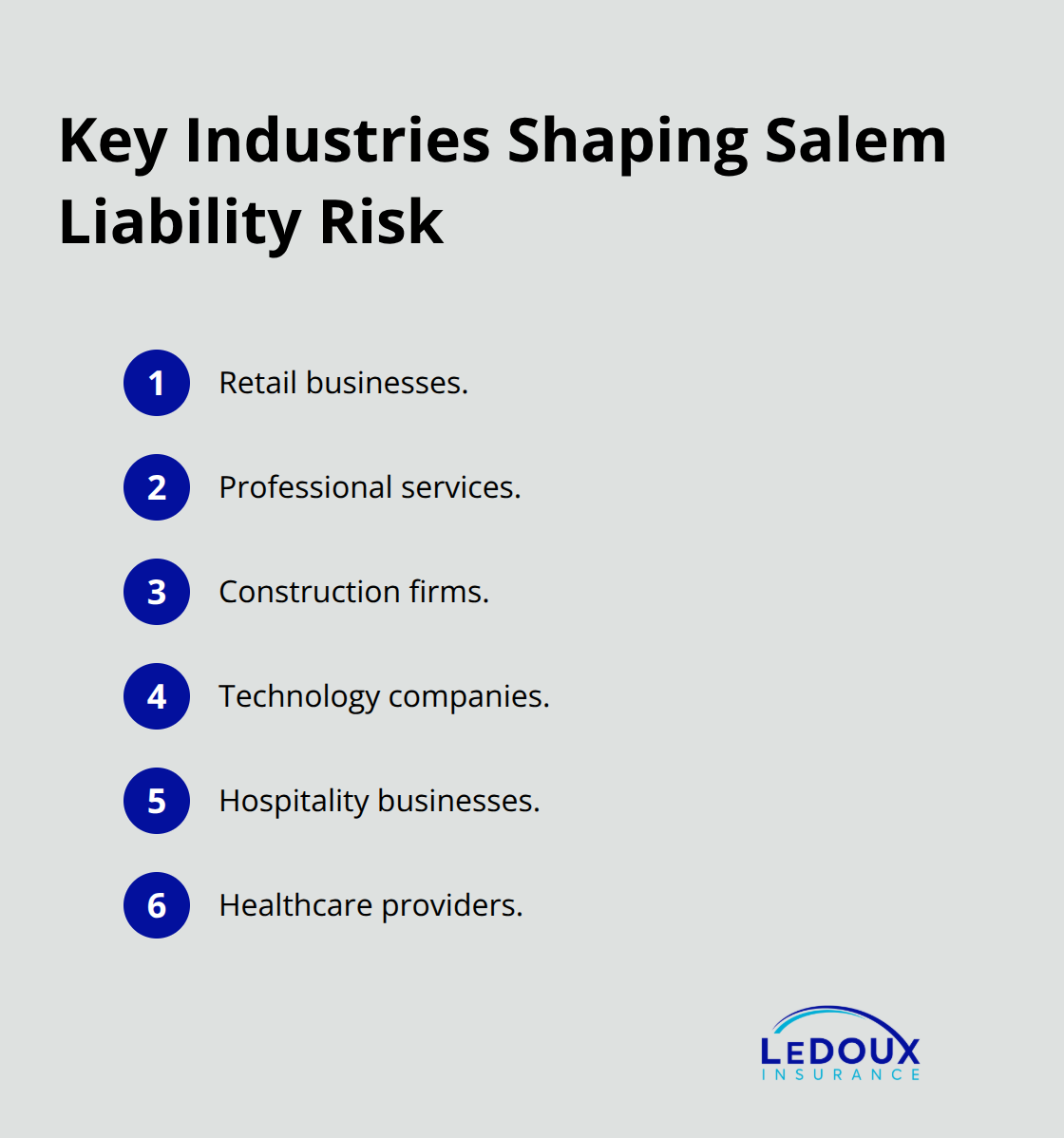
Liability Insurance for Startups: Build a Solid Foundation

Starting a business means taking on new risks. Lawsuits and liability claims can drain your resources fast, which is why liability insurance for startups isn’t optional-it’s essential.

At LeDoux Insurance Agency Inc., we help founders understand what coverage they actually need. This guide walks you through the types of liability protection available and how to pick the right limits for your business.

What Liability Insurance Actually Covers

General liability insurance protects your startup when a third party claims you caused them bodily injury, property damage, or financial harm through your business operations. This covers medical expenses if a client gets hurt at your office, repair costs if you accidentally damage a customer’s equipment, or legal defense if someone sues you for misleading advertising. The Hartford notes that general liability covers defense costs and settlements, which means the insurer pays for both your lawyer and any judgment against you, up to your policy limit. Most startups underestimate how quickly these costs accumulate-a single lawsuit can cost $10,000 to $50,000 just in legal fees before any settlement is paid. This is why coverage from day one matters more than most founders realize.

Where Startup Liability Actually Comes From

Most startup founders think liability claims only happen to manufacturers or contractors, but that’s wrong. A software consultant who gives bad advice, a marketing agency that uses unlicensed images in a campaign, or a service-based startup whose employee accidentally injures a client at their location-all face real liability exposure. Service-based startups particularly need professional liability insurance because errors or negligence in your advice can cost clients thousands. The U.S. Small Business Administration emphasizes that liability risk exists from your first customer interaction, whether you’re home-based or in a commercial space. Homeowners insurance explicitly excludes business-related claims, so running your startup from home without proper coverage leaves you personally liable for damages.

Hub-and-spoke visualization of common startup liability risks in the United States - Liability insurance for startups

Even low-revenue startups face lawsuits-it’s not about company size, it’s about whether someone can claim you caused them harm.

Why Liability Claims Disrupt Your Business

A lawsuit doesn’t just cost money; it derails your business. Legal fees consume time that should go to growth, and settlements can deplete cash reserves you need for payroll or inventory. Many startups fail not because of bad products but because they couldn’t absorb the financial hit from a single claim. Adequate liability coverage means the insurer covers these costs instead of your personal assets or business bank account. This protection also builds credibility-clients, landlords, and vendors often require proof of liability insurance before signing contracts. Some investors won’t fund startups without documented liability protection in place. Coverage now costs a few hundred dollars per year for basic protection, while fighting an uninsured claim can cost your entire business.

What Happens When You Skip Coverage

The financial consequences of operating without liability insurance extend beyond one lawsuit. If a claim exceeds your personal savings, creditors can pursue your home, car, and other assets to satisfy the judgment. Courts can garnish your wages for years to recover damages. Your startup’s reputation suffers when clients learn you lack insurance-many view it as a sign of instability or unprofessionalism. Banks and landlords may refuse to work with you if you can’t prove liability protection. The cost of obtaining coverage after an incident occurs is either impossible (insurers won’t cover past events) or prohibitively expensive (rates spike after claims). Starting with the right liability foundation now protects not just your business finances but your personal wealth and your ability to operate long-term.

Understanding what liability insurance covers and why you need it sets the stage for selecting the right types of protection. The next section breaks down the specific liability policies available to startups and how each one addresses different business risks.

Types of Liability Insurance for Startup Businesses

General Liability: Your Foundation Coverage

General liability insurance forms the foundation, and most startups should purchase it before their first customer interaction. This policy covers third-party bodily injury claims, property damage you cause to someone else’s belongings, and advertising injury claims like accusations of libel or false advertising. The Hartford reports that general liability covers both defense costs and settlements, meaning the insurer pays your legal bills and any judgment up to your policy limit. For startups, this matters because a single lawsuit defense can cost $10,000 to $50,000 before any settlement is paid.

A service-based startup whose employee injures a client, a consultant whose advice causes financial loss, or a product company whose item damages customer property all need this baseline protection. You can secure coverage before your official launch, which is often necessary to sign contracts or lease commercial space. Coverage limits typically range from $300,000 to $1,000,000 for early-stage startups, with most small businesses choosing $500,000 to $1,000,000 as their standard. Small businesses pay an average premium of $45 per month for general liability insurance, with annual policy costs ranging from around $250 to over $3,000 depending on industry risk and location.

Compact list of typical U.S. general liability costs and limits for startups - Liability insurance for startups

Professional Liability: Protection for Service-Based Startups

Professional liability insurance protects service-based startups from claims that your work caused financial harm through errors, negligence, or failure to deliver promised results. This policy is essential for consultants, marketing agencies, software developers, accountants, and design firms. A marketing agency that uses unlicensed images in a campaign faces a copyright claim; a tech consultant who recommends flawed infrastructure faces a claim for lost business revenue; a bookkeeper who misses tax deductions costs a client money.

These errors and omissions claims are not covered under general liability and can cost $25,000 to $100,000 to defend. Professional liability covers defense costs plus settlements, protecting your startup when a client claims your work caused them financial loss. Coverage limits for startups typically range from $250,000 to $1,000,000. Hiscox specializes in tailored errors and omissions coverage for IT, marketing, and business services startups.

Product Liability: Essential for Product-Based Startups

Product liability insurance applies only if your startup manufactures, sells, or distributes physical products. This covers claims that your product caused bodily injury or property damage to a customer. A food startup faces product liability if a customer becomes ill from contaminated product; a hardware company faces claims if a defective tool injures someone. This policy covers defense costs, medical expenses, and settlements up to your limit.

Most product-based startups need at least $500,000 to $1,000,000 in coverage. The cost depends heavily on product type and risk level, ranging from $400 to $2,000+ annually. Your specific industry and product category determine both what coverage you need and what insurers will charge for it.

Selecting the right liability coverage requires more than just picking a policy type-you need to assess your actual business risks and match them to appropriate limits and providers.

How to Choose the Right Liability Coverage for Your Startup

Assess Your Specific Business Risks

Start with an honest assessment of what can go wrong in your specific business, not what could theoretically happen to any startup. A software consultant faces different liability exposure than a cleaning service, which faces different risks than a product manufacturer. The U.S. Small Business Administration notes that common startup risks include customer injuries, professional mistakes, and property damage, but the likelihood of each varies dramatically by industry. List the specific ways a customer or third party could claim you caused them harm. A web designer might face claims that a website failure cost a client revenue; a fitness instructor might face injury claims if someone gets hurt during a session; an e-commerce startup might face product liability if items malfunction. Once you identify your actual exposure, you can match it to the right coverage type and appropriate limits.

Many startups purchase too much of the wrong coverage and too little of what they actually need, which wastes money and leaves gaps that matter. Your lease, client contracts, or lender agreements may mandate specific minimum coverage amounts, so review those documents before deciding on limits.

Match Coverage Limits to Your Exposure

Coverage limits should reflect both your revenue and your potential liability exposure, not just what feels affordable. A startup with $500,000 in annual revenue carrying only $300,000 in general liability coverage is underinsured if a single lawsuit could cost more than that. Startups with physical locations or employees should lean toward $500,000 to $1,000,000 in general liability limits as a baseline, while service-based startups need professional liability limits of at least $250,000 to $1,000,000 depending on the financial impact your work could have on clients.

Your industry and business model determine what coverage you actually need. A product-based startup needs product liability protection; a consulting firm needs professional liability; a business with employees needs workers’ compensation. Mismatching coverage to your actual risk leaves you exposed where it matters most.

Compare Quotes from Licensed Professionals

Licensed insurance professionals can identify coverage gaps you might miss on your own. Compare at least three quotes from different carriers, but focus on what each policy actually covers and what it excludes, not just the premium price. A policy $50 cheaper per month might exclude your specific industry risk or require higher deductibles that cost you more after a claim.

When you request quotes, provide detailed information about your operations, employee count, revenue, and the specific services or products you offer. This helps insurers give you accurate pricing and coverage recommendations. Ask each provider how their risk model handles your industry and whether they offer bundled policies that combine multiple liability coverages at a lower cost than purchasing them separately.

Three-point guide to evaluating liability insurance quotes for U.S. startups

Final Thoughts

Liability insurance for startups forms the foundation that protects both your business and your personal assets from a single costly claim. Start with general liability coverage before your first customer interaction, add professional or product liability based on your specific business model, and set coverage limits that match your actual exposure rather than just what feels affordable. A single lawsuit costs $10,000 to $50,000 in legal fees alone, which most startups cannot absorb without threatening survival, while proper coverage costs only a few hundred dollars per year.

Request quotes from at least three licensed insurance professionals and focus on what each policy actually covers rather than comparing premiums alone. Ask about bundled policies that combine multiple liability coverages at lower costs than purchasing separately, and review your lease, client contracts, and lender requirements to identify mandatory coverage amounts. Your industry, revenue, employee count, and specific operations all affect what you need and what you’ll pay.

Clients, landlords, and investors expect proof of coverage before signing agreements, and many won’t work with startups that lack documented protection. As your startup scales, review your policies annually and increase limits when you hire employees, expand services, or purchase new equipment. We at LeDoux Insurance Agency Inc. help startups across Oregon understand what liability insurance for startups they actually need and deliver competitive options to protect what matters most.

The information provided in this blog is for general informational purposes only and does not constitute legal, financial, or insurance advice. Coverage options, terms, and availability may vary. Please consult with a licensed professional for advice specific to your situation. Artificial intelligence may have been used to generate text and images in some blog articles.