
Eugene Homeowners Insurance Tips: Maximize Your Local Coverage
Living in Eugene means facing specific home insurance challenges that standard policies often overlook. Wildfires, heavy rainfall, and Oregon’s unpredictable weather patterns require coverage tailored to your region.
We at LeDoux Insurance Agency Inc. have helped countless local homeowners find the right protection at the right price. This guide covers Eugene homeowners insurance tips you need to maximize your coverage and minimize costs.
What Makes Eugene Home Insurance Different
Flood Risk Demands Separate Coverage
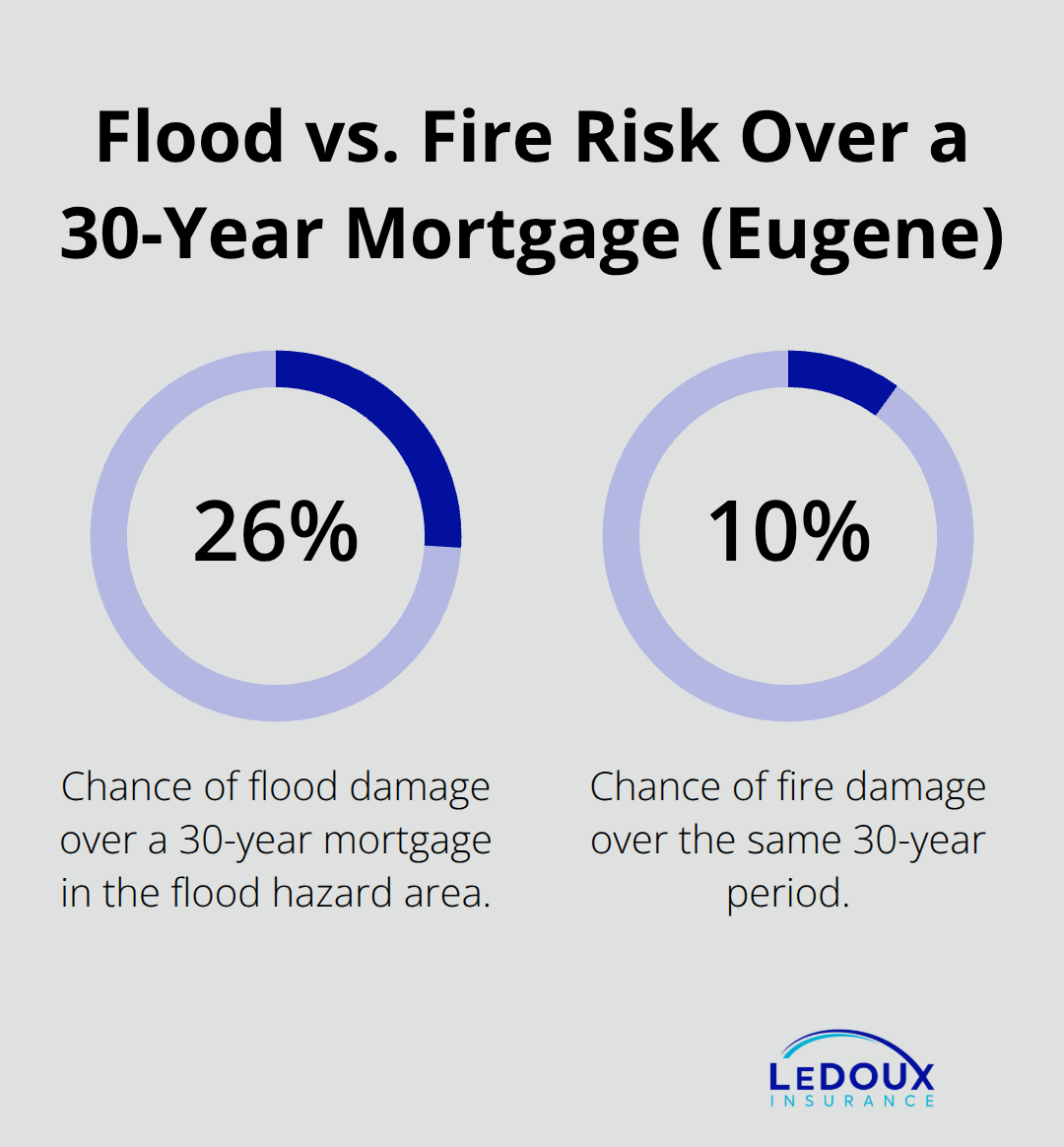
Eugene sits in a region where weather extremes and natural hazards demand insurance strategies that go beyond what a standard homeowner policy covers. The Willamette Valley experiences heavy winter rainfall that regularly causes flooding and water damage, yet flood damage is not covered by standard homeowners insurance policies. Over a 30-year mortgage, there is about a 26% chance of flood damage for structures in the flood hazard area, compared with a 10% chance of fire damage. This statistic alone explains why so many Eugene homeowners face unexpected losses.
Flood insurance requires a separate policy, and there is a 30-day waiting period after purchasing before coverage becomes effective. Waiting until a flood threatens your property means you have no protection. The City of Eugene participates in the National Flood Insurance Program, which allows residents to buy flood insurance even if they are not in a high-risk area.
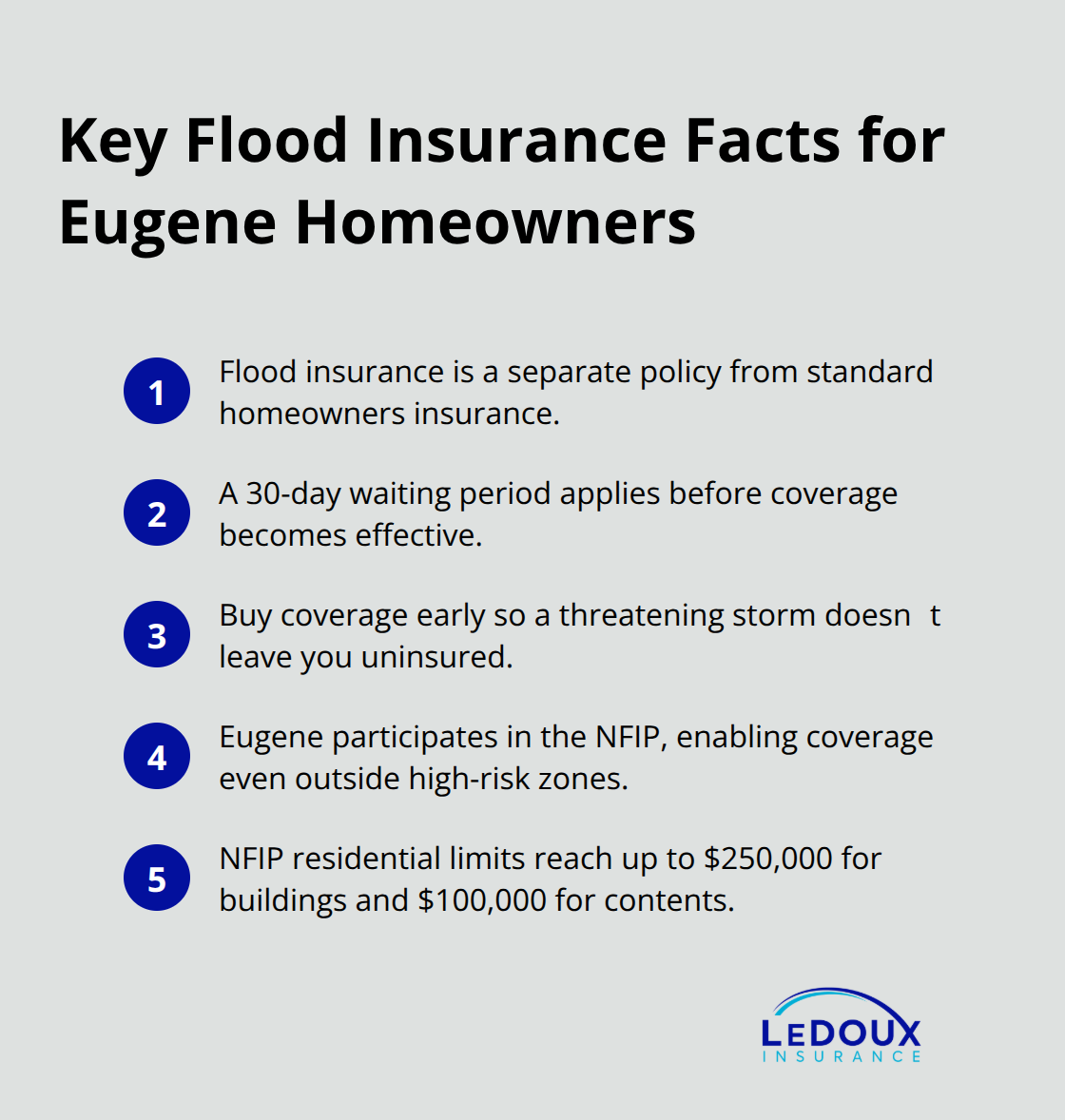
NFIP coverage limits reach up to $250,000 for building damage and $100,000 for contents on residential properties.
Wildfire Exposure and Rising Premiums
Wildfires pose another serious threat, especially for properties near forested areas or in zones flagged by wildfire-risk models that insurers now use to assess premiums. These models have become a major driver behind the sharp rate increases Eugene homeowners see at renewal. A local homeowner reported a 40% premium increase despite no claims, a trend directly linked to wildfire exposure and climate-related pricing adjustments. Even within Eugene city limits, proximity to forests or wildfire-prone zones influences insurance rates significantly.
Water Damage Beyond Flooding
Wind and hail during spring storms damage roofs and siding regularly. Sewer backups during heavy rain are common problems that standard policies often exclude. Sump pump failure and sewer backup coverage must be added as optional endorsements, not included in basic policies. These water-related hazards affect many Eugene properties but require specific add-ons to your standard coverage.
The Coverage Gaps in Standard Policies
Standard homeowner policies protect your dwelling, personal property, liability, and additional living expenses, but they leave critical gaps for Eugene residents. Earthquake coverage, common in Oregon, is also separate and not part of standard plans. Oregon does not legally require homeowners insurance, but mortgage lenders make it mandatory as a loan condition, leaving you vulnerable if your policy lacks the right coverage for local risks.
Taking time now to evaluate your actual risks and customize your coverage prevents the shock of discovering gaps when you file a claim. The specific hazards that threaten your home depend on its location, age, and proximity to natural risk zones. Understanding which coverage options apply to your situation sets the foundation for protecting your property effectively.
What Coverage Actually Protects Your Eugene Home
Dwelling Coverage and Replacement Cost
Your standard homeowners policy includes several core components, but understanding what each one covers-and what it doesn’t-makes the difference between adequate protection and costly gaps. Dwelling coverage pays to repair or rebuild your home’s structure if a covered peril like wind or hail damages it, yet the amount you choose matters significantly. Oregon homeowners pay around $2,065 per year on average according to NerdWallet data, though many carry dwelling limits that fall short of actual replacement costs. If your home would cost $450,000 to rebuild today and your policy covers only $350,000, you absorb the difference out of pocket. Replacement cost endorsements pay the cost to repair or replace your damaged property using current materials and labor.
Personal Property and Liability Protection
Personal property coverage inside your home typically covers 50 to 70 percent of your dwelling limit, meaning a $400,000 home might have only $200,000 to $280,000 in contents protection. That sounds reasonable until you itemize what’s actually inside: furniture, electronics, clothing, kitchen appliances, and tools add up fast. Many Eugene homeowners underestimate their belongings’ value and discover they’re underinsured only after a loss. Liability coverage protects you legally if someone is injured on your property or you accidentally damage someone else’s property, with typical limits ranging from $100,000 to $300,000. Additional living expenses cover hotel stays, meals, and other costs if your home becomes uninhabitable after a covered loss, preventing financial strain during recovery.
Identifying Coverage Gaps in Eugene
The real challenge for Eugene homeowners is recognizing what standard policies exclude and addressing those gaps deliberately. Flood damage requires separate flood insurance through the National Flood Insurance Program, and the 30-day waiting period means procrastination costs you protection. Sump pump failure and sewer backup coverage must be added as endorsements because standard policies treat water damage from internal plumbing differently than weather-related water intrusion. Earthquake coverage, essential in Oregon, is also separate and typically costs $15 to $30 per month depending on your home’s age and construction type.
Customizing Coverage for Your Specific Property
Your home’s location, age, and proximity to flood zones or forests determine which endorsements make sense. A 1970s home in a flood zone needs different protection than new construction on higher ground. Taking time to customize your policy now, rather than discovering exclusions during a claim, separates prepared homeowners from those facing unexpected out-of-pocket costs when disaster strikes. The next step involves identifying which money-saving strategies apply to your situation without sacrificing the protection your Eugene property actually needs.
How to Cut Your Eugene Home Insurance Costs Without Sacrificing Protection
Bundle Home and Auto Insurance for Immediate Savings
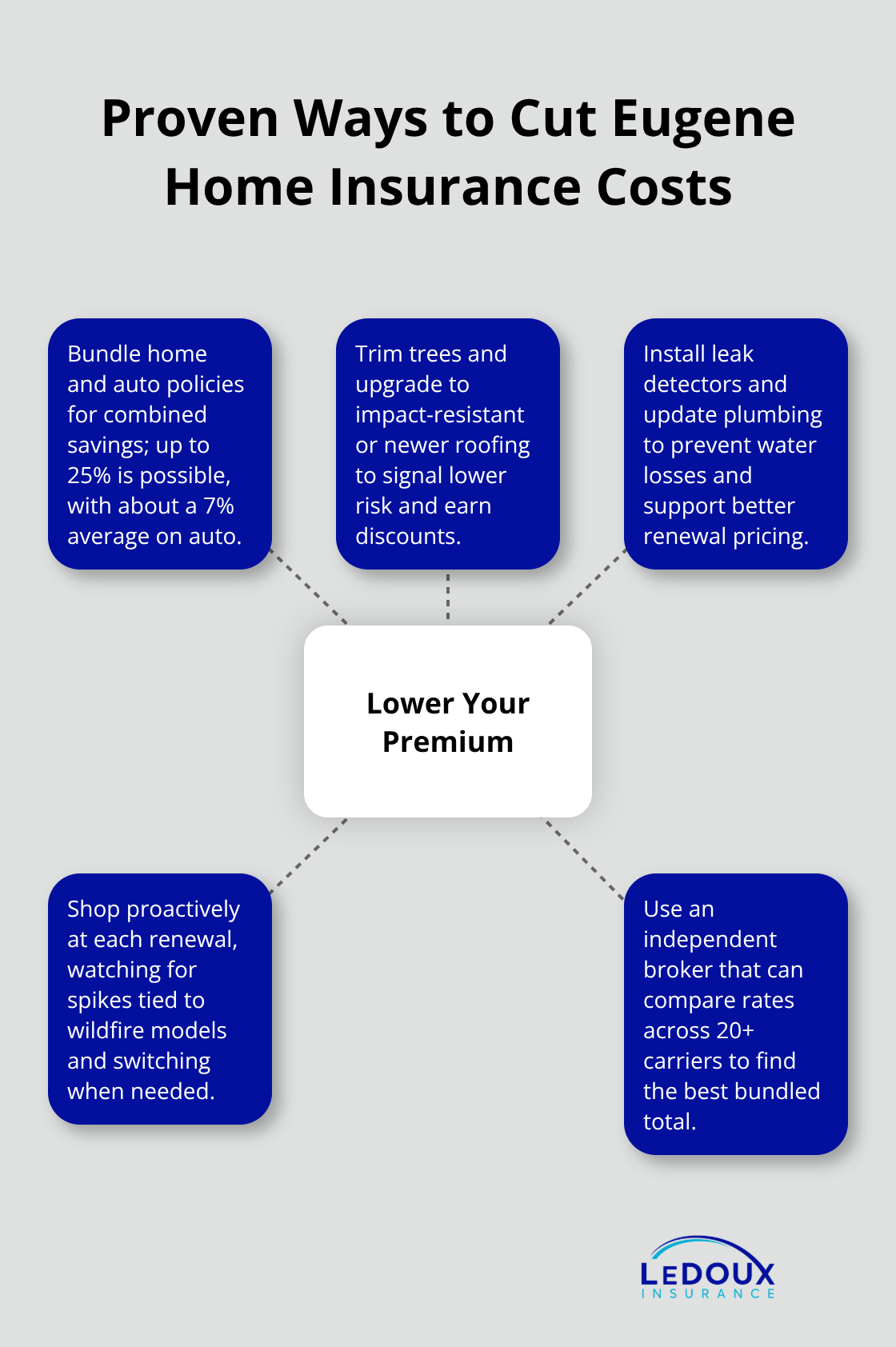
Customizing your coverage addresses local risks, but the real opportunity to reduce what you pay lies in three practical strategies that Eugene homeowners often overlook. Bundling your home and auto insurance with one carrier can save up to 25% or more on your combined premium, though the average bundle savings is 7% off your car insurance, making it a practical way to lower your annual costs. Instead of shopping auto and home policies separately, obtain quotes from the same insurer for both lines and compare the bundle total against what you’re paying now.
Many Eugene homeowners stay with separate carriers simply because they haven’t run the numbers, leaving hundreds of dollars on the table each year. When you bundle, ask the insurer to apply every available discount: multi-policy bundling, protective devices like alarm systems, smart home features such as leak detectors, and loyalty or good-payer discounts. According to NerdWallet data, Oregon homeowners average $2,065 annually for coverage, but bundled customers often pay noticeably less.
Working with an independent broker rather than a captive agent matters here because brokers shop multiple carriers and can find you the best bundled rate across different companies, not just one insurer’s offerings. An independent firm like LeDoux Insurance Agency Inc. represents 20+ top-rated carriers, giving you access to competitive options that a single-company agent cannot provide.
Reduce Risk Through Home Improvements
Home improvements that reduce risk directly lower what insurers charge, and this is where you control your own premium. Trim trees away from your roof and gutters to reduce wildfire exposure and wind damage risk, potentially saving 5 to 10 percent on your annual premium depending on your location and how close you are to wooded areas. Upgrade your roof to impact-resistant materials or replace an aging roof altogether to signal lower claims risk to underwriters and justify premium reductions when you renew.
Install water detection systems or upgrade your plumbing to reduce sewer backup and leak claims (endorsements that already cost extra become less necessary with modern systems in place). Document these improvements with photos and receipts, then provide them to your insurer at renewal to give concrete evidence for a rate adjustment. The key is acting before renewal time rather than hoping an insurer notices your improvements.
Monitor Your Renewal and Shop Proactively
Eugene homeowners who actively monitor their renewal quotes every 6 to 12 months catch rate spikes early and can shop around or negotiate based on their risk-reducing actions. A 40 percent premium jump at renewal signals either wildfire-risk model changes or simple rate creep that a competing carrier might not apply. Waiting passively for renewal notices guarantees you pay whatever rate your current insurer sets, while proactive shopping and bundling keep costs aligned with your actual risk profile.
Final Thoughts
Protecting your Eugene home means addressing the specific risks your property faces, from flood and wildfire exposure to water damage from heavy rainfall. Customizing your policy with flood insurance, sewer backup protection, and earthquake coverage closes the gaps that standard homeowner policies leave open. Dwelling coverage should reflect your actual replacement costs, personal property limits should match what you own, and liability protection should match your net worth.
The money-saving strategies work together to lower your annual costs without sacrificing protection. Bundling your home and auto insurance, taking advantage of multi-policy and protective device discounts, and making risk-reducing home improvements all reduce what you pay. Shopping your renewal every 6 to 12 months prevents rate creep and catches wildfire-related pricing changes before they lock you into inflated premiums.
Gather your current policy documents and list what coverage you actually carry versus what your Eugene home requires based on its location and age. Compare your dwelling limit against current replacement costs in your area, verify your personal property coverage matches your belongings, and confirm you have flood insurance if you’re in or near a flood zone. LeDoux Insurance Agency Inc. represents 20+ top-rated carriers and specializes in Eugene homeowners insurance tips tailored to local risks, so contact us to review your current policy and get quotes that reflect both your protection needs and your budget.
The information provided in this blog is for general informational purposes only and does not constitute legal, financial, or insurance advice. Coverage options, terms, and availability may vary. Please consult with a licensed professional for advice specific to your situation. Artificial intelligence may have been used to generate text and images in some blog articles.
