

Liability Insurance for Startups: Build a Solid Foundation
Starting a business means taking on new risks. Lawsuits and liability claims can drain your resources fast, which is why liability insurance for startups isn’t optional-it’s essential.
At LeDoux Insurance Agency Inc., we help founders understand what coverage they actually need. This guide walks you through the types of liability protection available and how to pick the right limits for your business.
What Liability Insurance Actually Covers
General liability insurance protects your startup when a third party claims you caused them bodily injury, property damage, or financial harm through your business operations. This covers medical expenses if a client gets hurt at your office, repair costs if you accidentally damage a customer’s equipment, or legal defense if someone sues you for misleading advertising. The Hartford notes that general liability covers defense costs and settlements, which means the insurer pays for both your lawyer and any judgment against you, up to your policy limit. Most startups underestimate how quickly these costs accumulate-a single lawsuit can cost $10,000 to $50,000 just in legal fees before any settlement is paid. This is why coverage from day one matters more than most founders realize.
Where Startup Liability Actually Comes From
Most startup founders think liability claims only happen to manufacturers or contractors, but that’s wrong. A software consultant who gives bad advice, a marketing agency that uses unlicensed images in a campaign, or a service-based startup whose employee accidentally injures a client at their location-all face real liability exposure. Service-based startups particularly need professional liability insurance because errors or negligence in your advice can cost clients thousands. The U.S. Small Business Administration emphasizes that liability risk exists from your first customer interaction, whether you’re home-based or in a commercial space. Homeowners insurance explicitly excludes business-related claims, so running your startup from home without proper coverage leaves you personally liable for damages.
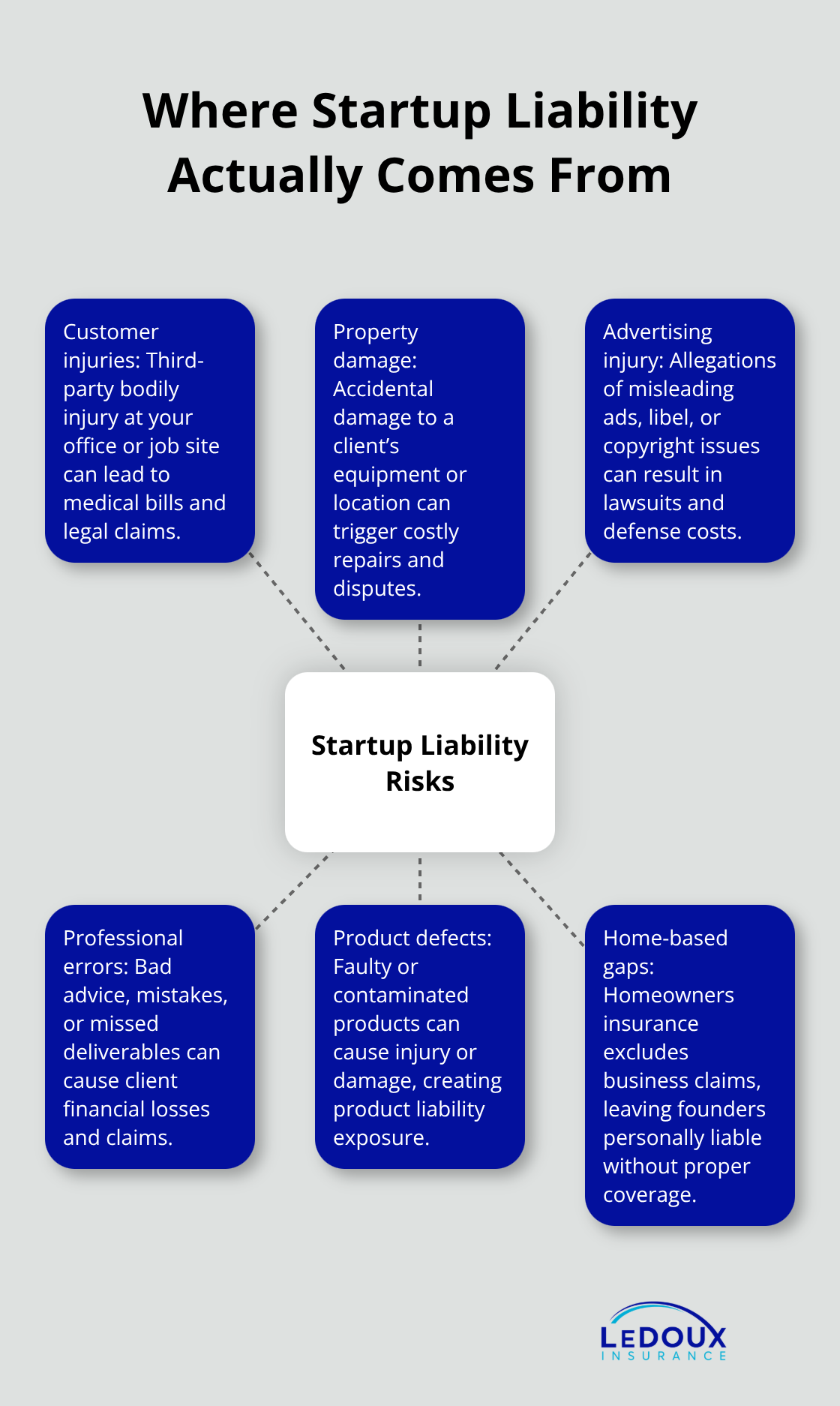
Even low-revenue startups face lawsuits-it’s not about company size, it’s about whether someone can claim you caused them harm.
Why Liability Claims Disrupt Your Business
A lawsuit doesn’t just cost money; it derails your business. Legal fees consume time that should go to growth, and settlements can deplete cash reserves you need for payroll or inventory. Many startups fail not because of bad products but because they couldn’t absorb the financial hit from a single claim. Adequate liability coverage means the insurer covers these costs instead of your personal assets or business bank account. This protection also builds credibility-clients, landlords, and vendors often require proof of liability insurance before signing contracts. Some investors won’t fund startups without documented liability protection in place. Coverage now costs a few hundred dollars per year for basic protection, while fighting an uninsured claim can cost your entire business.
What Happens When You Skip Coverage
The financial consequences of operating without liability insurance extend beyond one lawsuit. If a claim exceeds your personal savings, creditors can pursue your home, car, and other assets to satisfy the judgment. Courts can garnish your wages for years to recover damages. Your startup’s reputation suffers when clients learn you lack insurance-many view it as a sign of instability or unprofessionalism. Banks and landlords may refuse to work with you if you can’t prove liability protection. The cost of obtaining coverage after an incident occurs is either impossible (insurers won’t cover past events) or prohibitively expensive (rates spike after claims). Starting with the right liability foundation now protects not just your business finances but your personal wealth and your ability to operate long-term.
Understanding what liability insurance covers and why you need it sets the stage for selecting the right types of protection. The next section breaks down the specific liability policies available to startups and how each one addresses different business risks.
Types of Liability Insurance for Startup Businesses
General Liability: Your Foundation Coverage
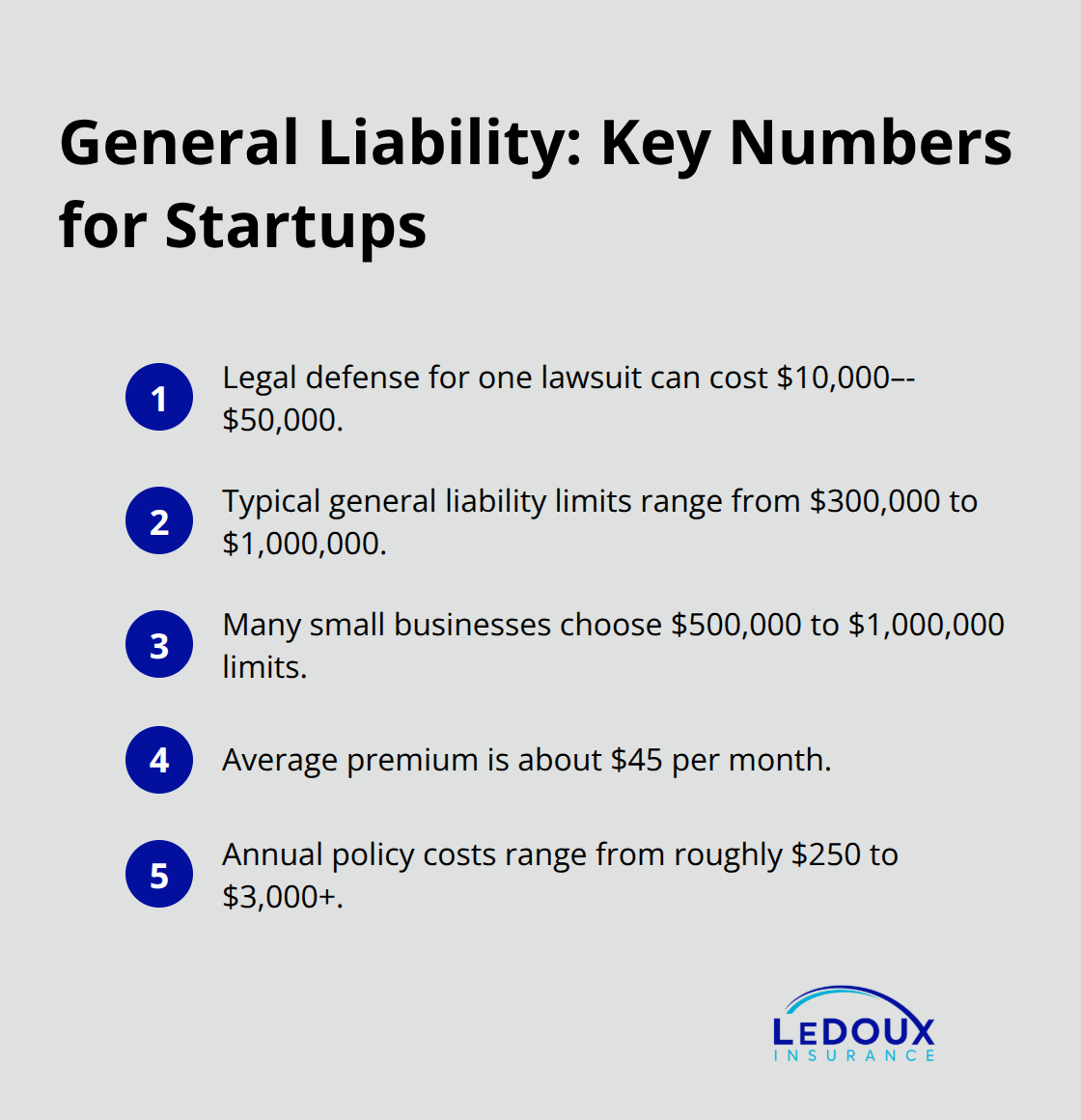
General liability insurance forms the foundation, and most startups should purchase it before their first customer interaction. This policy covers third-party bodily injury claims, property damage you cause to someone else’s belongings, and advertising injury claims like accusations of libel or false advertising. The Hartford reports that general liability covers both defense costs and settlements, meaning the insurer pays your legal bills and any judgment up to your policy limit. For startups, this matters because a single lawsuit defense can cost $10,000 to $50,000 before any settlement is paid.
A service-based startup whose employee injures a client, a consultant whose advice causes financial loss, or a product company whose item damages customer property all need this baseline protection. You can secure coverage before your official launch, which is often necessary to sign contracts or lease commercial space. Coverage limits typically range from $300,000 to $1,000,000 for early-stage startups, with most small businesses choosing $500,000 to $1,000,000 as their standard. Small businesses pay an average premium of $45 per month for general liability insurance, with annual policy costs ranging from around $250 to over $3,000 depending on industry risk and location.
Professional Liability: Protection for Service-Based Startups
Professional liability insurance protects service-based startups from claims that your work caused financial harm through errors, negligence, or failure to deliver promised results. This policy is essential for consultants, marketing agencies, software developers, accountants, and design firms. A marketing agency that uses unlicensed images in a campaign faces a copyright claim; a tech consultant who recommends flawed infrastructure faces a claim for lost business revenue; a bookkeeper who misses tax deductions costs a client money.
These errors and omissions claims are not covered under general liability and can cost $25,000 to $100,000 to defend. Professional liability covers defense costs plus settlements, protecting your startup when a client claims your work caused them financial loss. Coverage limits for startups typically range from $250,000 to $1,000,000. Hiscox specializes in tailored errors and omissions coverage for IT, marketing, and business services startups.
Product Liability: Essential for Product-Based Startups
Product liability insurance applies only if your startup manufactures, sells, or distributes physical products. This covers claims that your product caused bodily injury or property damage to a customer. A food startup faces product liability if a customer becomes ill from contaminated product; a hardware company faces claims if a defective tool injures someone. This policy covers defense costs, medical expenses, and settlements up to your limit.
Most product-based startups need at least $500,000 to $1,000,000 in coverage. The cost depends heavily on product type and risk level, ranging from $400 to $2,000+ annually. Your specific industry and product category determine both what coverage you need and what insurers will charge for it.
Selecting the right liability coverage requires more than just picking a policy type-you need to assess your actual business risks and match them to appropriate limits and providers.
How to Choose the Right Liability Coverage for Your Startup
Assess Your Specific Business Risks
Start with an honest assessment of what can go wrong in your specific business, not what could theoretically happen to any startup. A software consultant faces different liability exposure than a cleaning service, which faces different risks than a product manufacturer. The U.S. Small Business Administration notes that common startup risks include customer injuries, professional mistakes, and property damage, but the likelihood of each varies dramatically by industry. List the specific ways a customer or third party could claim you caused them harm. A web designer might face claims that a website failure cost a client revenue; a fitness instructor might face injury claims if someone gets hurt during a session; an e-commerce startup might face product liability if items malfunction. Once you identify your actual exposure, you can match it to the right coverage type and appropriate limits.
Many startups purchase too much of the wrong coverage and too little of what they actually need, which wastes money and leaves gaps that matter. Your lease, client contracts, or lender agreements may mandate specific minimum coverage amounts, so review those documents before deciding on limits.
Match Coverage Limits to Your Exposure
Coverage limits should reflect both your revenue and your potential liability exposure, not just what feels affordable. A startup with $500,000 in annual revenue carrying only $300,000 in general liability coverage is underinsured if a single lawsuit could cost more than that. Startups with physical locations or employees should lean toward $500,000 to $1,000,000 in general liability limits as a baseline, while service-based startups need professional liability limits of at least $250,000 to $1,000,000 depending on the financial impact your work could have on clients.
Your industry and business model determine what coverage you actually need. A product-based startup needs product liability protection; a consulting firm needs professional liability; a business with employees needs workers’ compensation. Mismatching coverage to your actual risk leaves you exposed where it matters most.
Compare Quotes from Licensed Professionals
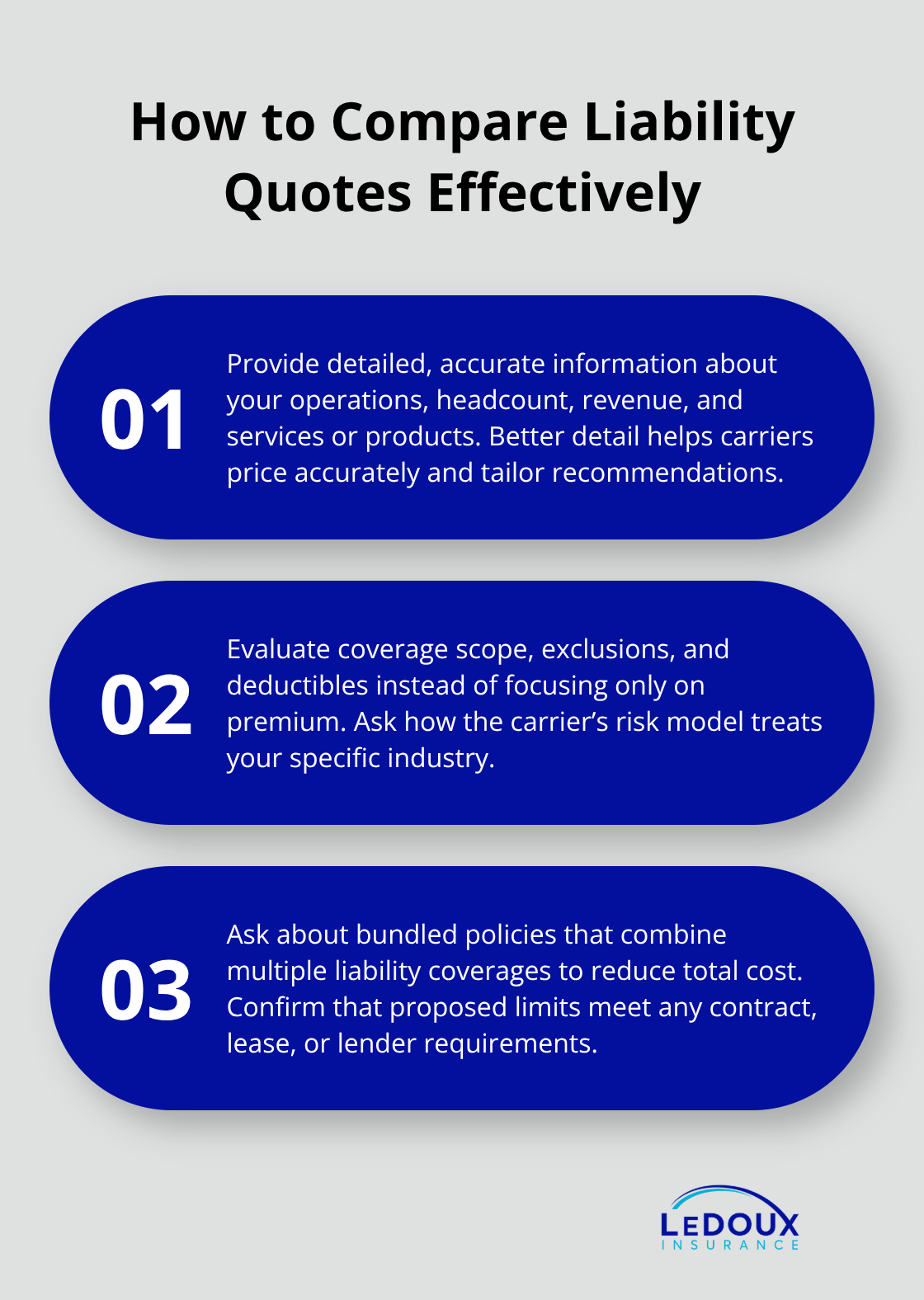
Licensed insurance professionals can identify coverage gaps you might miss on your own. Compare at least three quotes from different carriers, but focus on what each policy actually covers and what it excludes, not just the premium price. A policy $50 cheaper per month might exclude your specific industry risk or require higher deductibles that cost you more after a claim.
When you request quotes, provide detailed information about your operations, employee count, revenue, and the specific services or products you offer. This helps insurers give you accurate pricing and coverage recommendations. Ask each provider how their risk model handles your industry and whether they offer bundled policies that combine multiple liability coverages at a lower cost than purchasing them separately.
Final Thoughts
Liability insurance for startups forms the foundation that protects both your business and your personal assets from a single costly claim. Start with general liability coverage before your first customer interaction, add professional or product liability based on your specific business model, and set coverage limits that match your actual exposure rather than just what feels affordable. A single lawsuit costs $10,000 to $50,000 in legal fees alone, which most startups cannot absorb without threatening survival, while proper coverage costs only a few hundred dollars per year.
Request quotes from at least three licensed insurance professionals and focus on what each policy actually covers rather than comparing premiums alone. Ask about bundled policies that combine multiple liability coverages at lower costs than purchasing separately, and review your lease, client contracts, and lender requirements to identify mandatory coverage amounts. Your industry, revenue, employee count, and specific operations all affect what you need and what you’ll pay.
Clients, landlords, and investors expect proof of coverage before signing agreements, and many won’t work with startups that lack documented protection. As your startup scales, review your policies annually and increase limits when you hire employees, expand services, or purchase new equipment. We at LeDoux Insurance Agency Inc. help startups across Oregon understand what liability insurance for startups they actually need and deliver competitive options to protect what matters most.
The information provided in this blog is for general informational purposes only and does not constitute legal, financial, or insurance advice. Coverage options, terms, and availability may vary. Please consult with a licensed professional for advice specific to your situation. Artificial intelligence may have been used to generate text and images in some blog articles.

