
Eugene Investment Property Insurance: Protect Your Rental Portfolio
Rental properties in Eugene generate income, but they also expose you to risks that standard homeowners insurance won’t cover. That’s where Eugene investment property insurance becomes essential.
We at LeDoux Insurance Agency Inc. help landlords understand what protection they actually need. Without the right coverage, a single liability claim or property damage event can wipe out years of rental income.
Why Rental Properties Need Different Insurance
Rental properties operate under completely different risk dynamics than homes you occupy yourself. When tenants live on your property, liability exposure skyrockets. A guest slips on ice in the driveway, a tenant’s friend gets injured in the unit, or someone claims property damage from negligence-these situations happen regularly and can result in lawsuits costing $50,000 to $300,000 or more. Standard homeowners insurance explicitly excludes rental income properties, leaving you personally liable for these claims. Oregon law doesn’t require landlords to carry specific insurance, but lenders almost always do. More importantly, without proper coverage, a single incident wipes out years of profit.
Liability Claims Hit Harder on Rental Properties
Tenants and their guests file more claims than homeowners experience. Rental properties generate more liability claims of owner-occupied homes because properties with multiple occupants create more foot traffic, more activities, and more opportunities for accidents. A tenant’s injury claim alone can cost $100,000 to defend and settle. Rental property liability coverage protects you when someone sues for bodily injury or property damage they claim resulted from your negligence as a landlord. Without adequate limits, your personal assets become targets. Most Eugene landlords carry only $100,000 in liability protection when they should carry $300,000 to $500,000 minimum.
Protecting Your Actual Income Stream
Rental income represents real money flowing into your business. When a fire, major water damage, or other disaster forces repairs, you lose rent while the property sits damaged. Loss of rents coverage compensates you for that lost income during the repair period, which typically lasts 30 to 90 days for significant claims. Without this coverage, you cover the mortgage, property taxes, and maintenance costs yourself while earning zero rental income. This financial gap destroys cash flow fast. The coverage pays your lost rents up to the policy limits, allowing you to maintain financial stability while repairs happen.
What Happens When You Underestimate Your Exposure
Many landlords think standard homeowners policies or minimal coverage will suffice. They won’t. Your lender requires proof of adequate protection, and your own financial security depends on it. A liability claim that exceeds your policy limits means you personally pay the difference-potentially hundreds of thousands of dollars. Property damage claims follow the same pattern (your coverage maxes out, and you absorb the rest). The gap between what you think you’re covered for and what you actually need creates serious vulnerability. Understanding these coverage options prevents costly mistakes later.
Coverage Options for Rental Properties in Eugene
Building Protection Through Dwelling Fire Policies
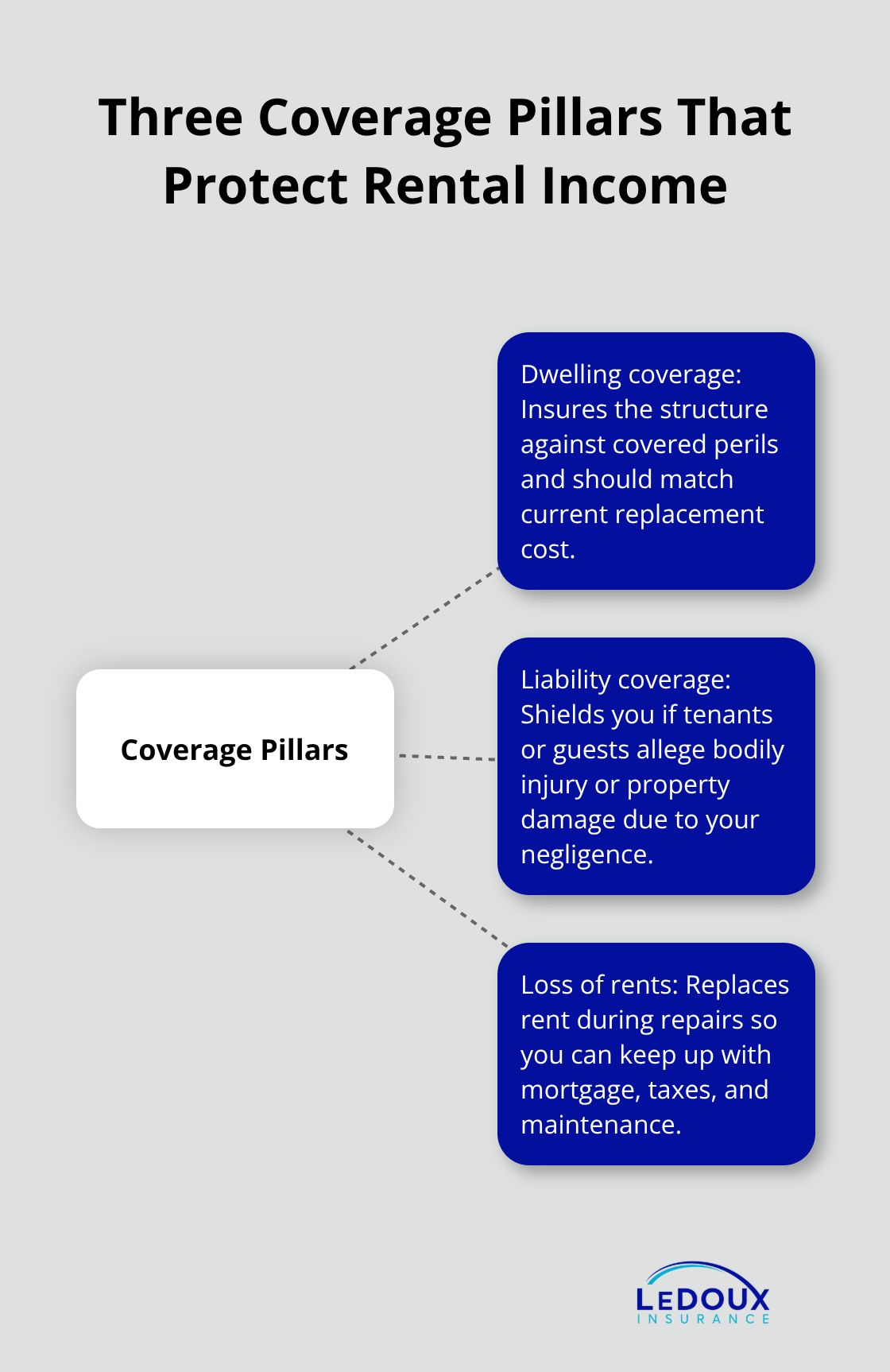
Structure protection through dwelling fire policies covers the building itself, but most landlords misunderstand what this means. A dwelling fire policy insures the physical structure against fire, wind, hail, theft, and vandalism, but it excludes business property like appliances you provide for tenants. The dwelling coverage limit should reflect your actual replacement cost, not what you paid for the property years ago.
If your rental cost $250,000 to build but would cost $350,000 to rebuild today due to inflation and construction costs, your coverage limit must reflect that higher figure. Eugene rental markets have appreciated significantly, yet many landlords carry outdated coverage limits based on older purchase prices. Request a professional property valuation from your insurance agent to establish accurate dwelling limits. This single step prevents catastrophic underinsurance that leaves you personally responsible for reconstruction costs exceeding your policy limits.
Liability Protection for Tenant and Guest Injuries
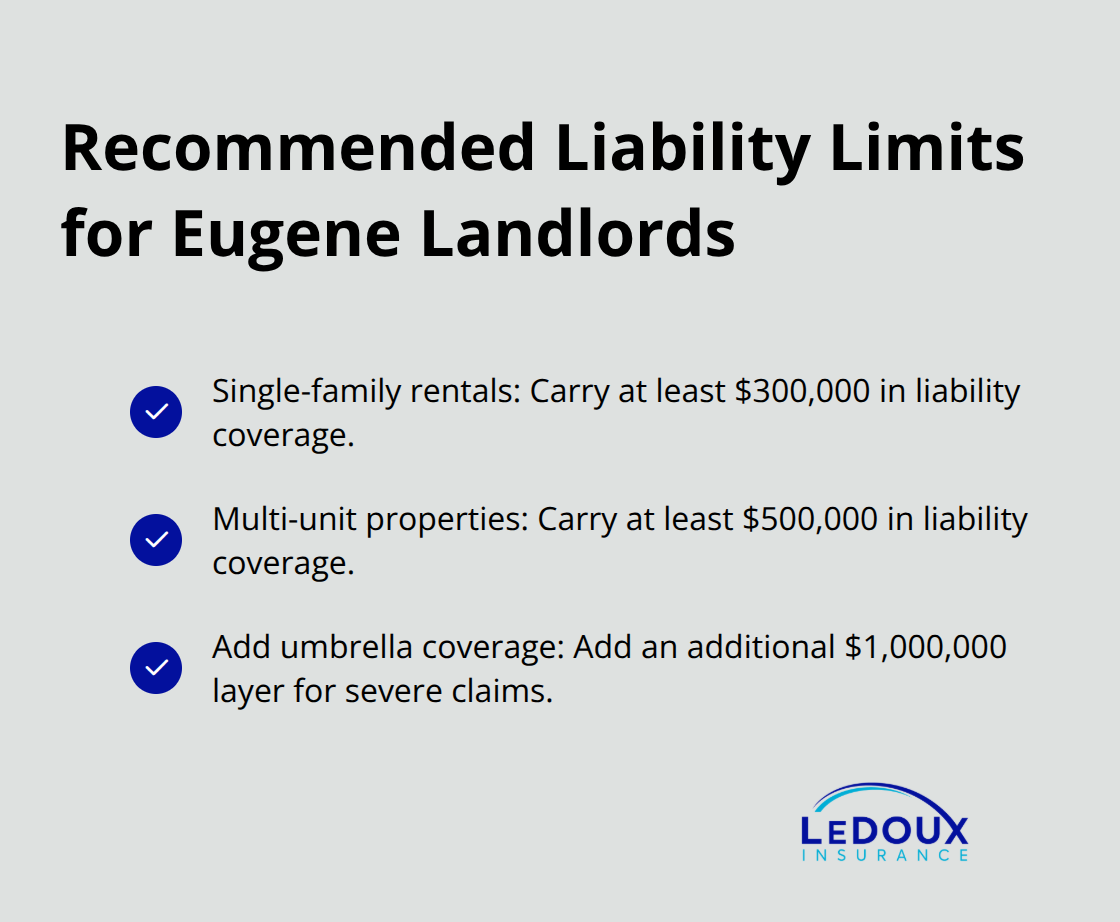
Liability coverage protects you when tenants or their guests suffer injuries on your property and hold you legally responsible. Most Eugene landlords start with $100,000 in liability limits, but this amount proves inadequate in today’s litigation environment. A serious injury claim involving permanent disability or multiple injured parties regularly exceeds $300,000 in damages and legal costs.
Minimum liability limits of $300,000 work well for single-family rentals and $500,000 for multi-unit properties, with umbrella coverage adding an additional $1,000,000 layer of protection. This layered approach (dwelling coverage plus liability plus umbrella) creates comprehensive protection against the most common claims that affect rental property owners. Tenants and their guests file more claims than homeowners experience, making adequate liability limits non-negotiable for your financial security.
Loss of Rents Coverage During Repairs
Loss of rents coverage compensates you for income lost when damage forces repairs. If a pipe burst floods your rental and creates two months of repair time, loss of rents coverage pays your lost rental income during that period, protecting your cash flow when you need it most. This coverage typically costs between $15 and $40 monthly depending on your annual rental income, yet most landlords skip it despite its importance to financial stability during disaster recovery.
Without this protection, you cover the mortgage, property taxes, and maintenance costs yourself while earning zero rental income. The financial gap destroys cash flow fast. This coverage pays your lost rents up to the policy limits, allowing you to maintain financial stability while repairs happen. Understanding these three coverage pillars (dwelling, liability, and loss of rents) positions you to identify the gaps that leave most Eugene landlords exposed.
Common Gaps in Rental Property Insurance
Underinsuring Property Value
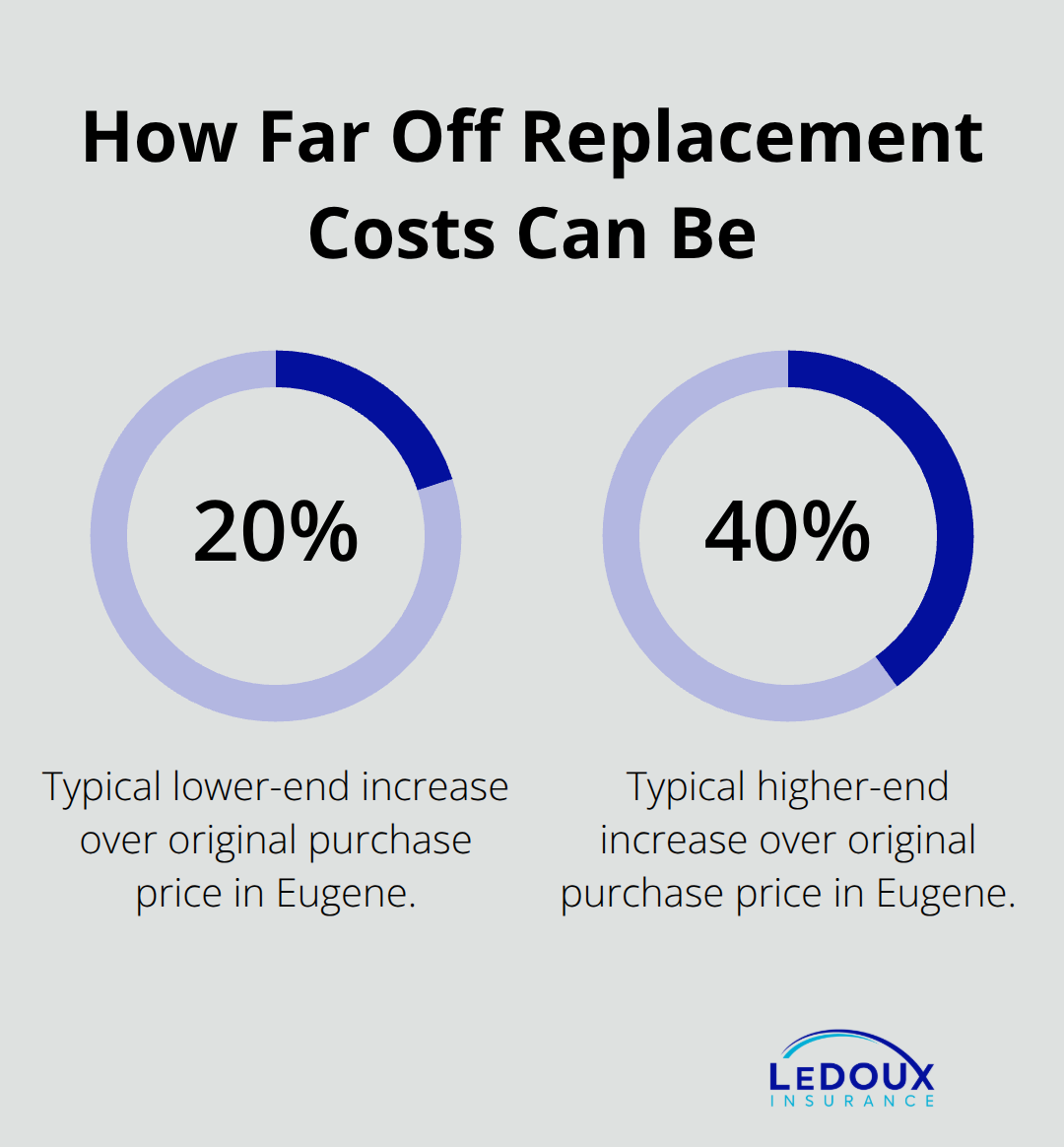
Most Eugene landlords base their dwelling coverage on what they paid for the property rather than what it would cost to rebuild today. If you purchased a rental in Eugene ten years ago for $280,000, reconstruction costs have climbed significantly due to inflation and labor shortages. A professional replacement cost assessment from your insurance agent reveals the actual figure-often 20 to 40 percent higher than the original purchase price.
This gap leaves you absorbing the difference when damage occurs. Your policy pays only up to its stated limit, and you cover everything beyond that amount from your own pocket. The solution requires requesting a professional replacement cost valuation from your agent annually to keep pace with market changes.
Overlooking Liability Limits
Liability limits haven’t kept pace with claim severity in today’s litigation environment. Many Eugene landlords maintain $100,000 limits that covered their exposure a decade ago, yet exposure has grown substantially. A tenant’s serious injury or a guest’s permanent disability easily generates $300,000 to $500,000 in damages and legal costs.
Your $100,000 policy maxes out immediately, leaving you personally responsible for the remainder. This gap represents the single most dangerous exposure in rental property portfolios. Try carrying $300,000 in liability limits for single-family rentals and $500,000 for multi-unit properties, with umbrella coverage adding an additional $1,000,000 layer of protection.
Failing to Update Coverage After Renovations
Landlords neglect to update coverage after renovations or property improvements. Adding a deck, upgrading electrical systems, installing new flooring, or finishing a basement increases your property’s replacement cost, but most owners never notify their insurance agent about these changes. Your policy still reflects the pre-renovation value, creating dangerous underinsurance on the improved structure.
A $40,000 deck addition that increases your home’s replacement cost should trigger a coverage limit increase, yet this oversight happens constantly. Notify your agent immediately whenever you complete renovations or major improvements. These steps cost nothing beyond the policy adjustments themselves, yet they eliminate the coverage gaps that turn disasters into financial catastrophes.
Final Thoughts
Eugene investment property insurance protects your rental portfolio from the financial devastation that comes with liability claims, property damage, and lost income. The gaps we’ve covered-underinsured property values, inadequate liability limits, and outdated coverage after renovations-represent real vulnerabilities that affect most landlords. Addressing these gaps requires action, not just awareness.
Start with your current policy documents and compare your dwelling coverage limits against a professional replacement cost assessment. Request this valuation from your insurance agent at no charge, then review your liability limits honestly. If you’re carrying $100,000 in coverage, increase it to at least $300,000 for single-family rentals or $500,000 for multi-unit properties, with umbrella coverage adding an additional $1,000,000 layer of protection.
Contact LeDoux Insurance Agency Inc. to schedule your portfolio review and identify exactly where your Eugene investment property insurance coverage falls short. We help landlords throughout the area review their entire rental portfolios and deliver competitive options tailored to your specific situation.
The information provided in this blog is for general informational purposes only and does not constitute legal, financial, or insurance advice. Coverage options, terms, and availability may vary. Please consult with a licensed professional for advice specific to your situation. Artificial intelligence may have been used to generate text and images in some blog articles.

