

Flood Earthquake Landlord Insurance: Comprehensive Protection for Rentals
Rental property owners in Oregon face real exposure to natural disasters. Standard landlord insurance policies leave you vulnerable because they don’t cover flood or earthquake damage-two of the costliest threats to rental properties.
At LeDoux Insurance Agency Inc., we help landlords understand their options for flood and earthquake landlord insurance. The right coverage protects your investment and keeps your business stable when disaster strikes.
Why Standard Landlord Insurance Leaves You Exposed
Your landlord insurance policy protects against fire, storms, theft, and liability claims. It does not protect against flood or earthquake damage. Standard landlord policies explicitly exclude both perils, leaving Oregon rental property owners facing potentially catastrophic financial loss. If a flood or earthquake damages your rental property, you pay for repairs out of pocket. If the damage makes the property uninhabitable, you lose rental income with no coverage to compensate. This gap exists because flood and earthquake risks vary dramatically by location, and insurers price them separately to reflect actual exposure.
Flood Risk Extends Beyond Mapped Zones
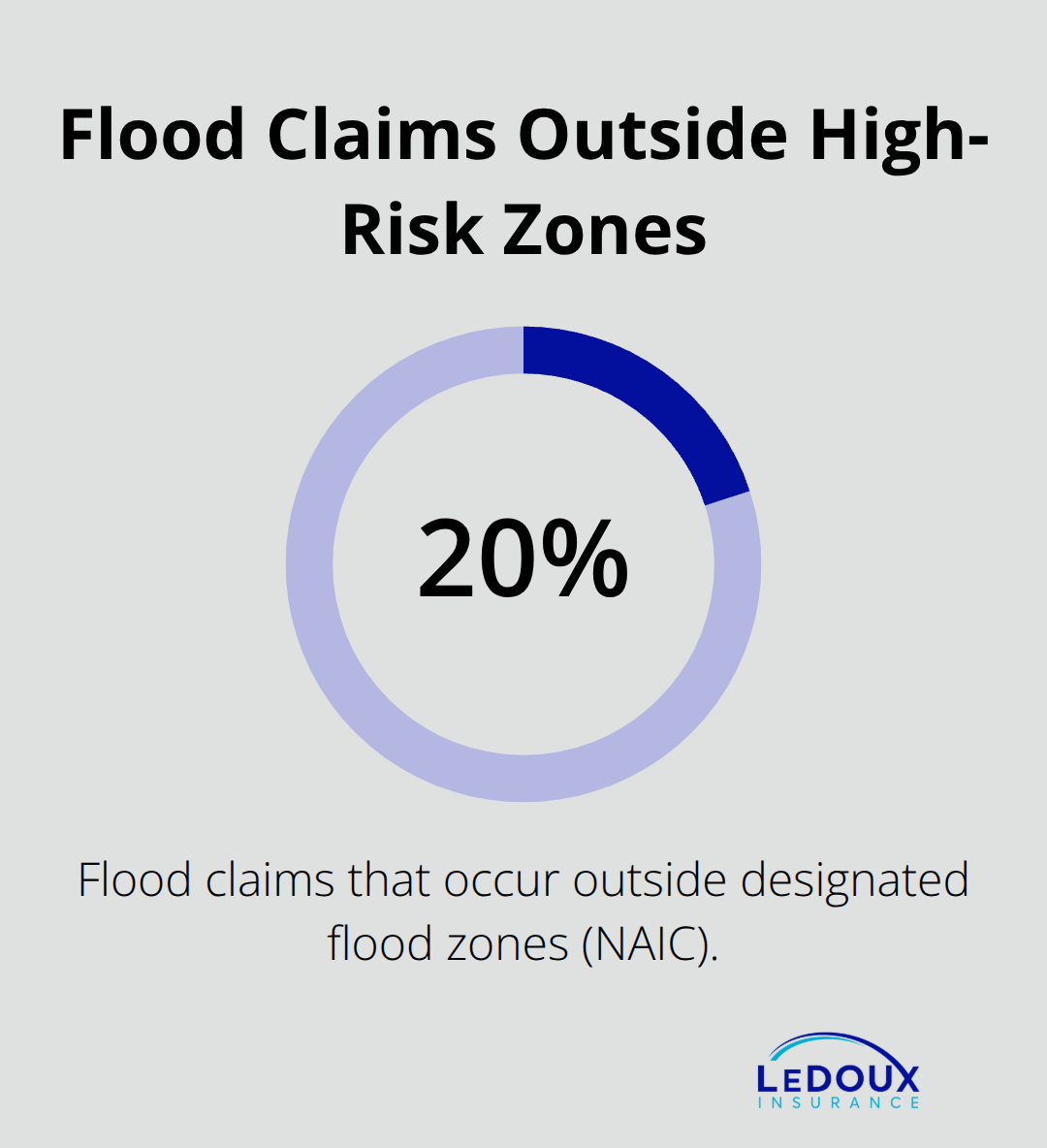
Oregon’s flood risk reaches far beyond the mapped high-risk zones. According to the National Association of Insurance Commissioners, about 20 percent of flood claims occur in properties outside designated flood zones. Many landlords assume their property is safe because it sits outside a mapped floodplain, then face devastating losses when heavy rain, river overflow, or poor drainage causes water damage.
A single flood event can cost $25,000 to $100,000 or more in repairs, depending on the extent of water intrusion and damage to structure, systems, and contents. Flood insurance through the National Flood Insurance Program or private carriers costs between $500 and $2,000 annually for most Oregon rental properties-a fraction of potential repair costs. Without it, you absorb the full expense and lose rental income while repairs happen.
Earthquake Damage Compounds Property Loss
Oregon sits in an active seismic zone. The Cascadia Subduction Zone, which runs along the Pacific Coast, poses a significant long-term earthquake risk. Seismic activity damages rental properties through foundation cracks, structural failure, burst pipes, and damage to electrical and HVAC systems. Repair costs for earthquake damage average $50,000 to $150,000 for residential properties, according to the U.S. Geological Survey. Earthquake insurance typically costs $300 to $800 annually for Oregon rental properties (depending on property age, construction type, and coverage limits). Skipping this coverage means betting that your property will not experience significant seismic activity during your ownership. That bet fails when an earthquake hits.
Why These Gaps Matter Now
The financial exposure from uninsured flood and earthquake damage threatens your rental business stability. One major event wipes out years of profit and forces you to choose between expensive repairs and prolonged vacancy. Understanding what your current landlord policy actually covers-and what it does not-is the first step toward real protection. The next section walks through how flood and earthquake coverage actually works and what options exist to fill these dangerous gaps.
How Flood and Earthquake Insurance Works for Rental Properties
Two Pathways to Flood Protection
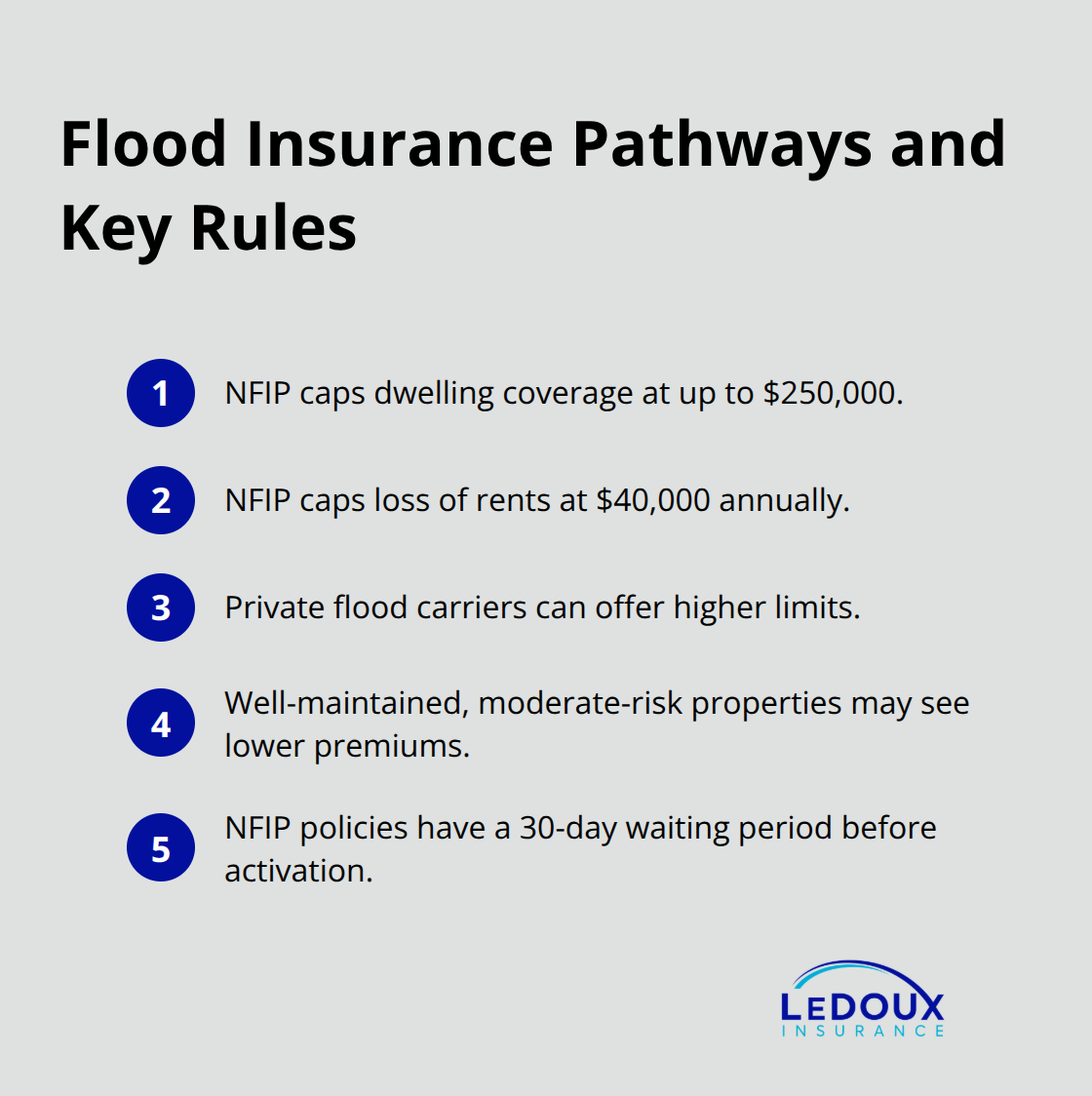
Flood insurance for rental properties operates through two distinct pathways, and understanding which one applies to your situation matters because the coverage limits and costs differ significantly. The National Flood Insurance Program, or NFIP, is a federal program that caps dwelling coverage at up to $250,000 and loss of rents at $40,000 annually. Private flood insurance carriers offer higher limits and sometimes lower premiums for well-maintained properties in moderate-risk areas. Oregon rental property owners should know that NFIP policies require a 30-day waiting period before coverage activates, so waiting until storm season to purchase protection leaves you exposed.
Flood insurance covers water damage to the structure, foundation, electrical systems, HVAC equipment, and built-in appliances, but it does not cover contents or tenant belongings. The average annual premium for NFIP flood coverage on an Oregon rental property ranges from $500 to $1,200 depending on flood zone designation and elevation, according to FEMA data. If your property sits outside a mapped flood zone, you still qualify for preferred-risk rates starting around $400 annually, which is substantially cheaper than facing a $50,000 water damage bill.
How Earthquake Coverage Protects Your Structure
Earthquake insurance works differently because it covers sudden, violent ground movement that damages foundation, walls, roof, and permanently installed systems. Oregon earthquake policies typically carry deductibles of 10 to 25 percent of the coverage limit rather than fixed dollar amounts, meaning a $200,000 policy with a 15 percent deductible requires you to pay $30,000 out of pocket before coverage kicks in. This structure reflects the low-frequency but high-severity nature of seismic events.
Annual earthquake premiums for Oregon rentals average $400 to $900 based on construction type, with older masonry buildings costing more to insure than newer wood-frame structures. Combining flood and earthquake coverage with your base landlord insurance creates genuine comprehensive protection because each policy addresses specific perils your standard coverage excludes entirely.
Layering Policies for Complete Protection
The practical approach to layering these policies involves three steps. First, determine your actual flood risk through the FEMA Flood Map Service Center and ask your insurance agent whether your property qualifies for preferred-risk rates, because many landlords overpay for flood insurance on properties with minimal exposure. Second, evaluate earthquake risk based on your property’s age, construction material, and distance from known fault lines-properties built before 1980 in seismic zones face substantially higher repair costs from earthquakes, making coverage more valuable.
Third, adjust your deductibles strategically across all three policies to balance premium costs with your financial capacity to absorb losses. Many landlords set $2,500 deductibles on flood and earthquake policies while maintaining $1,000 deductibles on their base landlord policy, a structure that keeps premiums reasonable while protecting against catastrophic exposure.
Coordinating Coverage Across Multiple Carriers
Review your combined coverage limits annually because rental income needs change as property values appreciate and rents increase. If your property generates $3,000 monthly rental income, your loss-of-rent coverage should reflect at least six months of income ($18,000) to sustain your business through extended repairs. Combining policies from multiple carriers sometimes produces better overall protection than bundling everything with one insurer, though coordination becomes more complex. An independent agent who represents multiple carriers prevents gaps and overlaps that create false economy and helps you navigate the specifics of each policy’s terms.
The next section walks through how to assess your property’s individual risk profile and select the right coverage limits and carriers for your rental business.
Selecting Coverage That Matches Your Property’s Actual Risk
Assess Your Property’s Flood Risk Profile
Start with your property’s specific characteristics because flood and earthquake risk vary dramatically across Oregon, and generic coverage amounts waste money or leave you exposed. Request a detailed flood zone assessment from FEMA’s Flood Map Service Center, then cross-reference with local county assessor data on historical water damage claims in your neighborhood. Properties near creeks, in low-lying areas, or with poor drainage qualify for preferred-risk flood rates starting around $400 annually, while properties in high-risk zones pay $1,200 to $2,000. A well-maintained rental with updated electrical systems and proper drainage might qualify for significant discounts from private flood carriers that the National Flood Insurance Program cannot offer.
Evaluate Earthquake Exposure Based on Construction Type
For earthquake risk, your property’s construction type and age matter most. Wood-frame structures built after 1980 cost $400 to $600 annually to insure against earthquakes, while older masonry or unreinforced concrete buildings run $800 to $1,500 because repair costs from seismic damage are substantially higher. Contact your local building department or a structural engineer if your property was built before 1980 in a seismic zone. Retrofit costs sometimes justify earthquake coverage through lower long-term expenses when you calculate the total financial impact over your ownership period.
Compare Quotes Across Multiple Carriers
Compare actual quotes from multiple carriers because premium variation for identical coverage reaches 30 to 50 percent across insurers. The National Flood Insurance Program sets standardized rates, so NFIP quotes are consistent, but private flood carriers price based on individual property condition.

For earthquake coverage, request quotes from at least three carriers and specify your preferred deductible percentage. A 15 percent deductible costs roughly 30 percent less than a 10 percent deductible, so adjusting this lever creates real savings.
Provide each carrier with identical property details-age, square footage, construction type, roof condition, distance from flood sources, and claims history-so quotes compare apples to apples. Many landlords discover their property qualifies for preferred-risk pricing or carrier-specific discounts only after requesting detailed quotes, which can reduce annual premiums by $300 to $500 combined across all three policies. An independent agent prevents the common mistake of accepting the first quote because initial offers rarely reflect your property’s actual risk profile or available discounts.
Work with an Independent Agent for Competitive Options
An independent agent who represents multiple carriers accesses competitive options across flood, earthquake, and landlord policies simultaneously rather than forcing you into a single company’s offerings. This approach prevents gaps and overlaps that create false economy and helps you navigate the specifics of each policy’s terms. LeDoux Insurance Agency Inc. represents 20+ top-rated carriers, which means we can access competitive options across all three policy types at once. Coordination becomes more complex when combining policies from multiple carriers, but the savings and customization often justify the additional effort.
Final Thoughts
Protecting your Oregon rental property from flood and earthquake damage requires moving beyond standard landlord insurance. The gaps in conventional coverage are real, the financial stakes are high, and the solution is straightforward: add flood and earthquake policies tailored to your property’s actual risk profile. Shopping around across multiple carriers typically reveals 30 to 50 percent premium variation for identical coverage, which means comparing quotes saves hundreds of dollars annually while ensuring you have genuine comprehensive protection.
The most common mistake landlords make is treating flood and earthquake insurance as afterthoughts rather than core components of their risk strategy. They purchase base landlord policies first, then add flood and earthquake coverage months or years later, often at higher rates or with gaps in protection. Instead, approach all three policies as a coordinated system from the start, adjusting deductibles strategically across policies to balance premiums with your financial capacity to absorb losses.
We at LeDoux Insurance Agency Inc. specialize in helping Oregon landlords build comprehensive flood earthquake landlord insurance strategies that actually protect their investments. Our agents will assess your property’s actual risk profile, compare options across multiple carriers, and customize a policy that protects your rental business without overpaying for unnecessary coverage. Contact LeDoux Insurance Agency Inc. today for a free quote on comprehensive landlord coverage including flood and earthquake protection.
The information provided in this blog is for general informational purposes only and does not constitute legal, financial, or insurance advice. Coverage options, terms, and availability may vary. Please consult with a licensed professional for advice specific to your situation. Artificial intelligence may have been used to generate text and images in some blog articles.

