

Vacant Property Landlord Policy: Bridge Gaps in Between Tenants
The gap between tenants is when your property is most vulnerable. Standard landlord insurance typically doesn’t cover vacant units, leaving you exposed to theft, vandalism, and other losses during transitions.
A vacant property landlord policy fills this protection gap. We at LeDoux Insurance Agency Inc. help landlords understand what coverage options actually work for empty properties and how to minimize risk while units sit vacant.
What Vacant Property Coverage Actually Protects
How Vacant Property Policies Work
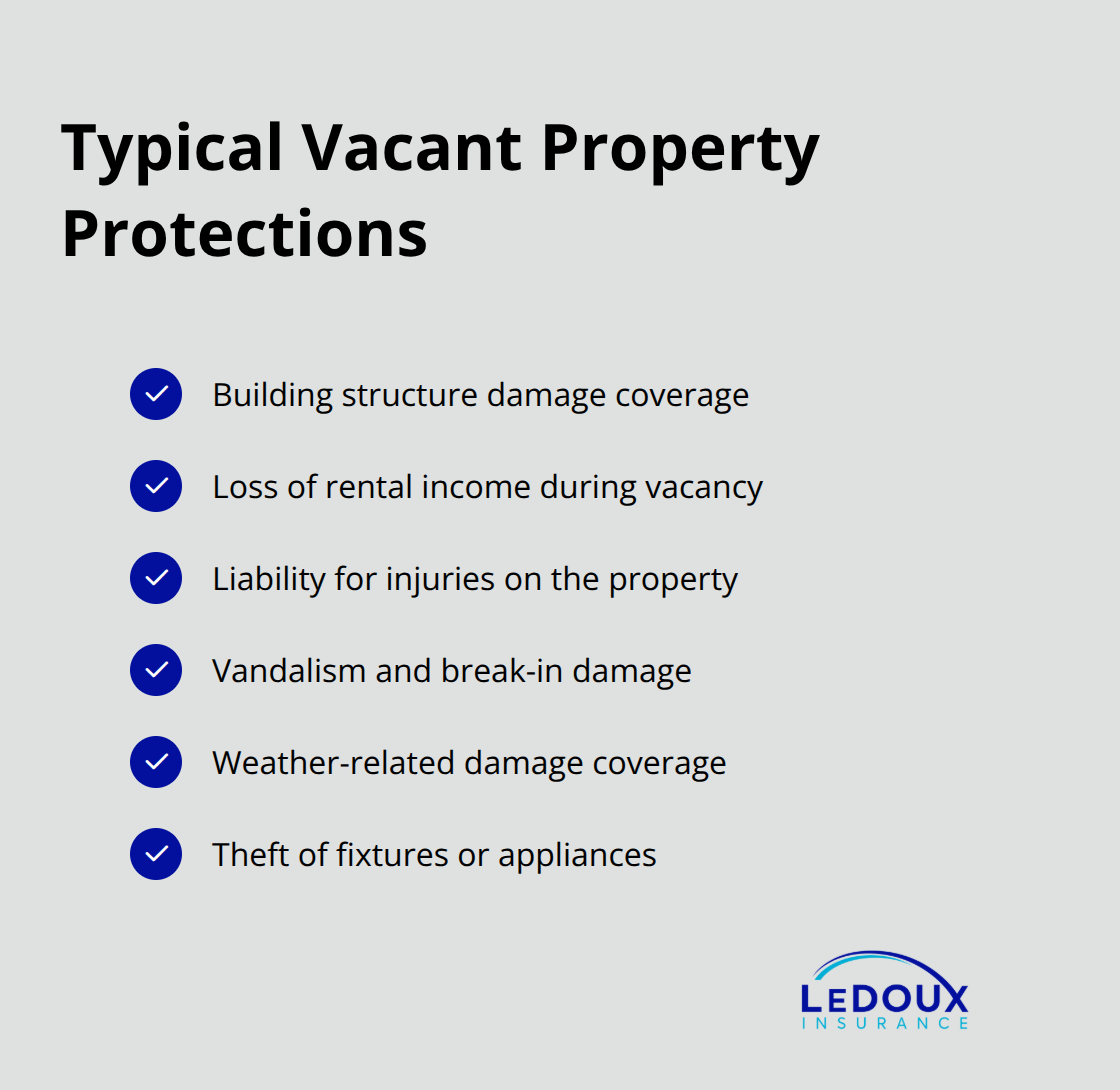
A vacant property landlord policy targets rental units that sit empty between tenants. Unlike standard landlord insurance, which assumes someone occupies the building, vacant policies acknowledge the real risks that emerge when properties are unoccupied. The coverage typically includes protection for the building structure, loss of rental income during the vacancy period, liability claims from injuries on the empty property, and damage from vandalism or break-ins. Some policies also cover weather-related damage and theft of fixtures or appliances.
Why Standard Policies Create Coverage Gaps
Standard landlord policies actively exclude or severely limit coverage once a unit becomes vacant, often within 30 to 60 days of the tenant moving out. Insurance companies view empty properties as higher risk because no one is present to detect problems early, report break-ins, or maintain the space. Standard policies might deny claims for pipe freezing in winter or water damage if the property sat unheated and unoccupied. Vandalism claims frequently get rejected under standard coverage when the property has been empty for weeks.
This gap exists because standard landlord insurance is priced for occupied properties with lower loss frequency. A property with active tenants has someone living there who notices a roof leak before it causes thousands in water damage. An occupied unit deters casual vandalism and break-ins simply through human presence. Standard coverage assumes regular maintenance and occupancy, which means the insurer’s risk models don’t account for the specific perils of transition periods.
The Real Cost of Standard Coverage Failures
If a burst pipe destroys flooring and cabinets while your unit sits vacant waiting for new tenants, your standard policy will likely deny the claim. Many landlords discover this gap only after filing a claim during vacancy, which means the financial hit comes when you’re already losing rental income. The vacancy exclusion in standard policies isn’t a small limitation-it can completely eliminate coverage for weeks or months depending on your lease turnover timeline.
Vacant property policies close these gaps by acknowledging that empty buildings need different protection strategies than occupied ones. The distinction matters most during property transitions, when you face the highest concentration of risks and the lowest income flow.
Coverage Options and What They Protect
Building Structure and Fixtures
Vacant property policies protect the physical property itself-walls, roof, electrical systems, plumbing, flooring, and built-in appliances-against damage from weather, vandalism, theft, and break-ins. If a window gets smashed and rain damages drywall and insulation while your unit sits empty, this coverage handles the repair costs. Fixture theft is particularly common during vacancies; thieves target copper piping, water heaters, and HVAC components specifically because they know properties are unoccupied. Confirm that your policy explicitly covers fixture removal, as some carriers limit this protection or require additional endorsements.
Loss of Rental Income During Vacancy
Loss of rental income during vacancy addresses the financial bleeding that happens when units generate zero revenue. If a property typically rents for $1,500 monthly and remains vacant for 60 days between tenants, that’s $3,000 in lost income. This coverage reimburses that lost rent up to your policy limits, though most carriers cap it at 6 to 12 months of rent depending on the policy.
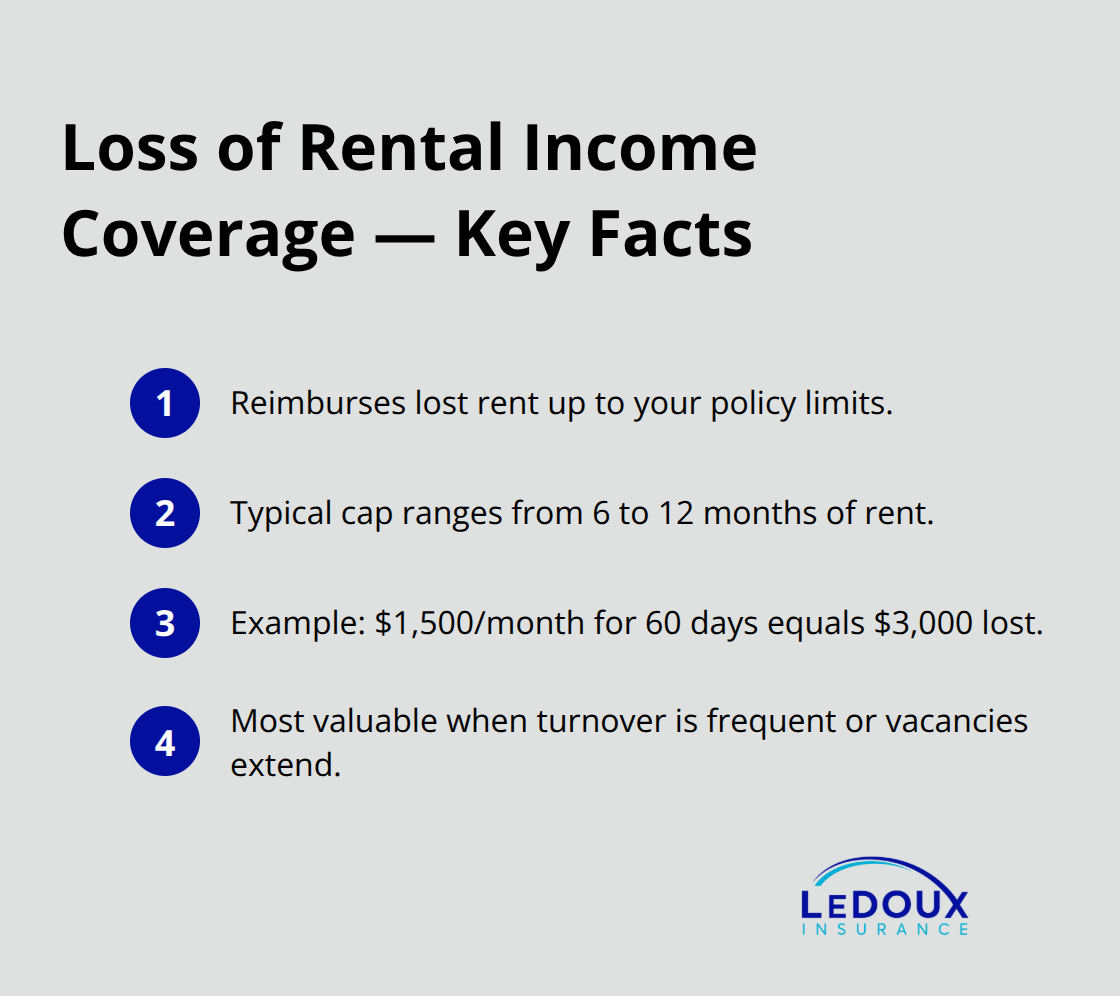
The protection matters most when turnover happens frequently or when market conditions extend vacancy periods beyond your control.
Liability Protection for Unoccupied Units
Liability protection for unoccupied units covers injuries that occur on your empty property-someone trespassing and getting hurt, a neighborhood child falling through a porch, or a contractor injured during repairs. Unoccupied properties face higher liability risk because securing them against intrusion is harder than maintaining an occupied building, making insurers view them as elevated exposure. This coverage protects your financial position when accidents happen on vacant land or buildings.
Vandalism and Break-In Protection
Vandalism and break-in protection specifically covers intentional damage and theft that occurs when the property sits empty. This is where vacant policies diverge most sharply from standard coverage. Standard policies either exclude vandalism claims on vacant properties entirely or require proof that you maintained constant occupancy or regular inspections. Vacant property policies acknowledge that some vandalism is inevitable during transitions and cover it as a standard peril rather than treating it as a gap in your security measures.
Understanding these four protection areas helps you select the right combination for your situation. The next step involves taking concrete actions to minimize risk while your property transitions between tenants.
How to Protect Your Property During Tenant Transitions
Implement Physical Security Measures
An empty property needs visible security to deter theft and vandalism. Install motion-sensor lighting on all sides of the building, and consider temporary security cameras that provide visible deterrents. Properties with visible security measures experience significantly fewer break-ins than those that look completely abandoned. For vacancies extending beyond two weeks, board up windows to prevent casual entry. These steps cost far less than replacing stolen fixtures or repairing vandalism damage.
Notify Your Insurance Provider Before Vacancy Begins
Contact your insurance provider at least one week before the tenant moves out to report the upcoming vacancy date. Some carriers require notification within specific timeframes to maintain coverage. Failing to notify them can result in claim denials later, even if your policy technically includes vacant coverage. This conversation activates your coverage without gaps and confirms what documentation or inspections your specific policy requires during the empty period.
Document Property Condition Before and After Tenant Departure
Take dated photographs of every room, the roof condition, basement or crawl space, HVAC systems, water heater, and all windows and doors before vacancy starts and immediately after the previous tenant leaves. This documentation protects you during claims because insurers often dispute damage timing, arguing that problems existed before vacancy rather than occurring during the empty period. If you discover a roof leak three weeks after the tenant moves out, your photos prove the roof was intact on move-out day. During longer vacancies, schedule monthly inspections and photograph the property each time to establish that conditions remained stable.
Monitor for Common Vacancy Losses
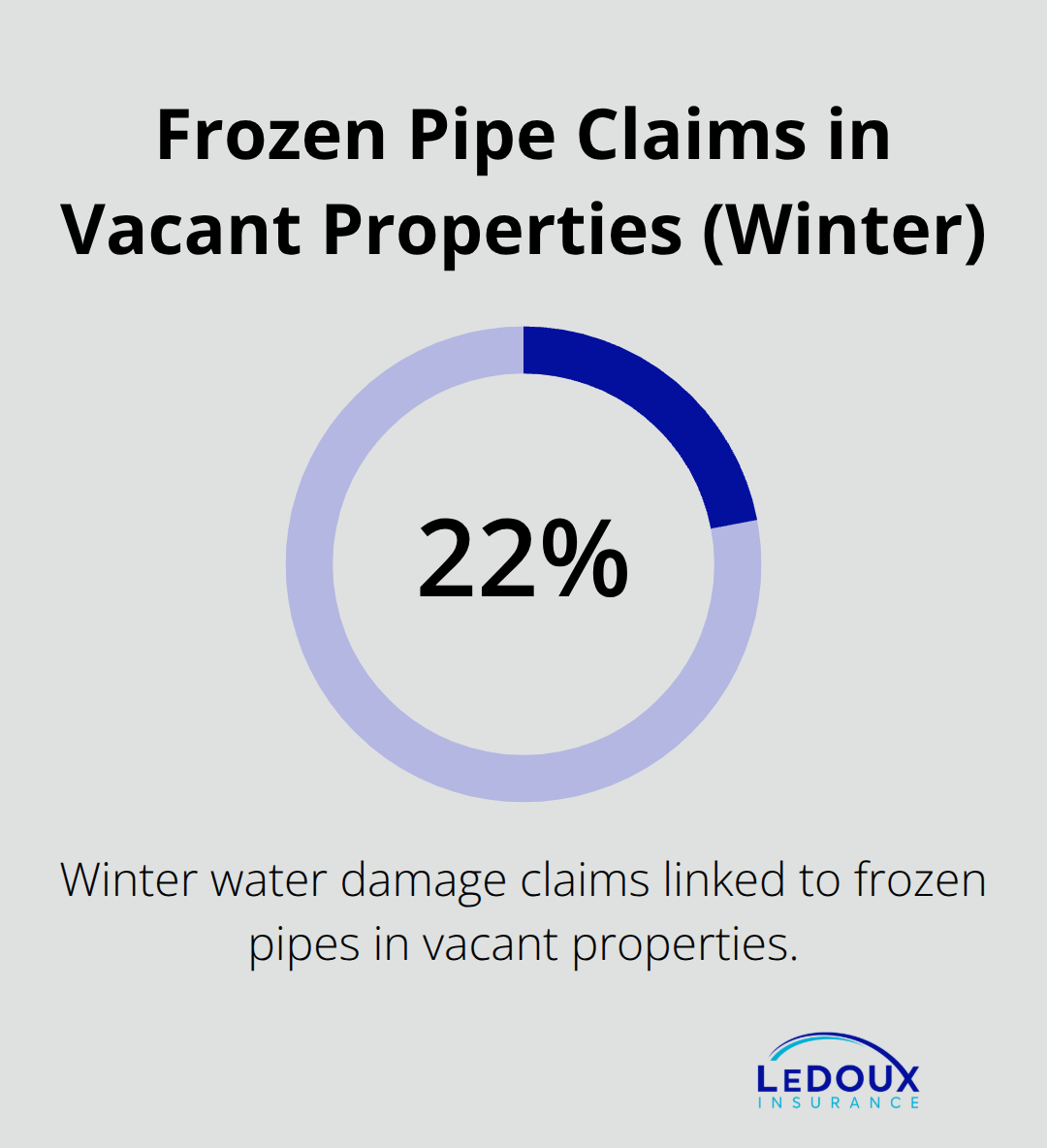
Over 22 percent of winter water damage claims involve frozen pipes in vacant properties, making regular heating maintenance essential even when the unit is empty. Theft of fixtures like copper piping and HVAC components happens quickly in vacant units, sometimes within days of the property sitting empty. Water damage from weather or burst pipes ranks as the most expensive vacant property claim type. Coordinate with your insurance provider about inspection frequency requirements, as some policies mandate inspections every 7 to 14 days to maintain full coverage. This requirement exists because insurers know that frequent monitoring catches problems early and prevents catastrophic losses that would otherwise occur undetected in empty buildings.
Final Thoughts
Vacant property landlord policies exist because standard landlord insurance leaves you exposed during the periods when your property faces the highest risk. The gap between tenants is when pipes freeze, thieves target fixtures, and vandals strike hardest. A vacant property landlord policy bridges that exposure by covering building damage, lost rental income, liability claims, and theft or vandalism that standard policies explicitly exclude.
Choosing the right coverage depends on your specific situation. If you own a single rental property with predictable tenant turnover, loss of rental income coverage becomes your priority because vacancy directly impacts your cash flow. If you manage multiple properties across different neighborhoods, vandalism and break-in protection matters more because you cannot monitor each unit constantly. Building structure protection is non-negotiable regardless of your portfolio size, since weather damage and pipe freezing do not discriminate between large and small landlords.
The practical steps matter as much as the policy itself-notify your insurance provider before vacancy starts, document property condition with dated photographs, implement visible security measures, and schedule regular inspections according to your policy requirements. These actions reduce claims and demonstrate to your insurer that you actively manage risk during transitions. Contact LeDoux Insurance Agency Inc. to review your current protection and find a vacant property landlord policy that matches your actual exposure.
The information provided in this blog is for general informational purposes only and does not constitute legal, financial, or insurance advice. Coverage options, terms, and availability may vary. Please consult with a licensed professional for advice specific to your situation. Artificial intelligence may have been used to generate text and images in some blog articles.

