

Oregon General Liability Insurance: What Businesses Need to Know
Running a business in Oregon means protecting yourself from unexpected liability claims. At LeDoux Insurance, we know that Oregon general liability insurance isn’t optional-it’s a business essential that shields you from costly lawsuits and property damage claims.
Whether you operate a small retail shop, a construction company, or a service-based business, the right coverage can be the difference between staying afloat and facing financial ruin. This guide walks you through everything Oregon business owners need to know about general liability insurance.
What General Liability Insurance Covers
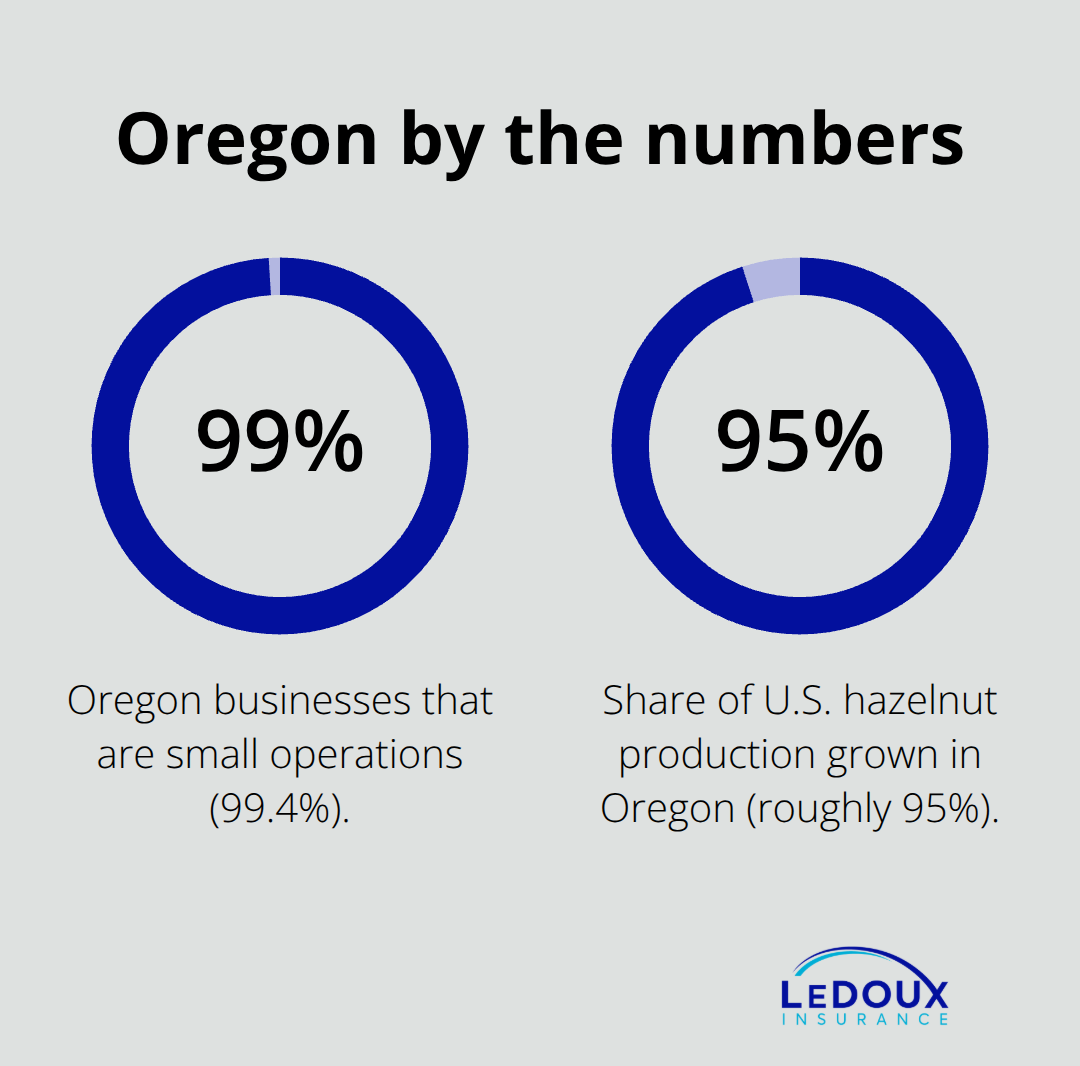
General liability insurance protects your Oregon business from claims that arise during normal operations. This coverage pays for bodily injury when someone is hurt on your property or because of your business activities, property damage when you accidentally damage a customer’s or third party’s belongings, and medical expenses for minor injuries that don’t result in lawsuits. It also covers personal injury claims like defamation or invasion of privacy, and advertising injury claims if your marketing materials inadvertently harm someone’s reputation. Legal defense costs are included, meaning the insurance company covers attorney fees and court expenses even if a claim is ultimately dismissed. For Oregon businesses, this protection matters because 99.4% of the state’s businesses are small operations, and a single liability claim can devastate a company without proper coverage.
Why Oregon Businesses Face Real Liability Exposure
Oregon’s economy is built on diverse industries that carry distinct liability risks. The state is the top lumber producer in the contiguous U.S., creating exposure for construction companies, contractors, and suppliers. Agriculture drives significant liability concerns as well, with hazelnuts accounting for roughly 95% of domestic production and the Willamette Valley supporting extensive berry farming that generates product liability exposure. The wine industry has grown substantially, with approximately 676 wineries operating across Oregon by 2014. Beyond agriculture and forestry, major employers like Nike in Beaverton and Intel in Hillsboro anchor a tech sector that includes data center operations in The Dalles, Prineville, and Boardman. Tourism and hospitality add another layer of liability exposure, from Portland’s dense brewery scene to the Oregon Shakespeare Festival. Each of these industries faces different risk profiles, but all share one reality: liability claims in Oregon are frequent and expensive.
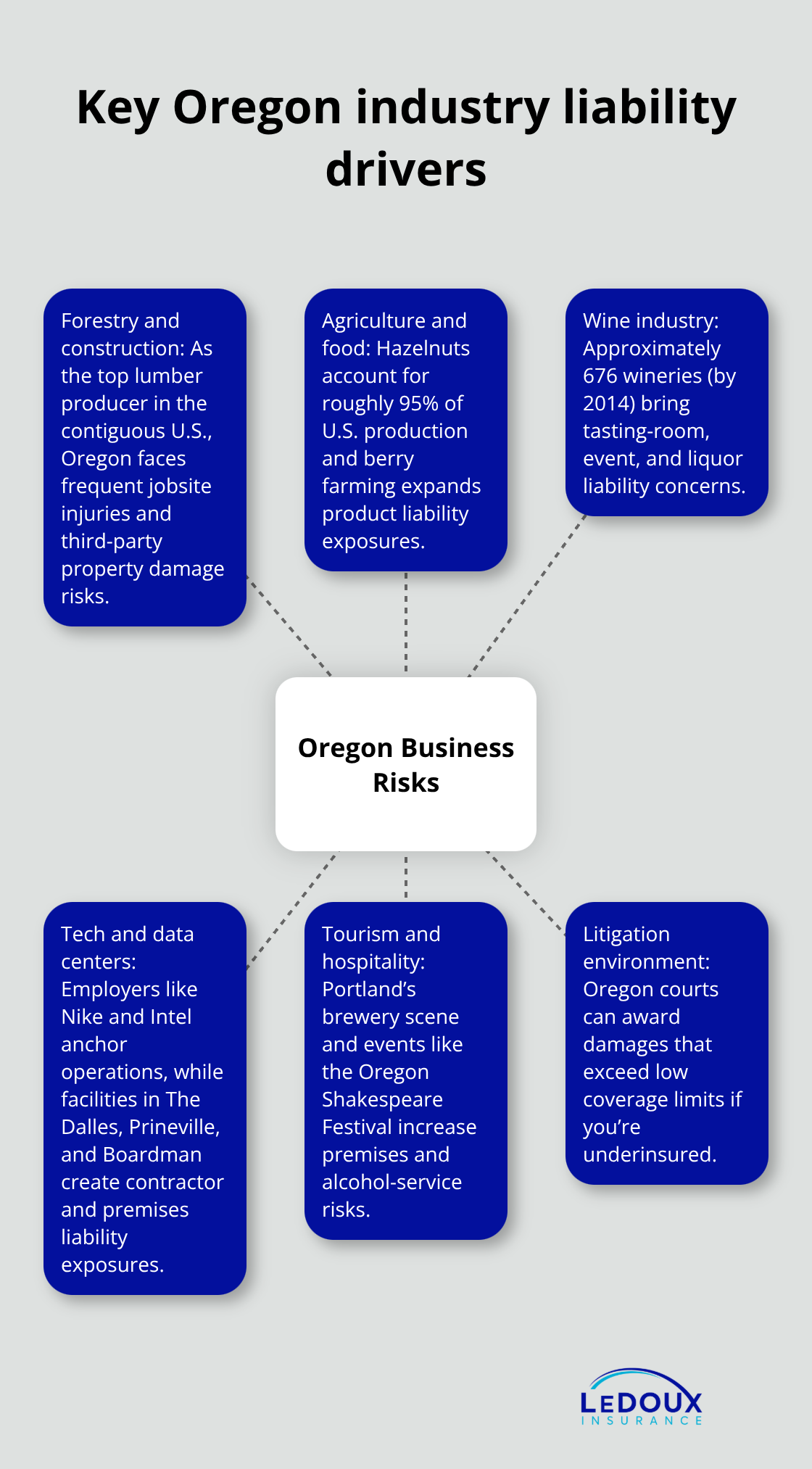
Oregon courts award damages that can exceed coverage limits if you’re underinsured.
Regulatory Requirements and Contractual Obligations
Oregon doesn’t impose a blanket legal requirement that all businesses carry general liability insurance, but many situations make it non-negotiable. If you sign a contract with a client, landlord, or vendor, that contract almost certainly includes a requirement to maintain coverage at specific limits. Construction projects, commercial leases, and service agreements routinely demand proof of general liability insurance before work begins. Failure to maintain required coverage can result in contract breach, which opens you to additional liability beyond the original claim. Additionally, if you employ workers, Oregon workers’ compensation law creates overlapping obligations that interact with general liability coverage. Local municipal codes and industry-specific regulations may impose additional requirements, particularly in construction, food service, and healthcare.
Taking Action on Your Coverage Requirements
Review every contract your business signs and confirm the coverage limits it requires. Work with a local insurance agent who understands Oregon’s regulatory landscape to verify you’re meeting all contractual and legal obligations. Underestimating required limits is a common mistake that leaves businesses exposed. An agent can map your specific liability exposure across your Oregon operations and recommend appropriate coverage limits based on your industry, revenue, and risk profile. This assessment becomes the foundation for selecting the right policy and comparing options among carriers.
Understanding Your Coverage Limits
Matching Limits to Your Actual Business Exposure
Selecting the right coverage limits for your Oregon business means matching your actual exposure to realistic financial protection, not picking a number that sounds safe. General liability policies in Oregon typically offer bodily injury and property damage limits ranging from $300,000 to $2 million per occurrence, with aggregate limits that cap total payouts per year. For most small businesses in Oregon, a $1 million per occurrence limit with a $2 million aggregate represents a reasonable starting point, though your specific industry and revenue determine whether you need more. Construction companies, manufacturers, and businesses with significant customer foot traffic often require $2 million or higher because a single serious injury claim can easily exceed $500,000 in medical costs, lost wages, and pain and suffering damages.
Why Underestimating Limits Costs You Money
If you operate in hospitality, food service, or retail-industries with frequent customer contact-underestimating limits leaves you personally liable for damages beyond your policy cap. A slip-and-fall injury at your restaurant, a customer injured by a defective product, or an accident on your premises can generate claims that far exceed modest coverage limits. Oregon courts award substantial damages for serious injuries, and you absorb any amount above your policy maximum from your personal assets.
Personal and Advertising Injury Coverage
Personal and advertising injury coverage protects against claims that don’t involve physical harm but damage someone’s reputation or business interests. These claims include defamation, slander, false advertising, and invasion of privacy, and they occur frequently in Oregon’s business environment. A negative online review that a customer claims is false, misleading marketing language that injures a competitor’s business, or an employee’s careless social media post about a client can trigger these claims. Oregon courts take reputational harm seriously, and settlements often reach $50,000 to $150,000.
Medical Payments and Legal Defense Costs
Medical payments coverage, separate from bodily injury liability, pays minor medical expenses up to $5,000 or $10,000 without requiring the injured party to file a lawsuit. This coverage resolves small incidents quickly and prevents minor injuries from escalating into formal claims. Legal defense costs deserve particular attention because Oregon’s attorney fees run $250 to $400+ per hour, and defense costs accumulate rapidly even when claims are baseless. Most carriers cover defense costs outside your policy limits, meaning your $1 million coverage applies to damages only, not legal expenses. However, some policies cap defense costs or include them within your limit, so clarify this detail before purchasing.
Selecting Coverage That Protects Your Business
A local insurance agent who understands Oregon’s liability environment helps you align your limits with your industry’s actual claims history and your business’s financial capacity to absorb uninsured losses. This assessment becomes the foundation for comparing coverage options and carriers to find the policy that fits your operation.
Choosing the Right Policy for Your Oregon Business
Price Alone Won’t Protect Your Business
The biggest mistake Oregon business owners make is shopping for general liability insurance based on price alone. Cheaper policies from national carriers often lack understanding of your specific industry, your local market, or the actual claims history for businesses like yours. A construction contractor in Portland faces entirely different risks than a winery in the Willamette Valley, yet many online quote systems treat them identically. When you see a $400 annual premium for a $1 million limit, skepticism is warranted-carriers that underprice often deny claims aggressively or provide weak customer service when you actually need them.
Document Your Business Activities in Detail
Start by writing down your actual business activities with precision. If you operate a restaurant, note your square footage, number of daily customers, whether you serve alcohol, and whether you host events. If you run a landscaping company, specify the equipment you use, whether you work near residential properties, and how many employees you supervise. This information directly affects your premium and the coverage you need. Construction companies in Oregon file general liability claims at significantly higher rates than professional service providers, which means your industry determines your baseline risk profile.
Research Your Industry’s Claims History
Talk to other business owners in your sector and ask what coverage limits they carry and whether they have filed claims. This real-world intelligence matters far more than theoretical risk assessments. You’ll learn which types of incidents occur most frequently in your field and what coverage limits actually protect against them. Other business owners can also recommend carriers that handled their claims fairly and agents who understand your specific risks.
Verify Carrier Ratings and Complaint Records
When comparing carriers, verify that each one has strong financial ratings from A.M. Best and positive complaint records with the Oregon Department of Consumer and Business Services. A carrier with excellent ratings is more likely to pay claims promptly and maintain adequate reserves to cover large losses. Check the Oregon Department of Consumer and Business Services website for complaint histories-a pattern of denied claims or poor customer service reveals itself in these public records.
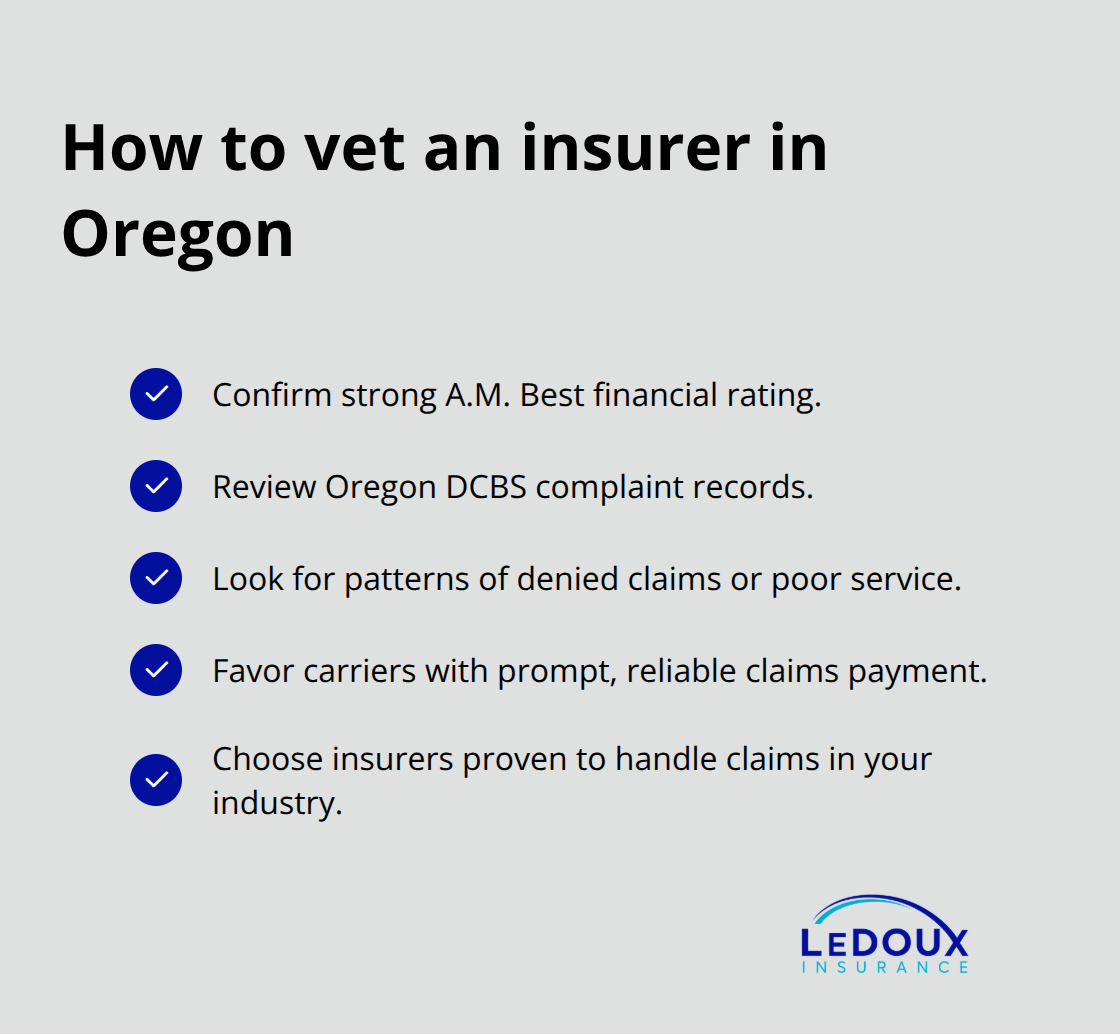
You want a carrier that has proven it can handle claims in your industry without fighting legitimate coverage.
Work with a Local Agent Who Understands Oregon
A local agent who has handled claims in your industry and understands Oregon’s regulatory environment provides personalized service that national carriers and online brokers cannot match. Your agent should ask detailed questions about your operations, your customers, and your specific liability concerns before recommending coverage limits. If an agent quotes you without asking substantive questions, find someone else. A local agent can explain exactly what your policy covers, help you identify gaps, and adjust your coverage as your business grows. LeDoux Insurance, serving Oregon from multiple local offices with 45+ years of experience, represents 20+ top-rated carriers and can match your specific risk profile to the insurer most likely to handle your claims fairly and offer competitive rates.
Final Thoughts
General liability insurance protects your Oregon business from the financial devastation that a single claim can cause. Whether you operate a small retail shop, a construction company, or a service-based business, the right coverage aligns with your actual liability exposure and your industry’s claims history. Oregon’s diverse economy-from lumber production and agriculture to tech and tourism-creates distinct risk profiles for different businesses, and your coverage should reflect those realities, not generic national standards.
Don’t shop for Oregon general liability insurance based on price alone. Instead, document your business activities in detail, research what coverage limits other businesses in your industry actually carry, and verify that any carrier you consider has strong financial ratings and a clean complaint record with the Oregon Department of Consumer and Business Services. Review every contract your business signs to confirm you’re meeting required coverage limits, because contract breaches create liability beyond the original claim.
Work with a local insurance agent who understands Oregon’s regulatory environment and your specific industry. That agent should ask detailed questions about your operations before recommending coverage limits and should explain exactly what your policy covers and where gaps exist. Contact LeDoux Insurance to discuss your coverage needs with an agent who knows Oregon’s business landscape.
The information provided in this blog is for general informational purposes only and does not constitute legal, financial, or insurance advice. Coverage options, terms, and availability may vary. Please consult with a licensed professional for advice specific to your situation. Artificial intelligence may have been used to generate text and images in some blog articles.

