

High Risk Liability Umbrella: Is Personal Umbrella Insurance Right for You?
One lawsuit can wipe out years of financial progress. At LeDoux Insurance Agency Inc., we see clients every day who think their homeowners and auto policies provide enough protection-they don’t.
A high risk liability umbrella policy fills the gap when medical bills, property damage claims, or legal judgments exceed your standard coverage limits. This guide walks you through what umbrella insurance actually covers, who needs it most, and how to find the right protection for your assets.
What Personal Umbrella Insurance Actually Covers
Personal umbrella insurance sits above your homeowners and auto policies, activating when a liability claim exceeds what those standard policies cover. Here’s how it works in practice: if someone suffers an injury on your property or you cause an accident that results in a judgment of $500,000, but your homeowners policy maxes out at $300,000, your umbrella policy covers the remaining $200,000 gap. Most umbrella policies start at $1 million in coverage, though you can purchase $2 million, $3 million, or higher limits depending on your assets and risk profile. The cost is surprisingly affordable-policies typically run $150 to $300 annually for $1 million in coverage, making them one of the most cost-effective ways to protect accumulated wealth. A single serious injury lawsuit can drain decades of savings, which is why umbrella coverage matters far more than most people realize.
How Umbrella Policies Layer Over Your Existing Coverage
Your homeowners insurance covers liability on your property up to a limit, usually between $100,000 and $300,000. Your auto policy does the same for vehicle-related incidents. These limits haven’t kept pace with actual jury awards and medical costs. Umbrella insurance doesn’t replace these underlying policies-it requires them as a foundation-but it removes the financial cliff when damages exceed those limits.
What Your Umbrella Policy Actually Protects
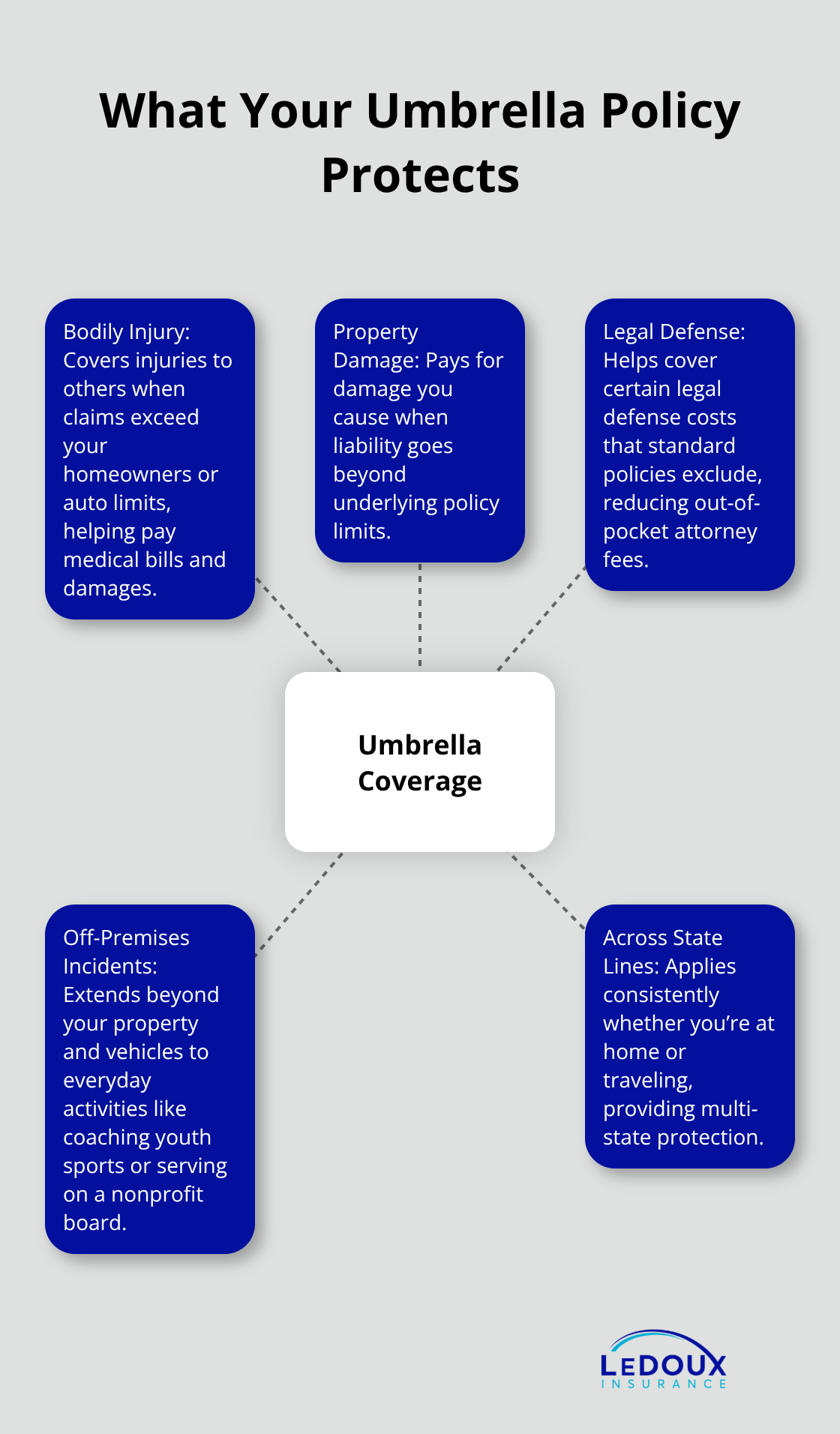
The policy covers bodily injury, property damage, and certain legal defense costs that standard policies exclude. If a guest suffers a serious injury at your home or you’re found liable for a multi-car accident, the umbrella absorbs the excess liability rather than forcing you to liquidate retirement accounts or sell property to pay a judgment. This protection extends beyond your property and vehicles to include personal liability exposures that arise from everyday activities (like coaching youth sports or serving on a nonprofit board). The coverage also applies to incidents that occur across state lines, providing consistent protection whether you’re at home or traveling.
Why Standard Policies Fall Short
Homeowners and auto policies were designed decades ago when liability awards were substantially lower. Today’s medical costs, combined with jury awards that frequently exceed $1 million, create a significant gap between what your standard policies cover and what you actually owe if a serious incident occurs. That gap is precisely where umbrella insurance steps in, and it’s why understanding your exposure matters before a claim happens.
Who Needs Umbrella Coverage
High Net Worth and Asset Protection
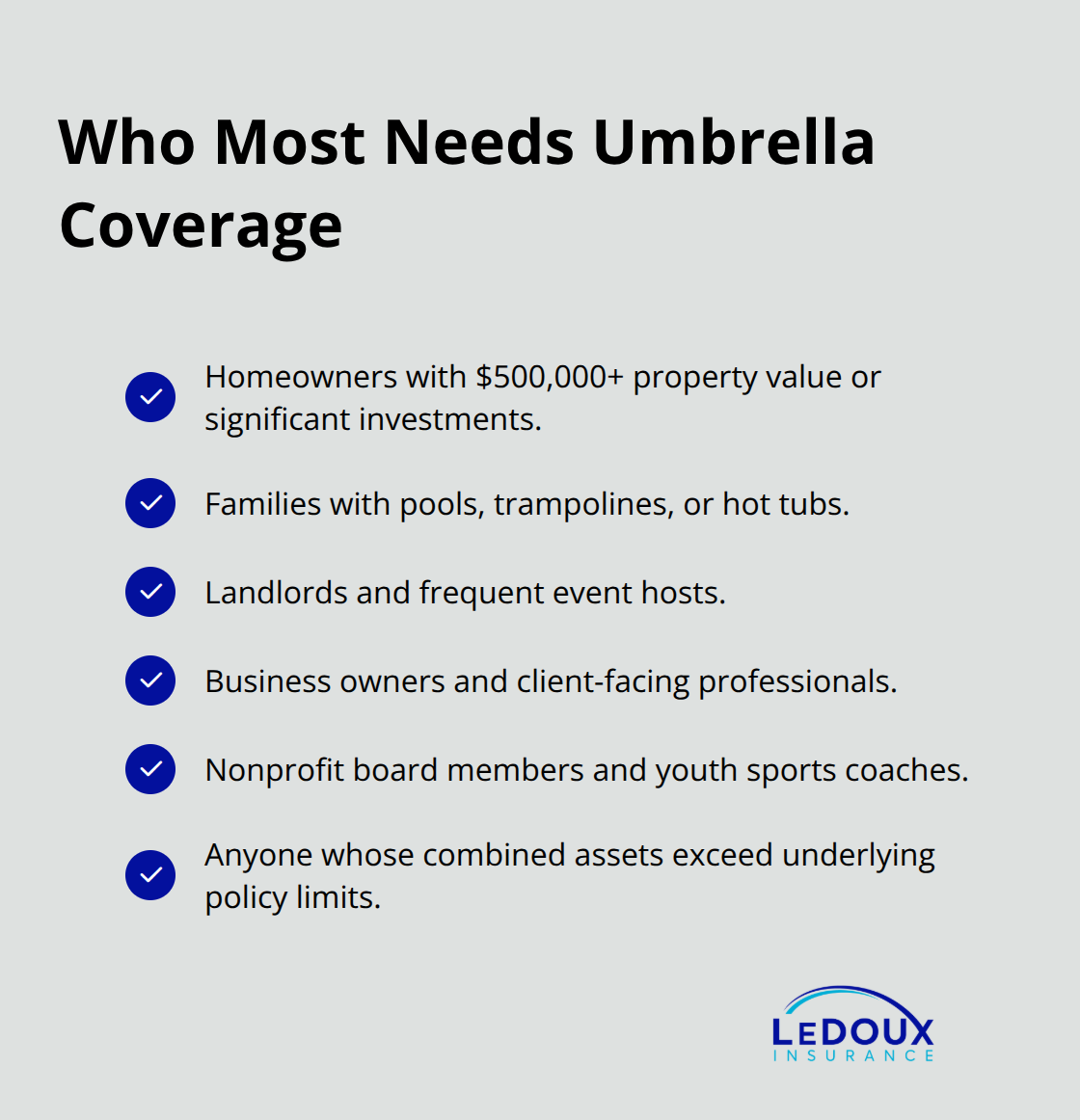
High net worth isn’t just about having a large investment portfolio-it’s about having assets that creditors can seize in a liability judgment. If you own a home worth $500,000 or more, carry investment accounts, or have significant retirement savings, umbrella insurance protects what you’ve built from a single lawsuit. A $1 million judgment against someone with $800,000 in liquid assets creates a financial catastrophe that standard policies cannot prevent.
The average homeowners liability claim exceeds $300,000, and medical malpractice verdicts routinely surpass $1 million. The math is straightforward: if a serious injury happens on your property and the judgment exceeds your underlying coverage, creditors pursue your bank accounts, investments, and future income until the verdict is satisfied. Anyone whose net worth exceeds their homeowners and auto policy limits combined faces real financial risk without umbrella protection.
Property Features That Increase Liability Exposure
Swimming pools create specific liability risks that standard policies underestimate. Drowning claims frequently result in settlements between $500,000 and $2 million. Trampolines, hot tubs, and other recreational equipment on your property invite injury claims that can exceed standard coverage limits within hours of an incident.
Rental properties, frequent events, and activities like coaching youth sports extend your liability exposure far beyond what homeowners insurance covers. Each guest who enters your property or each event you host multiplies your exposure to claims. The premium cost-typically $150 to $300 annually for $1 million in coverage-represents trivial protection against the legal and financial exposure these situations create.
Business Owners and Professionals at Risk
Business owners and professionals face greater risk, especially those in fields like consulting, real estate, contracting, or any role involving client interaction or decision-making that affects others financially. A single professional liability claim can bankrupt a small business. Your professional decisions carry financial consequences for others, and standard homeowners policies exclude business-related liability entirely.
Professionals who serve on nonprofit boards, manage client funds, or provide advice that influences financial outcomes need umbrella coverage that extends beyond property-based incidents. The exposure exists whether you operate from a home office or a commercial space. Your professional activities create liability gaps that only umbrella insurance can fill, making coverage essential before a claim tests your financial stability.
What Umbrella Insurance Actually Costs
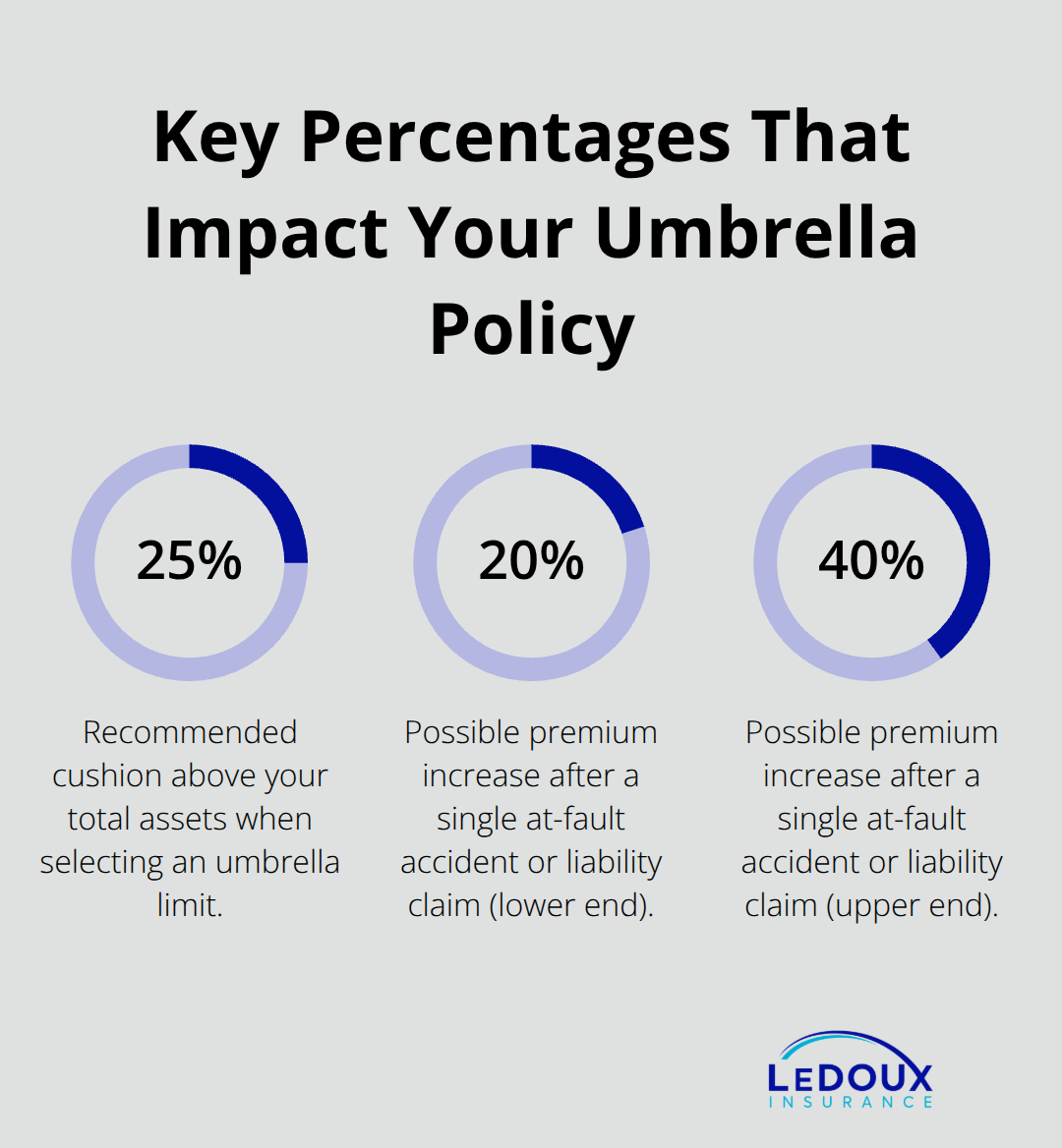
Umbrella insurance premiums range from $150 to $300 annually for $1 million in coverage, with most policies costing between $200 and $250 per year. This low price point surprises people who assume comprehensive liability protection requires substantial investment. The actual cost depends on several concrete factors: your underlying homeowners and auto policy limits, your claims history, the number of properties you own, and whether you have high-risk exposures like pools or rental properties. Carriers typically charge $250 to $400 annually for $2 million in coverage, while $3 million policies run $350 to $500 per year. The pricing structure rewards clean claims histories aggressively-a single at-fault accident or liability claim can increase your umbrella premium by 20 to 40 percent for three to five years. Your age and credit score also influence rates, with carriers viewing younger policyholders and those with lower credit scores as statistically higher risk.
Homeowners in rural areas often pay less than those in urban centers, reflecting actual claims data showing lower frequency of serious incidents in less densely populated regions.
Choosing the Right Coverage Limit
Most people purchase $1 million in umbrella coverage, but this amount should match your actual assets and income potential. Calculate your net worth-add your home value, investment accounts, retirement savings, and future earning capacity. Your umbrella limit should exceed this total by at least 25 percent to account for legal fees and punitive damages. Someone with $800,000 in assets needs minimum $1 million coverage; someone with $2.5 million in assets should carry $3 million to $5 million in protection. The deductible on umbrella policies typically ranges from $250 to $1,000, with most carriers setting $500 or $1,000 as standard. Higher deductibles reduce premiums modestly-choosing a $1,000 deductible instead of $250 might save $30 to $50 annually, which rarely justifies the increased out-of-pocket exposure. Your underlying homeowners and auto policies establish the true deductible floor; umbrella coverage only activates after those policies exhaust their limits. This structural requirement means you cannot reduce your homeowners deductible to lower your umbrella costs-the underlying policies must maintain adequate limits before umbrella protection functions.
Getting Accurate Quotes and Comparing Carriers
Obtain quotes from at least three carriers before purchasing umbrella coverage. Provide identical information to each-exact home value, detailed property features (pools, trampolines, rental units), driving records for all household members, and your occupation or professional role. Inconsistent information across quotes makes meaningful comparison impossible. Online quote tools often underestimate your actual exposure because they cannot capture specific risk factors; direct contact with agents produces more accurate pricing. Ask carriers specifically how they rate your occupation, since professionals in consulting, real estate, and contracting frequently receive higher premiums than others in the same geographic area. Some carriers charge significantly more for self-employed individuals, while others price aggressively for this segment.
Understanding How Claims History Affects Your Rate
Your claims history matters enormously-even minor incidents from seven to ten years ago may still appear on your record and affect pricing. Request the actual policy language before purchase to confirm coverage extends to your specific exposures; some policies exclude certain professional activities or limit coverage for rental properties. Underinsurance represents the genuine financial risk most people face. A $1 million policy sounds substantial until a serious injury claim exceeds that limit by $500,000, leaving you personally liable for the difference. The modest premium cost makes higher limits financially sensible compared to the catastrophic consequences of inadequate protection.
Final Thoughts
Calculate your net worth by adding your home value, investments, retirement accounts, and future earning potential. Your high risk liability umbrella coverage should exceed this total by at least 25 percent. Someone with $800,000 in assets needs minimum $1 million in protection; someone with $2.5 million in assets should carry $3 million to $5 million.
Review your current homeowners and auto policy limits next, since umbrella insurance requires adequate underlying coverage to function properly. Check whether you have specific exposures that increase your risk: pools, rental properties, professional activities, or frequent events on your property. These factors influence both your coverage needs and your premium cost.
Try quotes from multiple carriers using identical information about your property, driving records, and occupation. Request the actual policy language to confirm coverage extends to your specific exposures before purchasing. Contact LeDoux Insurance Agency Inc. to discuss your umbrella insurance needs and protect your assets before a claim tests your financial stability.
The information provided in this blog is for general informational purposes only and does not constitute legal, financial, or insurance advice. Coverage options, terms, and availability may vary. Please consult with a licensed professional for advice specific to your situation. Artificial intelligence may have been used to generate text and images in some blog articles.

